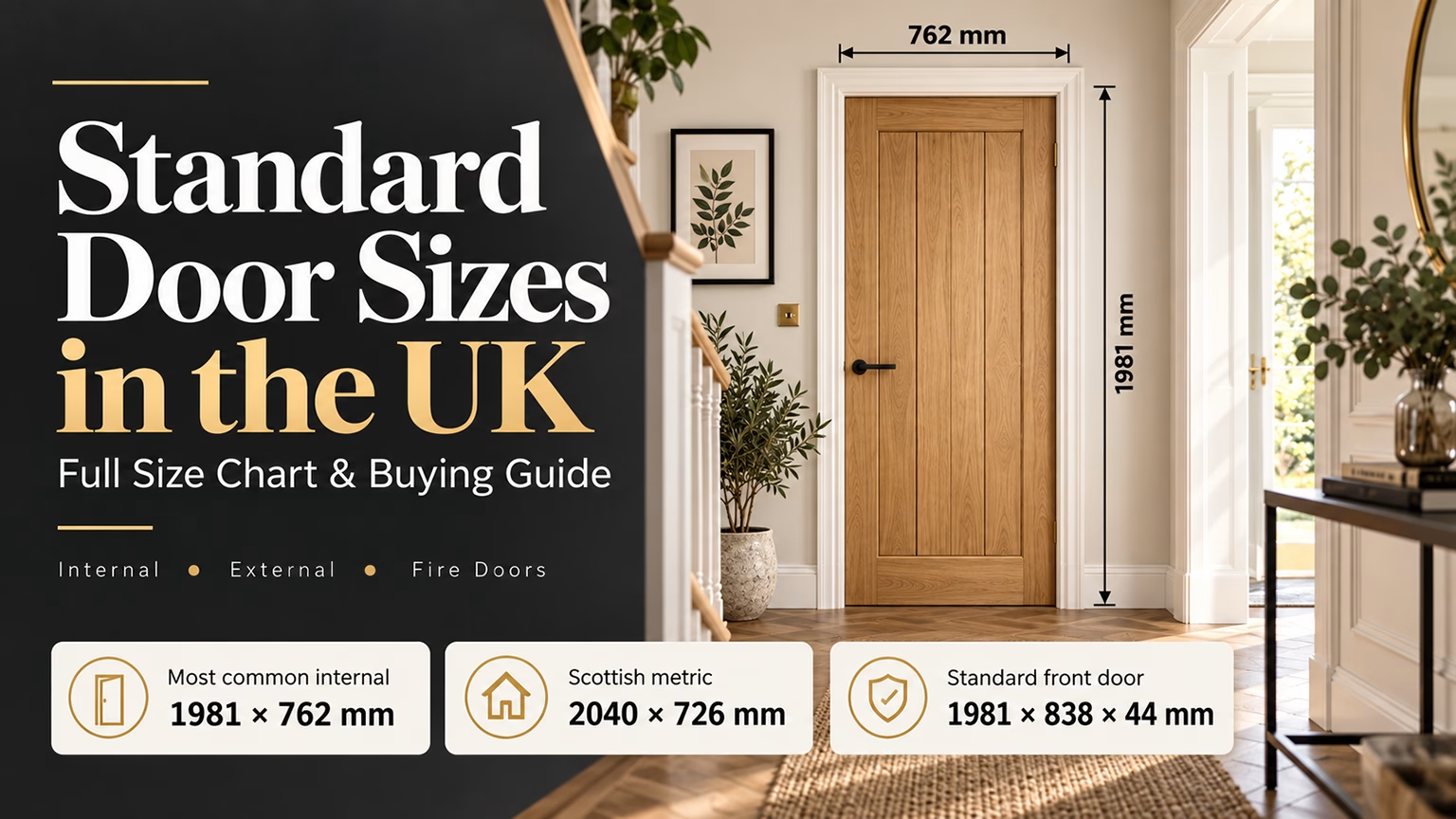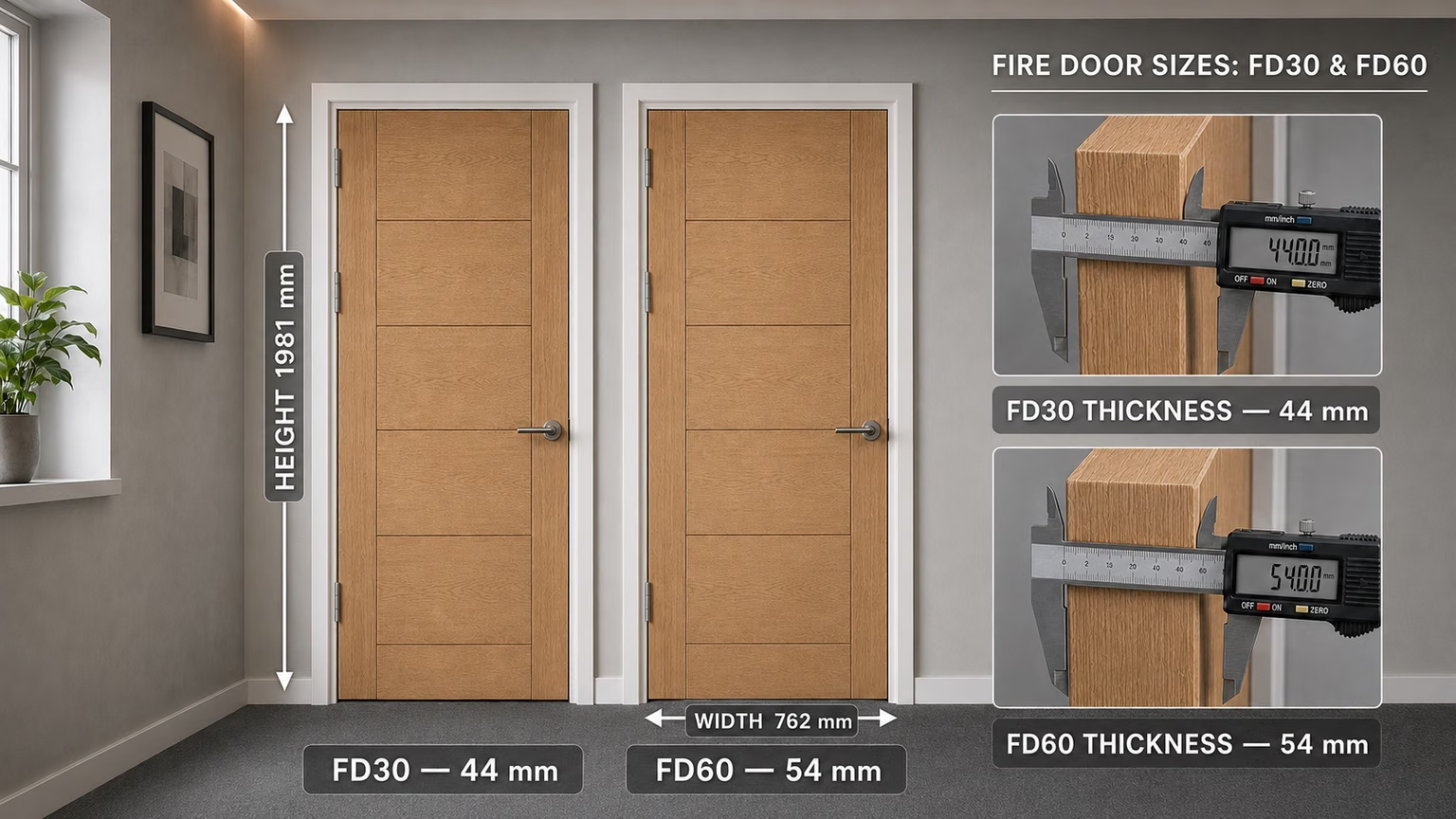
Most internal fire doors in the UK are 1981 x 762mm (2’6″) or 1981 x 838mm (2’9″), 44mm thick for FD30 and 54mm for FD60. Metric doors are 2040mm tall and 726mm or 826mm wide. If someone in a wheelchair uses the door, Approved Document M accepts an 826mm leaf, and an 838mm leaf clears it too. Once the door is hung, the gap to the frame should never be more than 4mm at the top and sides. And the rating comes from the certification label on the top edge, not from the thickness.
As there is a wide range of standard fire door sizes available in the UK, it is surprisingly complex to understand and choose the right ones. But how can you choose the right fire door if you’re unsure it fits the intended opening? One of the most important aspects of buying an internal fire door is the size.
While this may sound basic, the mix of metric and imperial sizes, not to mention the range of conventional dimensions, can make it difficult to decide exactly what you need. In this guide, we help you choose the correct fire door size first time round, saving you both time and money, and we quote the actual rules rather than guessing at them.
Why do Fire door sizes matter?
Choosing the right size of fire door matters for three reasons:
- If a fire door isn’t fitted properly, it won’t perform as it should, and it can be dangerous in the event of fire. A fire door is only effective when it is properly fitted, with the right intumescent strips and smoke seals in the right gap.
- An ill-fitting door won’t function well in regular use. It might not close correctly, which would decrease insulation, raise the possibility of unwanted entrance, and affect fire safety.
- Consider wheelchairs, young children, people with vision impairments, and hospital trolleys when choosing a door size and opening mechanism. All of this must, of course, meet the Building Regulations.
One thing to settle before you measure anything: a fire door is a fire door because it has been tested and certified, not because it is 44mm thick. The proof is the certification label or coloured plugs on the top edge of the leaf. If you’re not sure what you’re looking at, our guide on how to identify a fire door shows you where to look.
Standard Fire Door Sizes in UK
The most common fire door sizes available in the UK are listed below. The main difference between fire doors and standard internal door sizes is that the former are thicker, 44mm for most FD30 doors (45mm from some makers, including JB Kind) and 54mm for FD60, because they need a solid core and extra material inside to pass the fire test. It is also important that your door frame, intumescent seals, and ironmongery (such as hinges, handles, and locks) be fire-rated and appropriate for the door’s particular fire certification. In the following table, you can see the most common standard fire door sizes in the UK:
| Height (mm) | Width (mm) | Thickness (mm) | Common Use / Notes |
| 1981 | 457 / 533 | 44 | Ideal for cupboards or wardrobes |
| 1981 | 610 / 686 | 44 | Suitable for areas with restricted wall space and toilets |
| 1981 | 762 | 44 | Known as a 2’6″ door, the most common internal size in England and Wales |
| 1981 | 838 | 44 | Referred to as a 2’9″ door, the imperial leaf that clears the Part M wheelchair width |

A word on that Part M row, because it’s the one everyone gets slightly wrong. Approved Document M doesn’t name 838mm. It sets clear opening widths of 750mm, 775mm or 800mm depending on how wide the corridor is, and then says:
“A standard 826mm door leaf up to 44mm thick will be deemed to satisfy a requirement for a clear opening width of 775mm.”
Approved Document M, Volume 1 (Dwellings), Table 1.1, note
So the metric 826mm leaf is the one the Approved Document itself accepts, and the imperial 838mm leaf gives you a little more.
Common Fire Door Sizes
In the UK, fire doors come in a variety of standard sizes to fit both residential and commercial environments. Standard internal doors are typically 35mm thick (40mm for metric doors), while fire-rated doors are 44mm for FD30 and 54mm for FD60. That extra thickness isn’t a rule in itself, it’s what the tested construction needs, and it varies a little by maker. JB Kind puts it this way on its sizes page:
“The only dimensional difference is an increased thickness of 45mm, necessary to accommodate the extra core materials required to achieve the fire rating.”
JB Kind, Standard Door Sizes
So always go by the door’s certificate rather than a tape measure across the edge. In the following section, you can see the conversion chart of common fire door sizes:
Common Fire Door Size Conversion Chart
Here is the fire door size chart in mm, inches, and feet and inches, covering the imperial and metric ranges:
| Metric Size (mm) | Imperial (inches) | Feet & Inches | Typical Use |
| 1981 x 457 x 44mm | 78″ x 18″ | 6’6″ x 1’6″ | Cupboard / wardrobe fire doors |
| 1981 x 533 x 44mm | 78″ x 21″ | 6’6″ x 1’9″ | Small internal spaces |
| 1981 x 610 x 44mm | 78″ x 24″ | 6’6″ x 2’0″ | Restricted wall space |
| 1981 x 686 x 44mm | 78″ x 27″ | 6’6″ x 2’3″ | Narrow rooms or passageways |
| 1981 x 762 x 44mm | 78″ x 30″ | 6’6″ x 2’6″ | Most common internal fire door size (FD30) |
| 1981 x 838 x 44mm | 78″ x 33″ | 6’6″ x 2’9″ | Clears the 775mm Part M opening width |
| 1981 x 914 x 44mm | 78″ x 36″ | 6’6″ x 3’0″ | Wide openings, trolleys and equipment |
| 2040 x 726 x 44mm | 80.5″ x 28.6″ | 6’8″ x 2’5″ (approx.) | Metric fire door (standard in Scotland, common in new builds) |
| 2040 x 826 x 44mm | 80.5″ x 32.5″ | 6’8″ x 2’8.5″ (approx.) | The leaf Approved Document M names for a 775mm clear opening |
| 2040 x 926 x 44mm | 80.5″ x 36.5″ | 6’8″ x 3’0.5″ (approx.) | Wide metric openings, commercial use |
If you’re unsure how to properly measure for your fire door, check out our guide on how to measure up for an internal door. The method is the same for a fire door: measure the frame, not the old leaf, at three points each way, and keep the largest.
FD30 Fire Door Sizes (30-Minute Rated)
FD30 fire doors are designed to hold back fire for at least 30 minutes. The common FD30 fire door sizes available are:
Traditional UK Sizes (44mm thickness):
- 1981 x 457 mm
- 1981 x 533 mm
- 1981 x 610 mm
- 1981 x 686 mm
- 1981 x 762 mm (2’6″)
- 1981 x 838 mm (2’9″)
Metric Sizes (typically 2040mm height):
- 2040 x 526 mm
- 2040 x 626 mm
- 2040 x 726 mm
- 2040 x 826 mm
- 2040 x 926 mm
The FD30 doors we stock from Deanta and LPD come in 686, 762 and 838mm at 1981mm high, and 726 and 826mm at 2040mm high, all 44mm thick. You’ll find them in our 44mm fire doors range.
FD60 Fire Door Sizes (60-Minute Rated)
As FD60 fire doors are designed to resist fire for a longer amount of time, they’re usually thicker and heavier than other doors. The common FD60 fire door sizes include:
| Metric Size (mm) | Imperial (inches) | Feet & Inches | Thickness |
| 1981 x 610 x 54mm | 78″ x 24″ | 6’6″ x 2’0″ | 54mm |
| 1981 x 686 x 54mm | 78″ x 27″ | 6’6″ x 2’3″ | 54mm |
| 1981 x 762 x 54mm | 78″ x 30″ | 6’6″ x 2’6″ | 54mm |
| 1981 x 838 x 54mm | 78″ x 33″ | 6’6″ x 2’9″ | 54mm |
| 1981 x 914 x 54mm | 78″ x 36″ | 6’6″ x 3’0″ | 54mm |
| 2040 x 726 x 54mm | 80.3″ x 28.6″ | ~6’8″ x 2’5″ | 54mm |
| 2040 x 826 x 54mm | 80.3″ x 32.5″ | ~6’8″ x 2’8″ | 54mm |
| 2040 x 926 x 54mm | 80.5″ x 36.5″ | ~6’8″ x 3’0.5″ | 54mm |
Deanta’s FD60 range, the Seville for example, runs from 1981 x 533mm up to 2040 x 926mm, all at 54mm. Browse our 54mm fire doors for the sizes in stock.
Difference between standard and custom fire door sizes
Standard and custom fire doors differ mostly in terms of availability and choice. Standard sizes (e.g., 1981 x 762 x 44mm) are readily available, less expensive, and suitable for the majority of standard entrances. On the other hand, custom (or bespoke) fire doors are manufactured to your precise specifications. With this kind of door, you’ll have more freedom to choose. Custom fire doors are typically more expensive, but they are ideal for special buildings or certain access requirements.
By taking a look at the following table, you can easily understand their key differences:
| Feature | Standard Fire Door Sizes | Custom (Bespoke) Fire Door Sizes |
| Size Options | Fixed industry-standard sizes (e.g. 1981 x 762 x 44mm) | You can customise the door to your desired size. |
| Availability | Widely available | Need to be ordered as it is unique |
| Lead Time | Stock sizes ship within days | Depends on the brand and the manufacturer, so ask before you order |
| Cost | Budget-friendly/Economical | Higher cost due to customisation |
| Fire Ratings Available | Common ratings like FD30 and FD60 | Available in FD30, FD60, FD90, FD120 depending on specs |
| Material Options | Standardised timber or veneer finishes | Wide range of finishes and materials available |
| Design Flexibility | Limited to set styles and finishes | Customisable (style, glazing, veneers, finish, etc.) |
| Installation Compatibility | Fits most common wall openings | Designed for unique or non-standard openings |
| Ideal For | New builds, standard refurbishments | Older properties, renovations, and unique architectural needs |
Fire Door Sizes Regulations
There is no fixed dimension for fire door size regulations in the UK. No regulation says “a fire door must be 762mm wide” or “44mm thick”. What the rules do set is how wide the opening has to be for the people using it, and how tight the door has to fit once it’s hung. Here are the three you’ll actually be checked against:
- Escape width (Approved Document B, Volume 2, Table 2.3). For buildings other than houses, the minimum width of an escape route or exit is 750mm for up to 60 people, 850mm for up to 110, 1050mm for up to 220, and 5mm per person above that. Note that this is clear width, not leaf width, and the table adds that widths “may need to be increased to meet guidance in Approved Document M”. Inside a house, Approved Document B Volume 1 sets no width for internal fire doors, so the standard sizes below are fine.
- Accessible width (Approved Document M, Volume 1, Table 1.1). Doorways need a clear opening of 750mm, 775mm or 800mm depending on the corridor width, and the Approved Document names the leaf that gets you there: the 826mm leaf, in the note quoted above.

- The gap (GOV.UK fire door guidance under the Fire Safety (England) Regulations 2022). In the government’s words:
“The industry standard is that the gap size should never be more than 4mm, except at the bottom of the door, where the gap should be as small as practicable, while ensuring that the door is unlikely to snag on the floor even if the door drops slightly on the hinges.”
GOV.UK, Fire Safety (England) Regulations 2022: fire door guidance
The British Woodworking Federation’s best practice guide gives the working range:
“The gap between the frame is often between 2 & 4mm but can be greater where supported by test evidence.”
BWF Fire Door Alliance, Fire Doors Best Practice Guide
The common sizes that meet these rules in practice:
Height:
Usually 1981mm (6’6″)
Common Widths:
- Small openings/cupboards: 457mm / 533mm
- Tighter spaces: 610mm / 686mm
- Most common internal size: 762mm (2’6″)
- Wheelchair access: 826mm (metric) or 838mm (2’9″)
Metric Fire Door Sizes (standard in Scotland, common in new builds):
- Height: Usually 2040mm
- Common Widths: 526mm / 626mm / 726mm / 826mm / 926mm
Fire Door Thickness:
- FD30: 44mm thick (45mm from some makers)
- FD60: 54mm thick
Thickness is only one distinction; our FD30 vs FD60 fire doors guide explains the differences in fire resistance, construction and typical applications, and our fire door regulations guide covers who is responsible for what.
Fire Door Gaps, Frames and Linings
The size on the label is only half the job. A fire door passes or fails its inspection on the gap around it and the frame it sits in, and those are the two figures people search for most and find least. Here they are on one line each:
| What | Figure | Where it comes from |
| Gap at the top and sides | 2 to 4mm, never more than 4mm | GOV.UK fire door guidance; BWF best practice guide |
| Gap at the bottom | As small as practicable without the door snagging | GOV.UK fire door guidance |
| Fire door lining depth | 108mm or 133mm, to suit the wall thickness | JB Kind FD30 lining set |
| Lining thickness | 32mm jambs and head | JB Kind FD30 lining set |
| Door stop | 32mm x 13mm | JB Kind FD30 lining set |
| Intumescent strip and smoke seal | The type and position named in the door’s certificate | JB Kind; BWF |
Two things follow from that table. First, if your existing gap is 6mm or 8mm, a new leaf in the same nominal size won’t fix it, because the door sizes are fixed; the fix is the lining or the stops, which is a job for whoever hangs the door. Second, a fire door lining is not the same as an ordinary lining: it’s thicker, it’s grooved for the intumescent strip, and it carries its own certification. Our door frames range includes FD30 linings in both depths, and if the frame itself is what you’re replacing, our guide to fitting a door frame walks through it.
How to Choose the Right Fire Door Size for Your Building
One of the key points you should consider when choosing a fire door size is the building type, because the building type decides how many people pass through the door and which rules apply. Just look at the following table, it helps clarify how to choose the best fire door sizes for your building:
| Building Type | Fire Door Size Requirements |
| Schools | Width follows the number of people the door serves (Approved Document B Volume 2, Table 2.3: 750mm clear for up to 60, 850mm for up to 110). Corridor and hall doors are usually 838mm leaves or pairs. The rating (FD30 or FD60) comes from the school’s fire strategy. |
| Hospitals | NHS doorsets are specified under Health Technical Memorandum 58, and the widths for beds and trolleys come from the trust’s own specification, so work from the drawings rather than a stock size. FD60 is common on compartment lines. |
| Offices | Standard internal sizes like 1981 x 762mm (FD30) are typical. Where wheelchair access is needed, use the 826mm or 838mm leaf to clear the 775mm Part M width. FD60 doors go where the fire strategy puts them, such as plant rooms. |
| Residential / Homes | Most common size: 1981 x 762mm (2’6″) with 44mm FD30 thickness, on the doors Approved Document B asks for in a house (loft conversions, and the door from an integral garage). For better accessibility: 826mm or 838mm. |
Not sure whether your home needs fire doors at all? Our guide on where you need fire doors goes room by room.
5 Biggest Mistakes When Choosing Fire Door Sizes
If you know the biggest mistakes people make when choosing fire door sizes in the UK, then you can avoid them. That’s why we gathered these mistakes for you to be careful about:
- Choosing the wrong door width: Choosing a door that is too narrow comes with problems like hindering wheelchair access or safe evacuation in the event of fire. For public buildings, 838mm or wider is often a good choice.
- Overlooking the correct door thickness: Installing a door with the wrong thickness can decrease the door’s fire resistance. They must meet the right rating; FD30 doors are typically 44mm thick, while FD60 doors are 54mm.
- Ignoring frame compatibility: For a fire door to function as intended, it must fit correctly into a fire-rated lining and be compatible with the appropriate hardware and seals.
- Considering that one size fits all: The needs of different rooms and buildings vary. Not every space can benefit from a typical door size, particularly in intricate contexts like schools or hospitals.
- Trimming past the allowance: A fire door can only be planed by the amount its maker allows, and never on the labelled edge. Deanta allows 30mm in total on its FD30 doors, 15mm per edge in equal amounts; some LPD FD30 doors allow 3mm per long edge and some none at all. The per-brand figures are in the trimming table on our standard door sizes Go past them and the certificate no longer applies.
Find the best door for your space at Zdoors
Here at ZDoors, we make choosing the right fire door easy for you, so you don’t have to go through complicated steps. No matter what your space theme is, we offer a wide range of high-quality fire doors in standard and custom sizes to suit your space. Not only for homes and offices, but we also have options for hospitals and schools. Here is what we keep in stock, by brand:
| Brand and rating | Thickness | Sizes we stock (H x W, mm) | Trimming allowance |
| Deanta FD30 | 44mm | 1981 x 686, 762, 838; 2040 x 726, 826 | 30mm total, 15mm per edge, equal amounts, then reseal |
| Deanta FD60 (Seville) | 54mm | 1981 x 533 to 838; 2040 x 526 to 926 | Check the product’s fitting sheet |
| LPD FD30 | 44mm | 1981 x 686, 762, 838; 2040 x 726, 826 | Varies by door: 3mm per long edge on the Oak range, none on the Belize; read the product page |
| Premdor FD30 and FD60 | 44mm and 54mm | Office and glazed doors, see the product pages | Check the product’s fitting sheet |
All of them are solid core, and the Deanta and LPD doors carry a 10-year manufacturer’s warranty. If you’re unsure how to start upgrading for safety, accessibility, or style, our expert team is here to help. Just check out our FD30 fire doors page and get in touch with our dedicated team if you have any questions or need any help regarding it.
Conclusion
Fire door sizes are simpler than the mix of imperial and metric makes them look: 1981 x 762 or 838 in England and Wales, 2040 x 726 or 826 in Scotland and new builds, 44mm for FD30 and 54mm for FD60, and a gap no bigger than 4mm once the door is hung. We also have a collection of external doors manufactured from long-lasting materials like hardwood, if you’re looking to improve those too.
Remember that a fire door’s size has a greater impact on its ability to stop smoke and fire from spreading than you may imagine. In order to meet a variety of requirements, like allowing enough room for wheelchair access, emergency evacuation, or the movement of medical trolleys, fire door sizes must also follow the Building Regulations.
FAQ
What are the most common fire door sizes?
The most common fire door sizes are 1981 x 762mm (2’6″) for internal doors and 1981 x 838mm (2’9″) where wheelchair access is needed, both 44mm thick for FD30. In Scotland and many new builds the metric 2040 x 726mm and 2040 x 826mm are the usual pair.
What is the minimum size for a fire exit door?
There is no minimum leaf size. Approved Document B Volume 2 sets a minimum clear width for escape routes and exits of 750mm where up to 60 people use them, rising to 850mm for 110 and 1050mm for 220. Clear width is measured through the open door, so it’s less than the leaf: an 826mm leaf gives about 775mm, which means a 762mm leaf falls short of 750mm. In practice an escape door in a non-domestic building is an 826mm or 838mm leaf, or a pair.
How does fire rating affect door size and thickness?
The higher the fire rating, the thicker the door. FD30 doors are typically 44mm thick (45mm from some makers). FD60 doors are 54mm, as they need a heavier core to withstand an hour of fire. The width and height don’t change with the rating; the same 762mm or 838mm leaf is made in both.
What are the legal requirements for fire door sizes?
The Building Regulations, through Approved Document B (fire safety) and Approved Document M (access), require doors on escape routes to be wide enough for the number of people using them and doors on accessible routes to give a 750 to 800mm clear opening. The Fire Safety (England) Regulations 2022 guidance adds the fit: no more than 4mm around the top and sides. Neither sets a thickness; that comes from the door’s test certificate.
What size is an FD30 door?
An FD30 door comes in the same sizes as any internal door, most often 1981 x 762mm or 1981 x 838mm at 44mm thick, or 2040 x 726mm and 2040 x 826mm in metric. The “FD30” tells you it held back fire for 30 minutes in a test to BS 476-22 or BS EN 1634-1, not what size it is.
Are all 44mm doors fire doors?
No. Plenty of ordinary solid doors are 44mm thick, and JB Kind makes its fire doors at 45mm. What makes a fire door is the test and certification, shown by the label or coloured plugs on the top edge. If there’s no label and no paperwork, treat it as an ordinary door until a fire door inspector says otherwise.
Can you trim a fire door to size?
Yes, but only by the amount the manufacturer allows, and never on the edge that carries the label. Deanta allows 30mm in total on FD30 doors, taken equally from both edges and resealed afterwards; some LPD FD30 doors allow 3mm per long edge and some none. Trim past the allowance and the certificate, and the guarantee, no longer apply. If the frame is much smaller than a stock size, order the door made to measure instead.
Sources
- HM Government, Approved Document B (fire safety) Volume 2: Buildings other than dwellings, 2019 edition incorporating 2020, 2022, 2025 and 2026 amendments, paragraph 2.18 and Table 2.3 (widths of escape routes and exits): https://www.gov.uk/government/publications/fire-safety-approved-document-b
- HM Government, Approved Document M (access to and use of buildings) Volume 1: Dwellings, 2015 edition, Table 1.1 and the note on the 826mm door leaf: https://www.gov.uk/government/publications/access-to-and-use-of-buildings-approved-document-m
- UK, Fire Safety (England) Regulations 2022: fire door guidance (gap “never more than 4mm”), updated 8 August 2025: https://www.gov.uk/government/publications/fire-safety-england-regulations-2022-fire-door-guidance/fire-safety-england-regulations-2022-fire-door-guidance
- British Woodworking Federation Fire Door Alliance, Fire Doors Best Practice Guide (gap “often between 2 & 4mm”): https://firedoors.bwf.org.uk/
- JB Kind, Standard door sizes (“increased thickness of 45mm”): https://www.jbkind.com/info-centre/useful-door-information/standard-door-sizes
- JB Kind, Fire doors (tested to BS 476 pt22 or EN1634-1): https://www.jbkind.com/info-centre/fire-doors
- JB Kind, Universal White Primed Fire Door Lining Set (108mm and 133mm depths, 32mm, 13mm stops): https://www.jbkind.com/accessories/universal-white-primed-fire-door-lining-set
- Deanta, Q-Mark FD30 Type 5 fire door installation instructions (trimming allowance): https://deantawood.co.uk/wp-content/uploads/2024/04/Q-Mark-FD30-Type-5-Rev-3.pdf
- ZDoors product pages for Deanta Windsor FD30, Deanta Seville FD60 and LPD Shaker FD30 (sizes, thickness, warranty)