

20% to 22%
FD30 Pre-finished fire doors arrive with their finish applied at the factory, so they're ready to fit the day they're delivered. They suit most homeowners, and landlords replacing several doors at once, because there's no site finishing: no sanding, staining or drying time. Choose from oak, walnut, black, grey and white, with real wood veneer, laminate or moulded faces. Most are FD30 at 44mm, and FD60 at 54mm comes in oak only. Your main decision is the finish. Would you rather oil or lacquer a door yourself? Browse our unfinished fire doors.




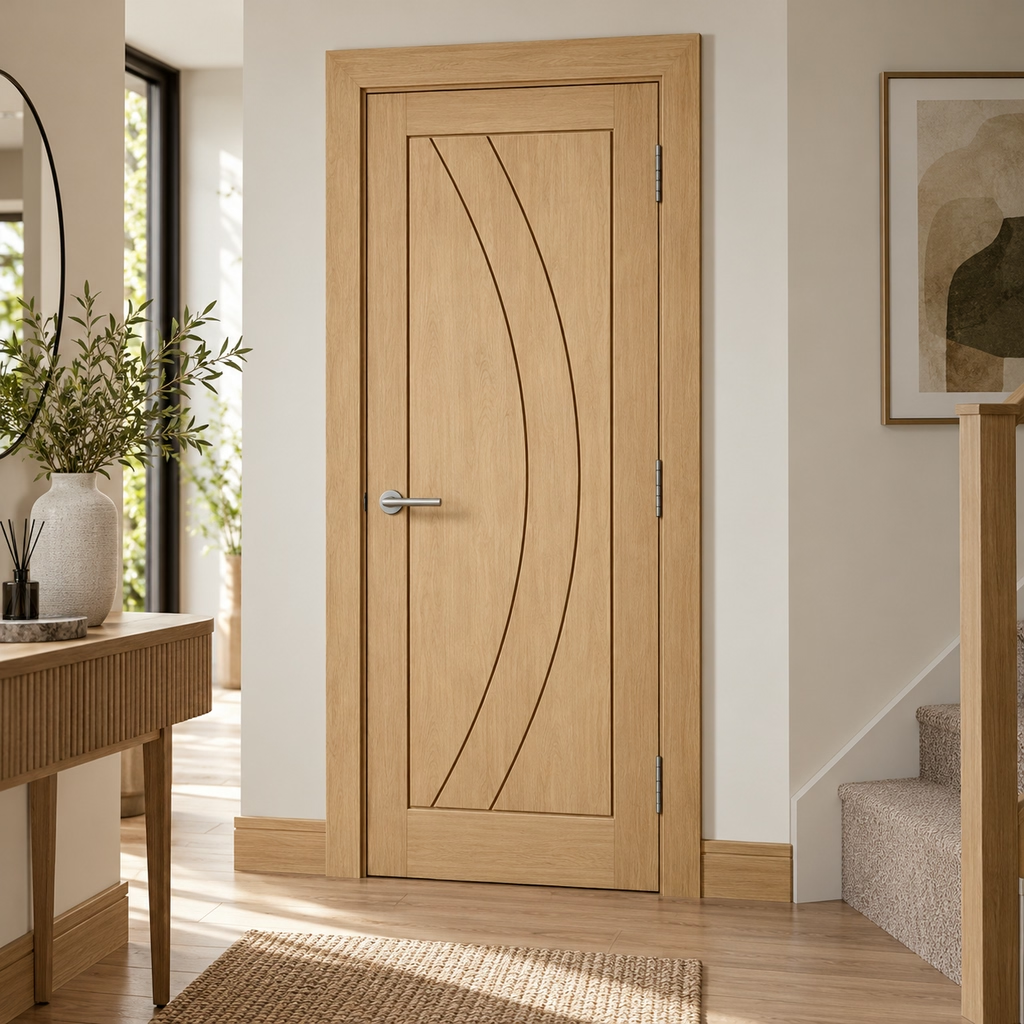
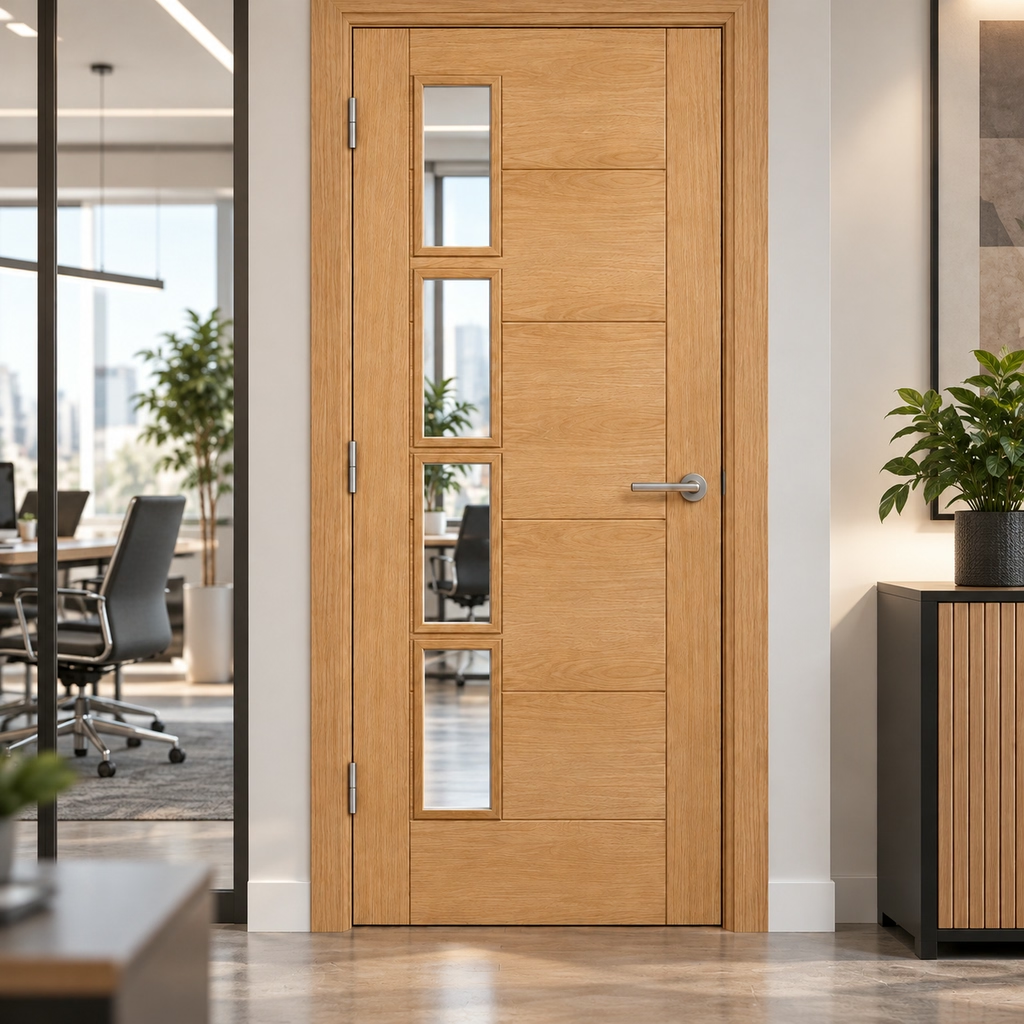
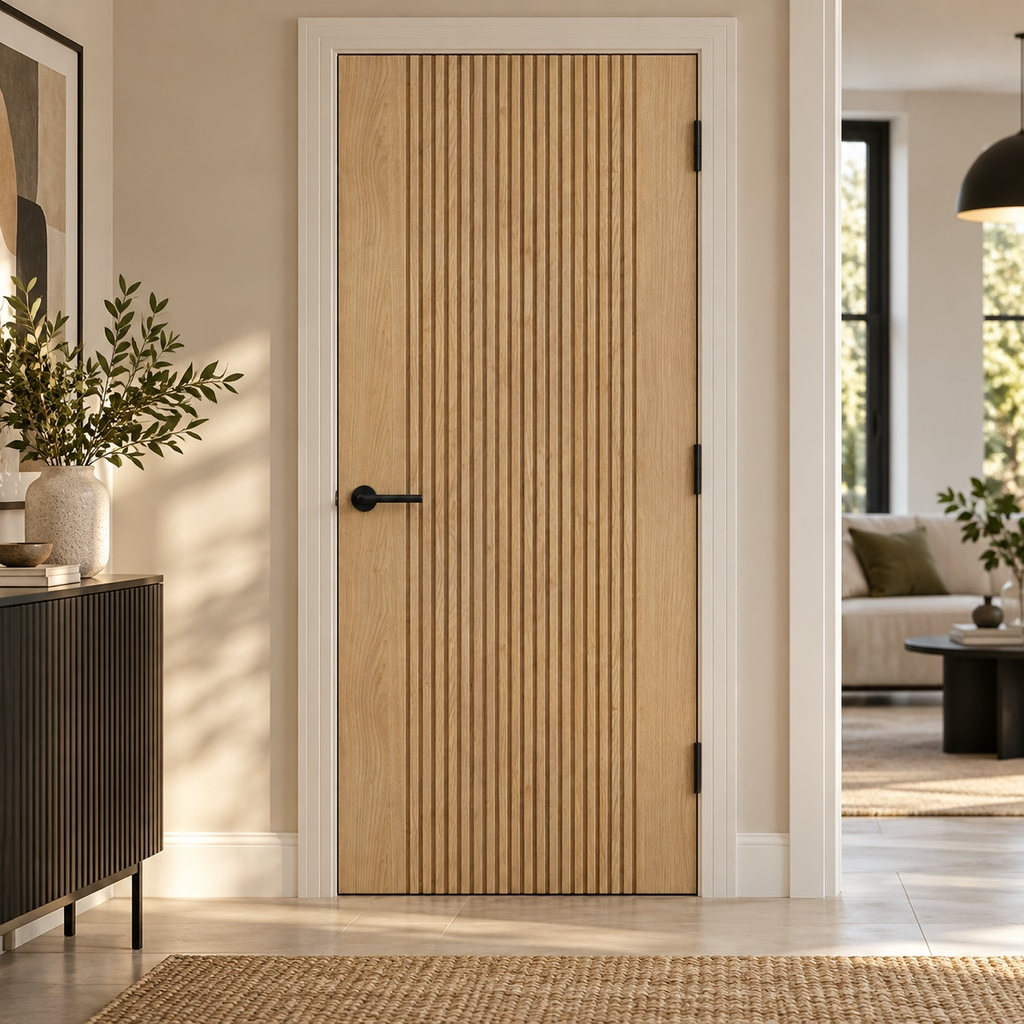
Buying guide
In this guide
Pre-finished fire doors have every visible surface completed at the factory, whether that’s lacquer over a real wood veneer, a laminate face or a factory-finished moulded skin. Nothing needs sanding, staining or drying on site.
That’s the real difference from the doors either side of them. A primed door has a white base coat and still needs painting, and an unfinished door arrives as bare timber. Ready-to-hang fire doors skip both jobs, which is why they suit busy households, landlords turning a property round between tenants and anyone fitting a run of doors in one go.
The colour and sheen are set in the factory rather than by hand, too, so a hallway of fully finished fire doors matches far more closely than a set finished on site.
Pre-finished fire doors still don’t work on their own, though. Like any fire door, each one performs as a doorset, with a suitable frame, intumescent seals, fire-rated hinges and a closer wherever one is required. The certification label stays on the door as well.
Pre-finished fire doors come in five finishes, so start with the colour, then narrow things down by design and glazing. Every door carries a 10-year manufacturer’s guarantee, and the full specification is on each product page.
| Finish | Brands | Designs to start with | Glazed options | FD60 available? |
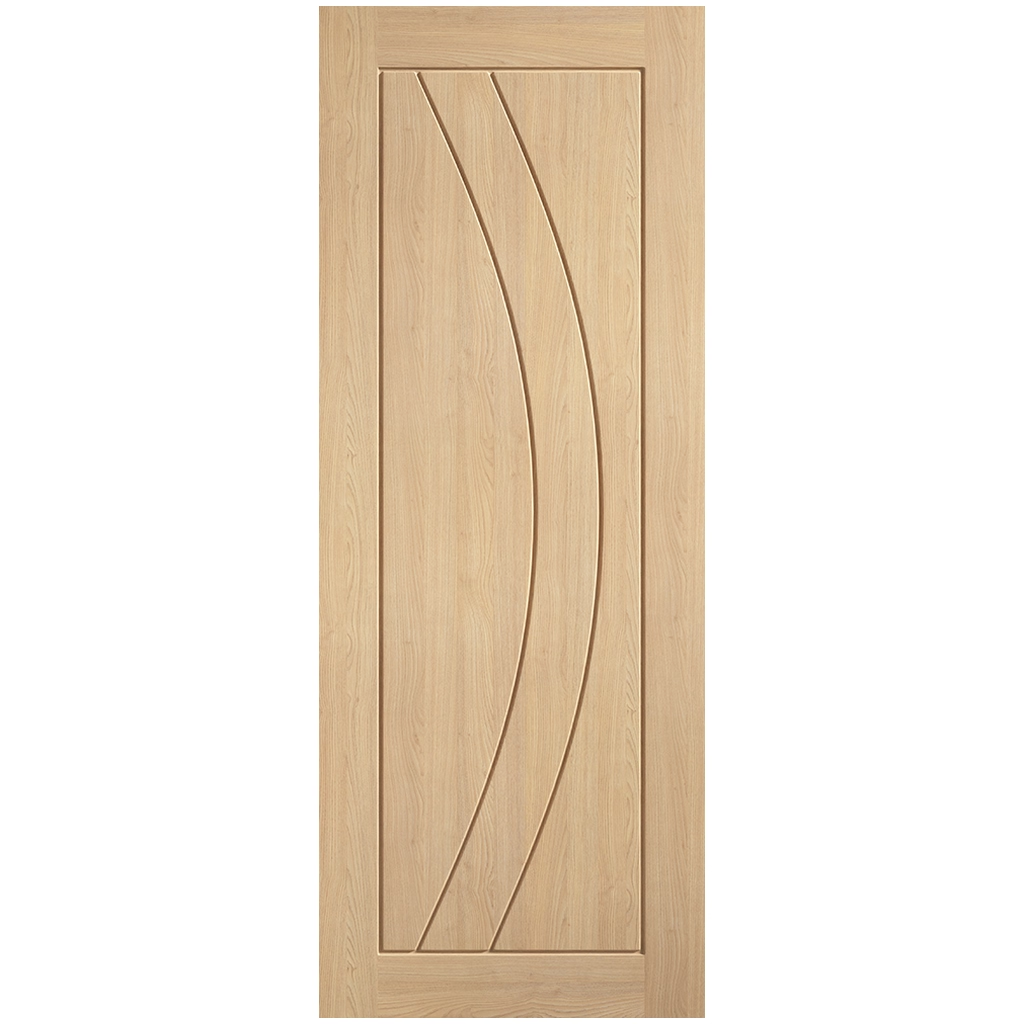
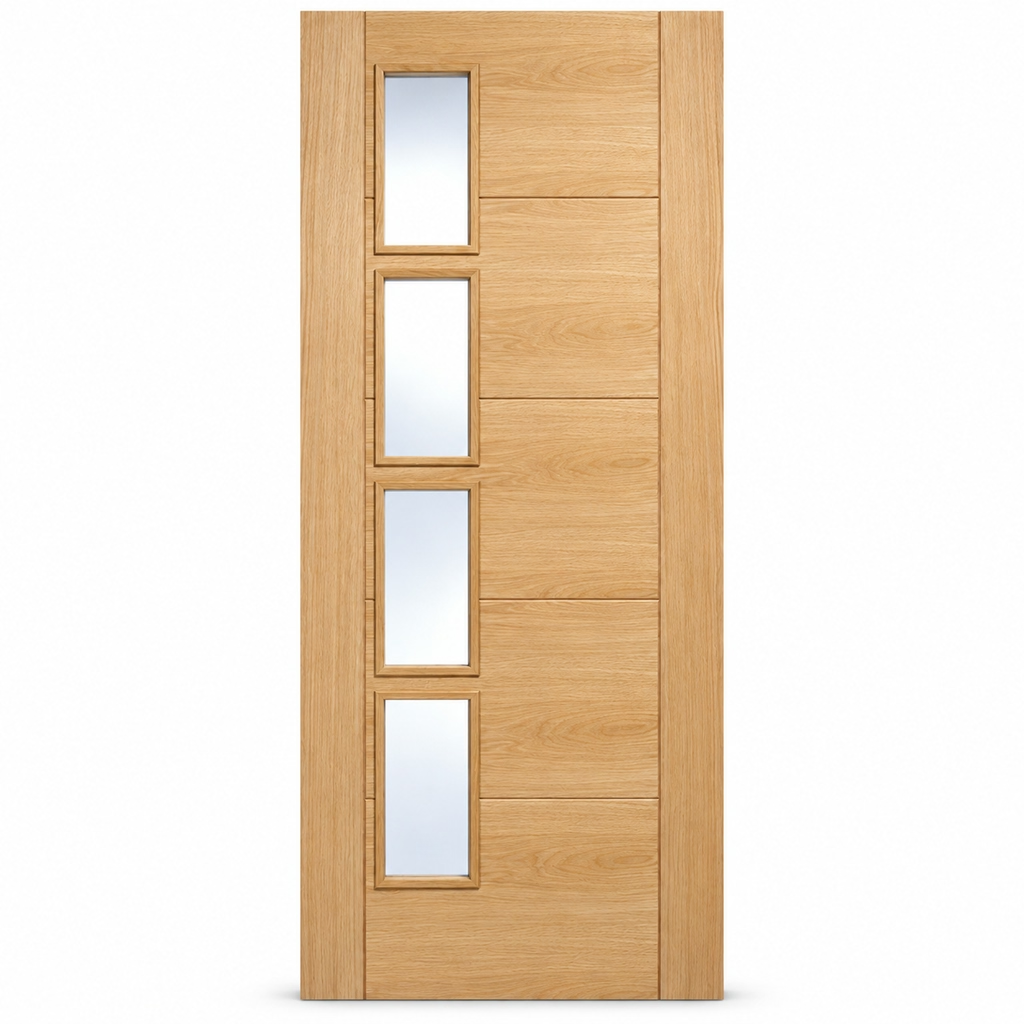
| Oak | Deanta, LPD, Premdor | Seville, Pamplona, Kensington, Vancouver, Mexicano, London | Yes | Yes, 54mm |
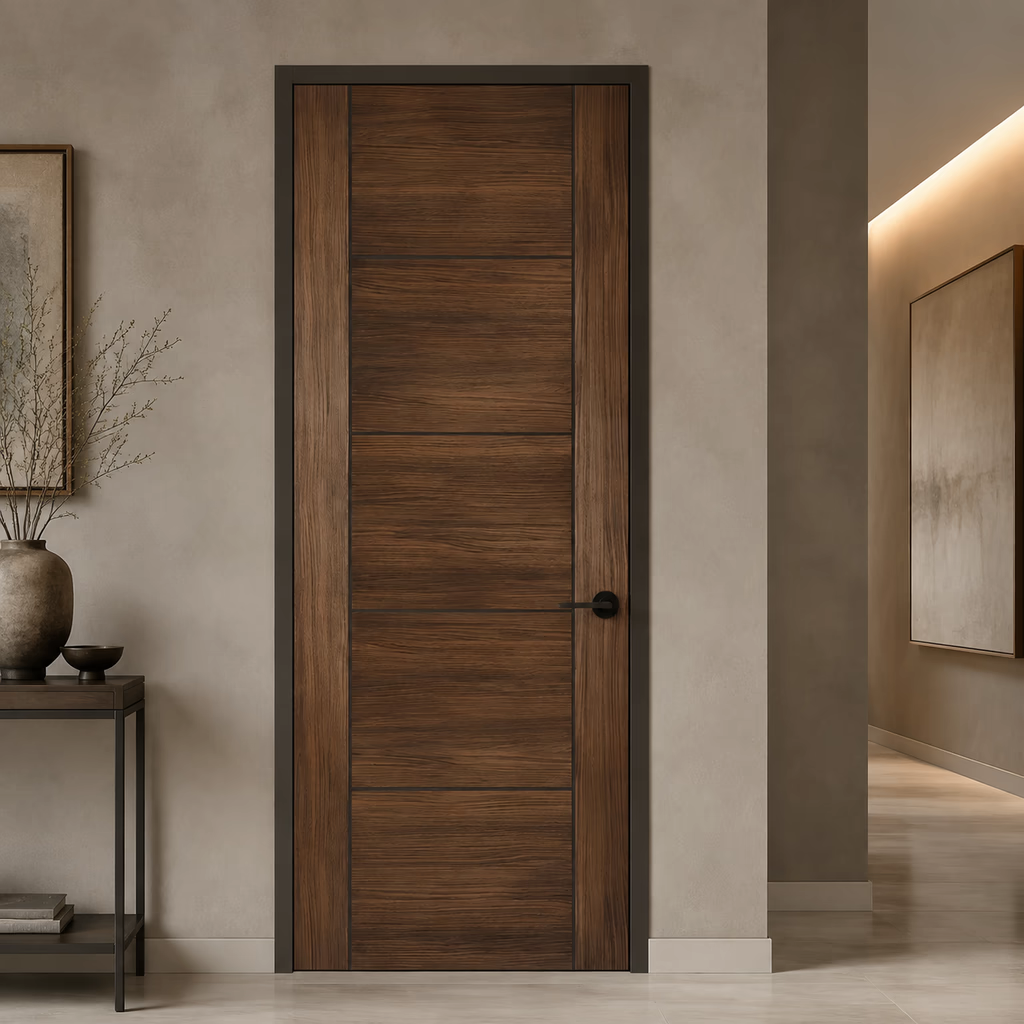
| Walnut | Deanta, LPD, Premdor | Seville, Pamplona, Cadiz, Tres, Vancouver | Yes | No |
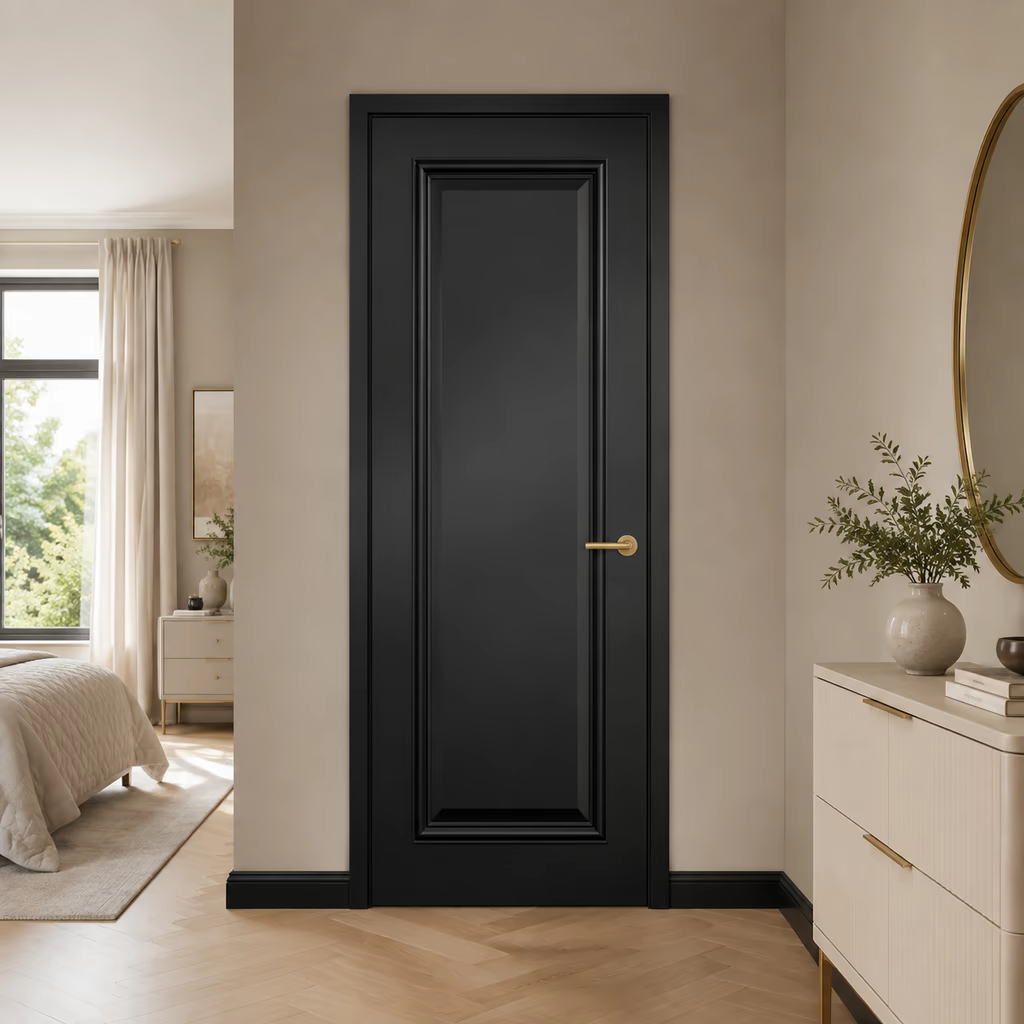
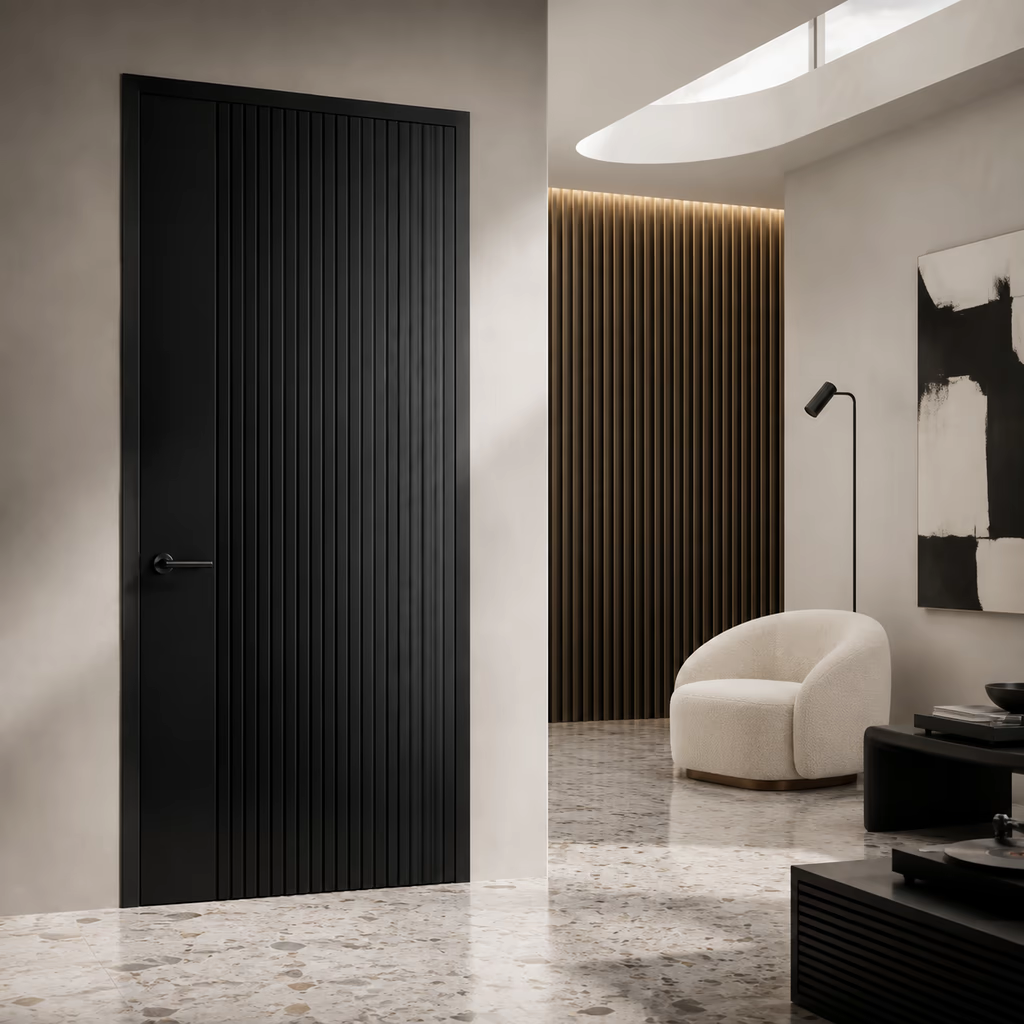
| Black | Deanta, LPD | Clarendon, Sandringham, Windsor, Toledo, Murcia | Yes | No |
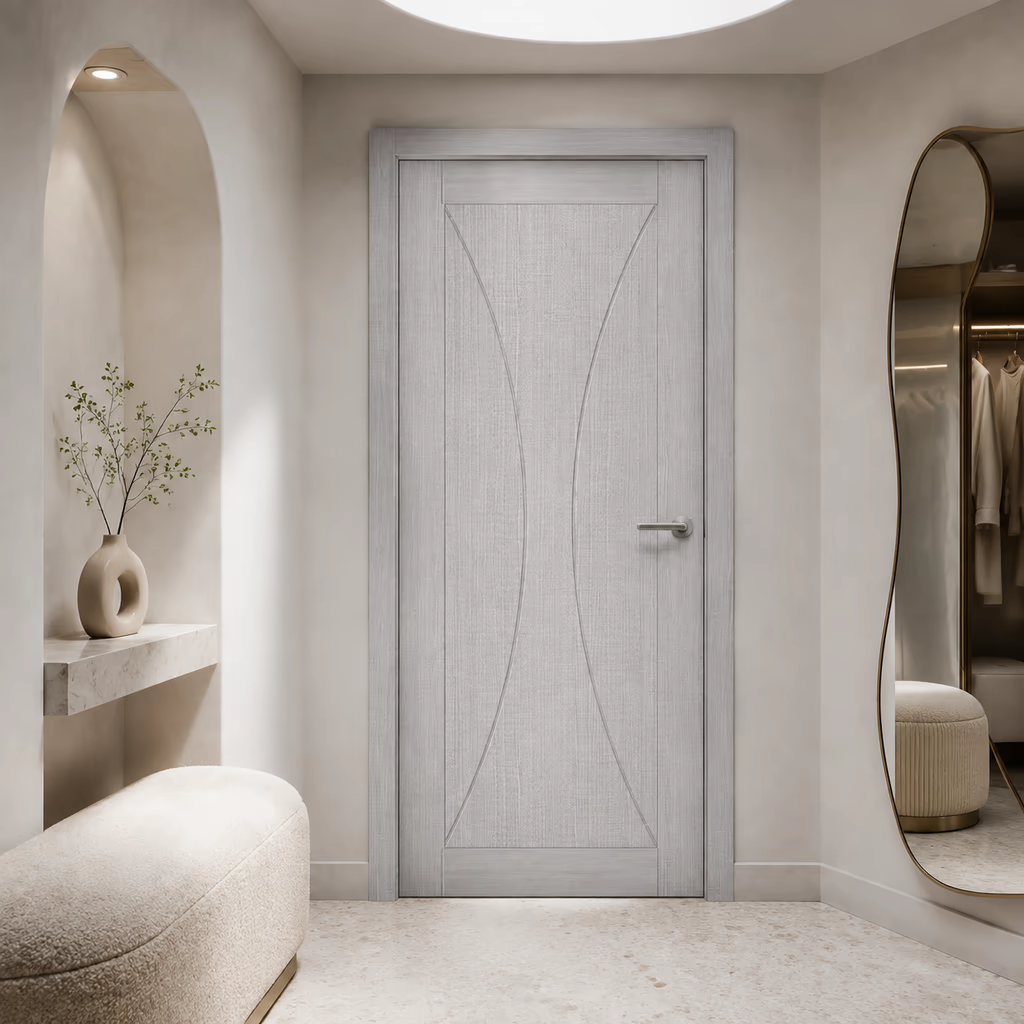
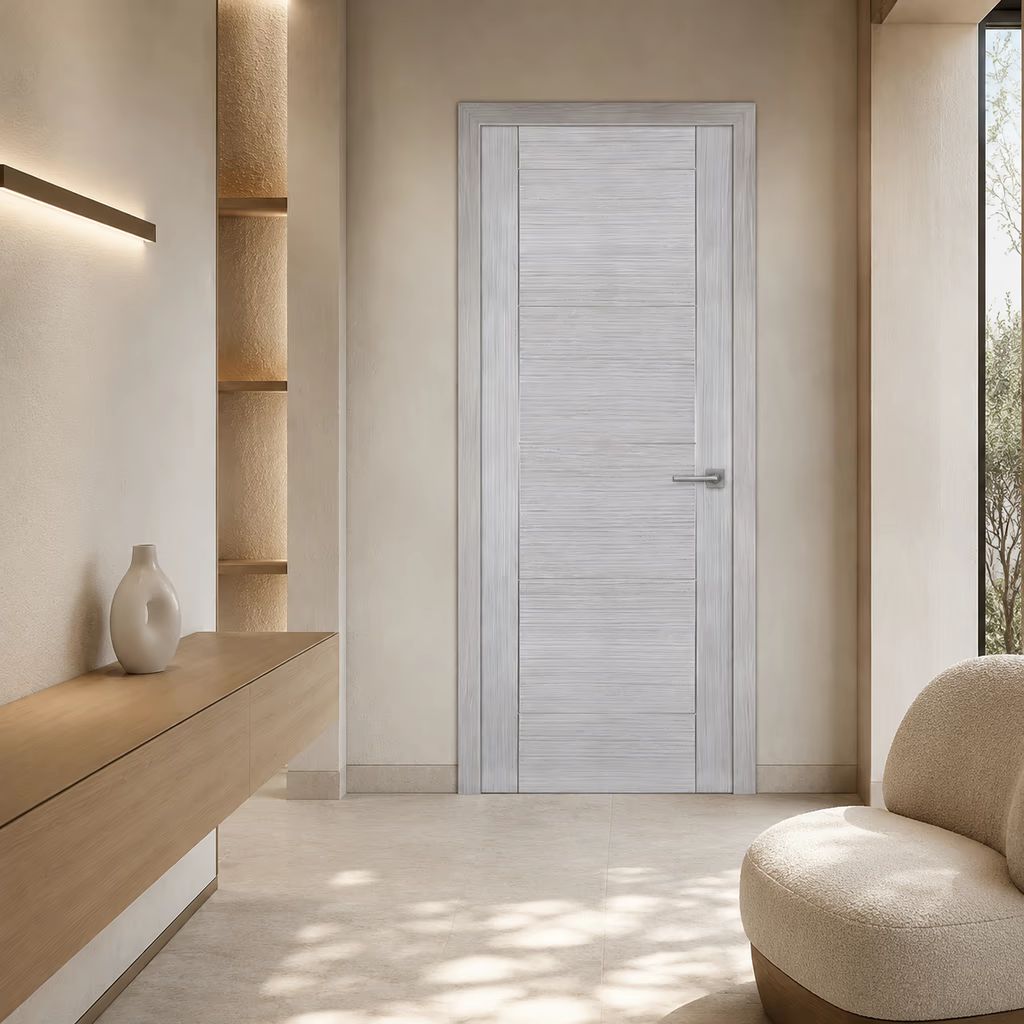
| Grey | Deanta, LPD | Montreal, Torino, Ravello, Belize, Edmonton | Yes | No |
| White | LPD, Premdor | Berlin, Sierra Blanco, Sydney, Rockport | Solid designs | No |
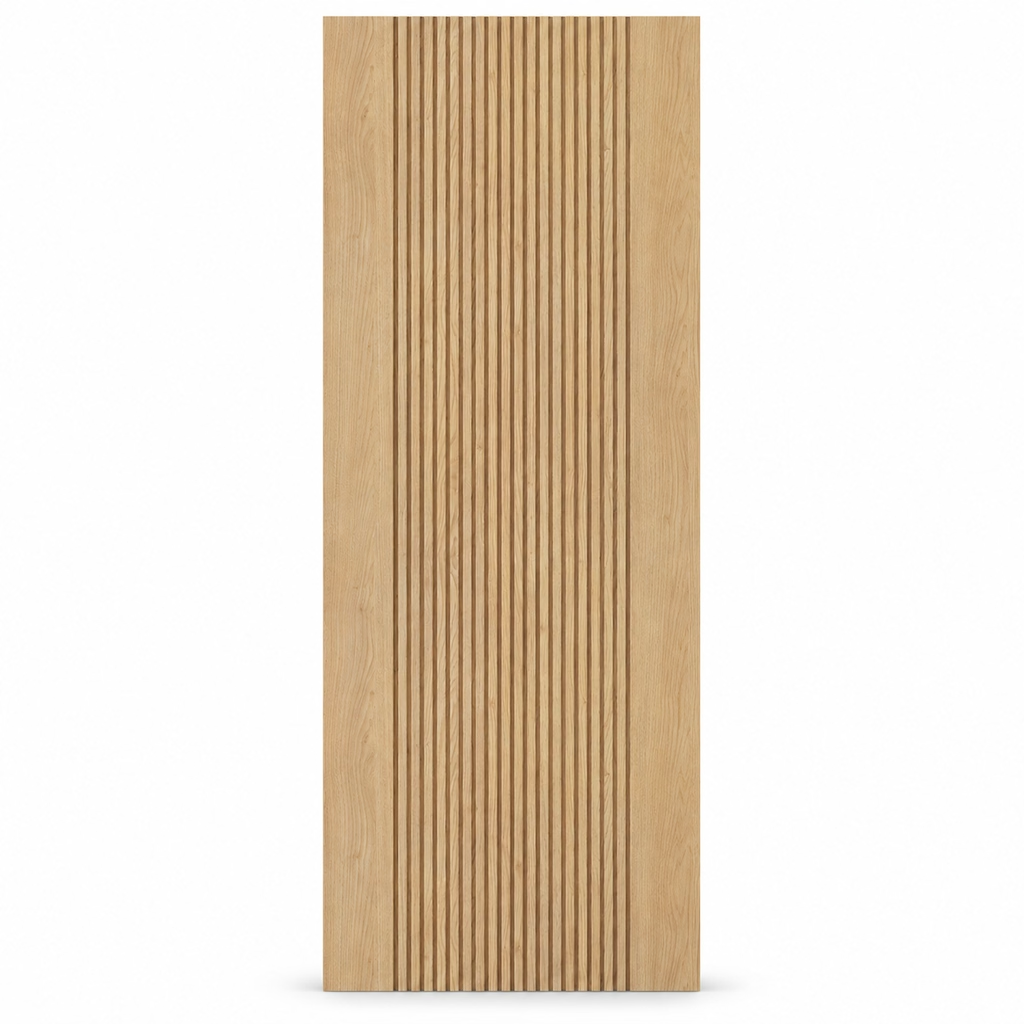
Oak is the largest part of the range. Most prefinished oak fire doors here are real oak veneer, from Deanta designs such as the Seville, Pamplona and Kensington to LPD’s Vancouver, Mexicano and London, alongside Premdor’s oak veneer doors. LPD also makes smoked and blonde oak shades if natural oak feels too warm. You’ll see every design, finished and unfinished, on our oak fire doors page.
Walnut gives you a darker, richer grain. Our prefinished walnut fire doors include the Deanta Seville, Pamplona, Coventry and Cadiz, LPD’s Tres and Vancouver, and a Premdor side-glazed office door.
Black works in contemporary interiors and period homes alike. The prefinished black fire doors range covers Deanta’s Clarendon, Sandringham and Windsor and LPD’s charcoal black Toledo, Murcia and Vancouver, with glazed designs to stop a dark hallway feeling closed in.
Grey runs from pale to almost charcoal. Deanta’s grey doors use ash veneer, so the grain still shows through the colour, while LPD adds light, medium, dark and chocolate grey shades. Glazed designs such as the Torino and Montreal make a prefinished grey fire door work even in a dim hallway.
White is the simplest way to keep a hallway bright. If you’re after fully finished white internal fire doors that need no painting at all, look at LPD’s Berlin, Sierra Blanco and Sydney or Premdor’s 5 Panel Rockport.
Two doors in the same colour can be made quite differently, and the product name usually tells you which one you’re looking at.
Most of our pre-finished fire doors have a solid core, and a few are semi-solid; each product page lists which. Choose veneer if real timber matters to you. Laminate makes more sense when an identical colour on every door matters more, such as in a rental or along a landing with five or six doors.
Most pre-finished internal fire doors in the range are FD30, with a 44mm leaf. Whichever finish you choose, from natural oak to our grey fire doors, a prefinished FD30 fire door covers the typical domestic job, such as the doors onto a protected hallway or landing, although your building control officer or fire risk assessor has the final say.
Among our pre-finished fire doors, FD60 is limited to oak. The Deanta Seville and Ely and the LPD Vancouver and Belize come as FD60 doors with a 54mm leaf, which needs a frame rebated for that thickness and fire-rated hinges suited to the extra weight. There’s no FD60 option in walnut, black, grey or white.
If you need light through a fire door, a prefinished glazed fire door gives you that without any site work, as the glass, beads and seals are fitted and tested as one. Depending on the design, you can choose clear, clear toughened, see-through or frosted-line glass. Never replace or recut the glass yourself.
A factory finish is only an advantage if it survives fitting. These habits keep finished fire doors looking the way they left the factory.
For rooms that don’t need fire protection, our pre-finished internal doors carry the same factory finish through the rest of the house. Ordering for a development or several rentals? A trade account is worth setting up first.
An unfinished door usually costs less to buy, but that’s only part of the bill. Add the finish, sundries and the hours spent sanding, coating and waiting for each coat to dry, and pre-finished fire doors close the gap quickly, particularly if you’re paying a decorator or fitter by the day. Unfinished tends to win only when you’re doing the work yourself or need to match existing timber.
Pre-finished fire doors aren’t made for it. Painting over a factory lacquer means keying the surface first, and laminate needs specialist preparation before paint will hold. If you want a painted finish, start with one of the primed designs on our white fire doors instead, and keep paint off the seals and certification label either way.
Only if the opening calls for it. Trimming limits depend on the door and are set by the manufacturer, so check the fitting instructions before you cut and seal the edge afterwards. Ordering the right size in the first place is always the better option.
Only oak designs: the Deanta Seville and Ely and the LPD Vancouver and Belize, all with a 54mm leaf. Our walnut, black, grey and white pre-finished doors are FD30.
A soft, damp cloth and a little mild soapy water are all most finishes need, and laminate gives you a genuinely wipe-clean surface. Avoid scouring pads, solvents and spray polish, which can dull a factory lacquer, and check the care notes on the product page for anything specific to your door.
No. Laminate is a decorative surface with a printed grain, bonded over the core. If you want real timber, choose a veneer door instead. The product name and page always tell you which face a door has.
 PREMDOR Walnut 2L 16G Side Glazed Pre-Finished Internal FD30 Office Door
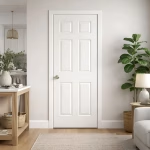 PREMDOR White Textured White Primed 6 Panel Internal FD30 Door
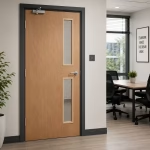 PREMDOR Unfinished Plywood 2L Clear Wired Side Glazed Internal FD30 Office Door
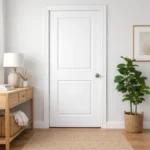 PREMDOR Cambridge White Primed 2 Panel Smooth Internal FD30 Fire Door
PREMDOR Walnut 2L 16G Side Glazed Pre-Finished Internal FD30 Office Door
PREMDOR White Textured White Primed 6 Panel Internal FD30 Door
PREMDOR Unfinished Plywood 2L Clear Wired Side Glazed Internal FD30 Office Door
PREMDOR Cambridge White Primed 2 Panel Smooth Internal FD30 Fire Door
Check your email for the confirmation link, then visit the login page.