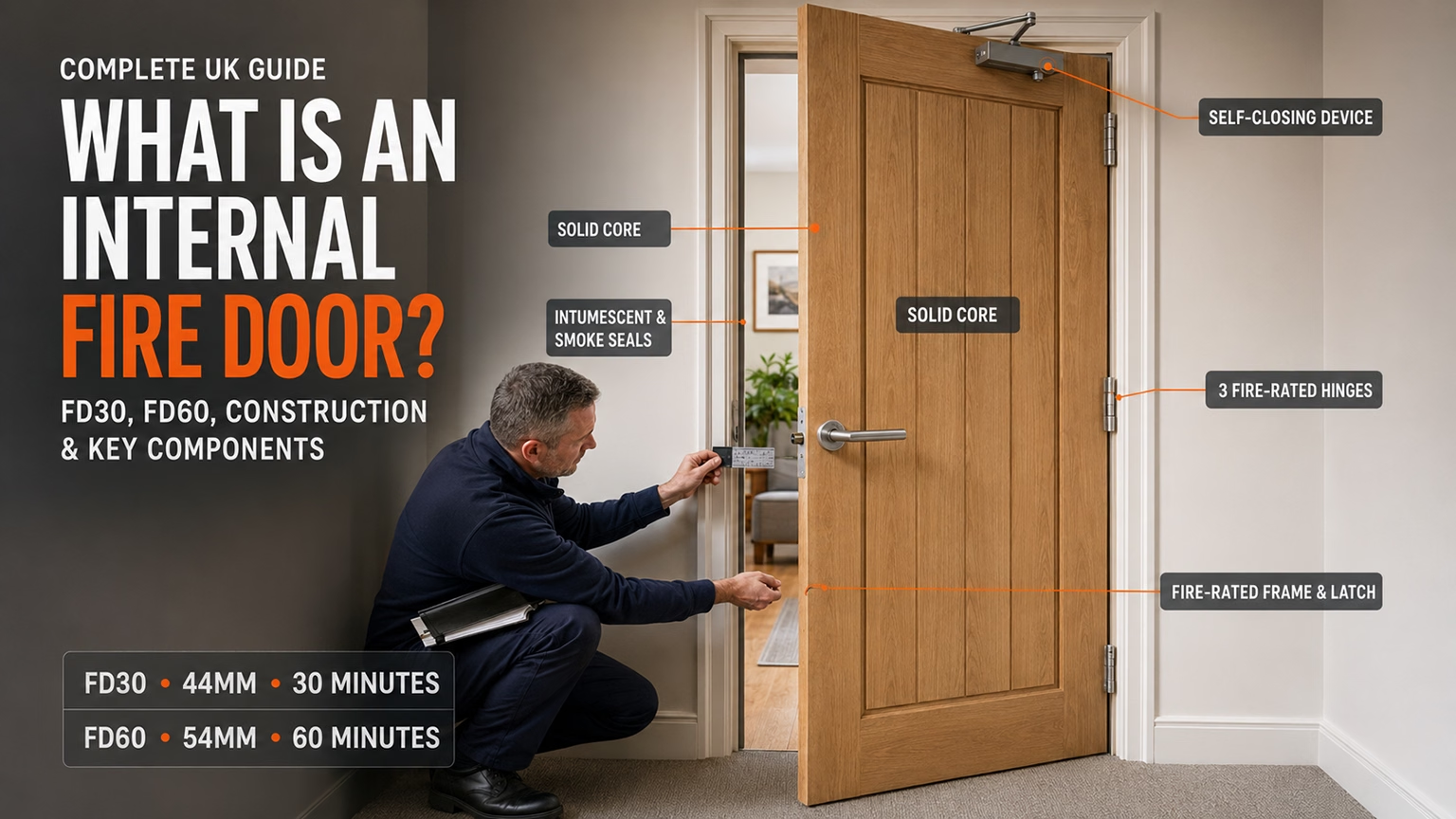
Internal fire doors are critical components of building protection systems designed to prevent the spread of fire and smoke within a structure. These doors resist heat and flames, inhibiting the rapid transmission of fire and smoke to other areas of the building. This resistance provides additional time for the safe evacuation of occupants and for emergency responders to take action.
The primary feature of internal fire doors is their ability to maintain fire resistance for a specified duration, typically 30 to 120 minutes. This resistance is achieved through specialized materials such as solid wood, mineral wool, and expansion joints that protect the door from the passage of fire and smoke when temperatures rise. Additionally, the precise design of the door and its frame ensures that the door closes properly, leaving no gaps that could allow fire to penetrate.
What Is the Purpose of an Internal Fire Door?
Internal fire-rated doors compartmentalize a building, confining fire and smoke to a specific area. This containment allows more time for occupants to evacuate safely and for emergency services to arrive. Moreover, these doors create safe exit pathways designed to withstand high temperatures and prevent smoke infiltration.
Another primary objective of internal fire-rated doors is to support firefighting activities. By restricting fire to a designated area, firefighters can more effectively control and extinguish the flames without worrying about rapid spread to other parts of the building.
Compliance with building safety regulations is also of paramount importance. Many building codes mandate the installation of internal fire doors to ensure occupants’ safety and property protection.
Are internal fire doors a necessity?
Where do you need Fire Doors? Internal fire-rated doors are essential in many types of buildings:
- Multi-Story Residential Buildings: Installing these doors in locations such as stairwells and corridors enhances occupant safety.
- Commercial and Industrial Buildings: These doors prevent the spread of fire and smoke by creating secure compartments, thereby increasing the safety of employees and protecting equipment.
Since fires can escalate rapidly, having internal fire-rated doors as a primary line of defense is crucial. These doors help protect lives and reduce financial losses by mitigating property damage. In summary, internal fire-rated doors are integral to comprehensive fire safety programs. Investing in them signifies a commitment to safeguarding both lives and assets.
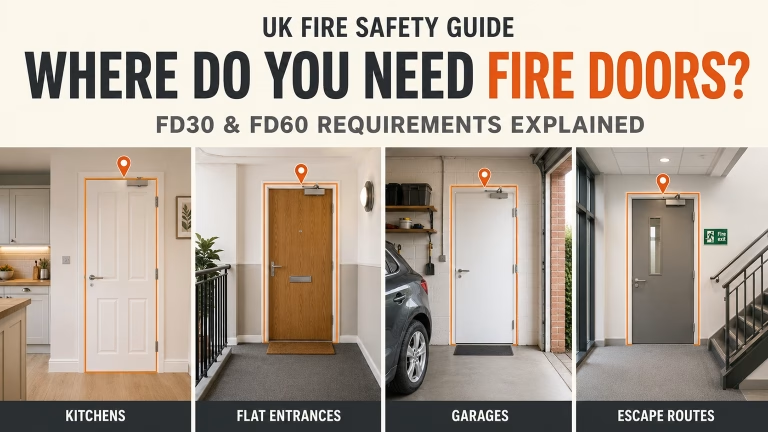
Whether it’s a domestic or a commercial property, in the UK they’re legally required to have fire doors installed. So, if you’re a landlord or…
What Are Internal Fire Doors Made Of?
The materials used in the construction of these doors are selected to ensure high resistance to heat:
- Steel: Due to its high resistance and strength against flames, steel is a common material for internal fire-rated doors and is predominantly used in commercial and industrial environments.
- Wood: Hardwoods such as oak and ash are also utilized to manufacture fire-rated doors. These doors offer suitable fire resistance and add an aesthetically pleasing and warm appearance.
- Gypsum: Gypsum, as a heat-resistant material, is combined with other substances to enhance the door’s resistance at high temperatures.
- Vermiculite Boards: These boards are used in the core of the doors because of their unique properties, effectively maintaining the door’s structural integrity during a fire.
- Fire-Resistant Glass: Some fire-rated doors incorporate special glass that can withstand high temperatures while allowing visibility.
- Aluminum: Aluminum is used in constructing particular fire-rated doors as a lighter option, providing acceptable resistance to fire.
- Mineral Materials and Fillers: Materials such as stone wool and calcium silicate boards are incorporated into the door cores to improve insulation and fire resistance.
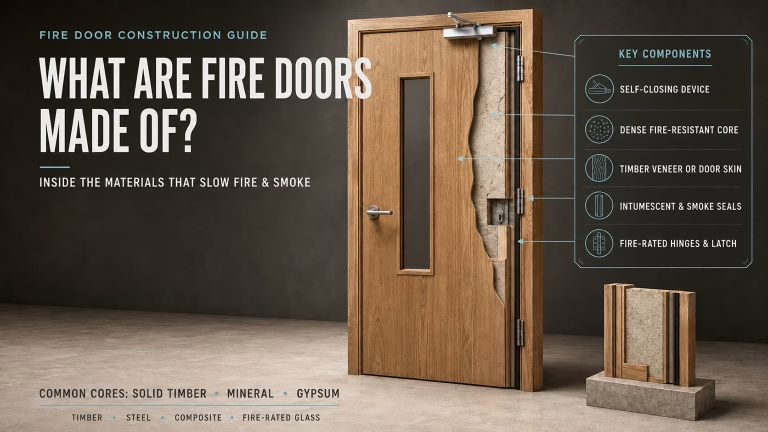
What are fire doors made of? They are built with strong materials like solid wood, gypsum, or steel that can handle high heat. Heat-activated seals…
Hardwares of Internal Fire Doors
The hardware used in internal fire-rated doors plays a crucial role in their proper functioning and must perform reliably under fire conditions:
- Hinges: Special hinges made from materials like stainless steel are used to ensure resistance to high temperatures and maintain their functionality during a fire.
- Locks and Latches: These components must ensure that the door remains fully closed during a fire, preventing the passage of fire and smoke.
- Door Closers: Fire-rated doors are typically equipped with automatic door closers that ensure the door fully closes after being opened.
- Expanding Seals: Installed around the door, these seals expand when exposed to heat, sealing gaps and preventing the passage of smoke and flames.
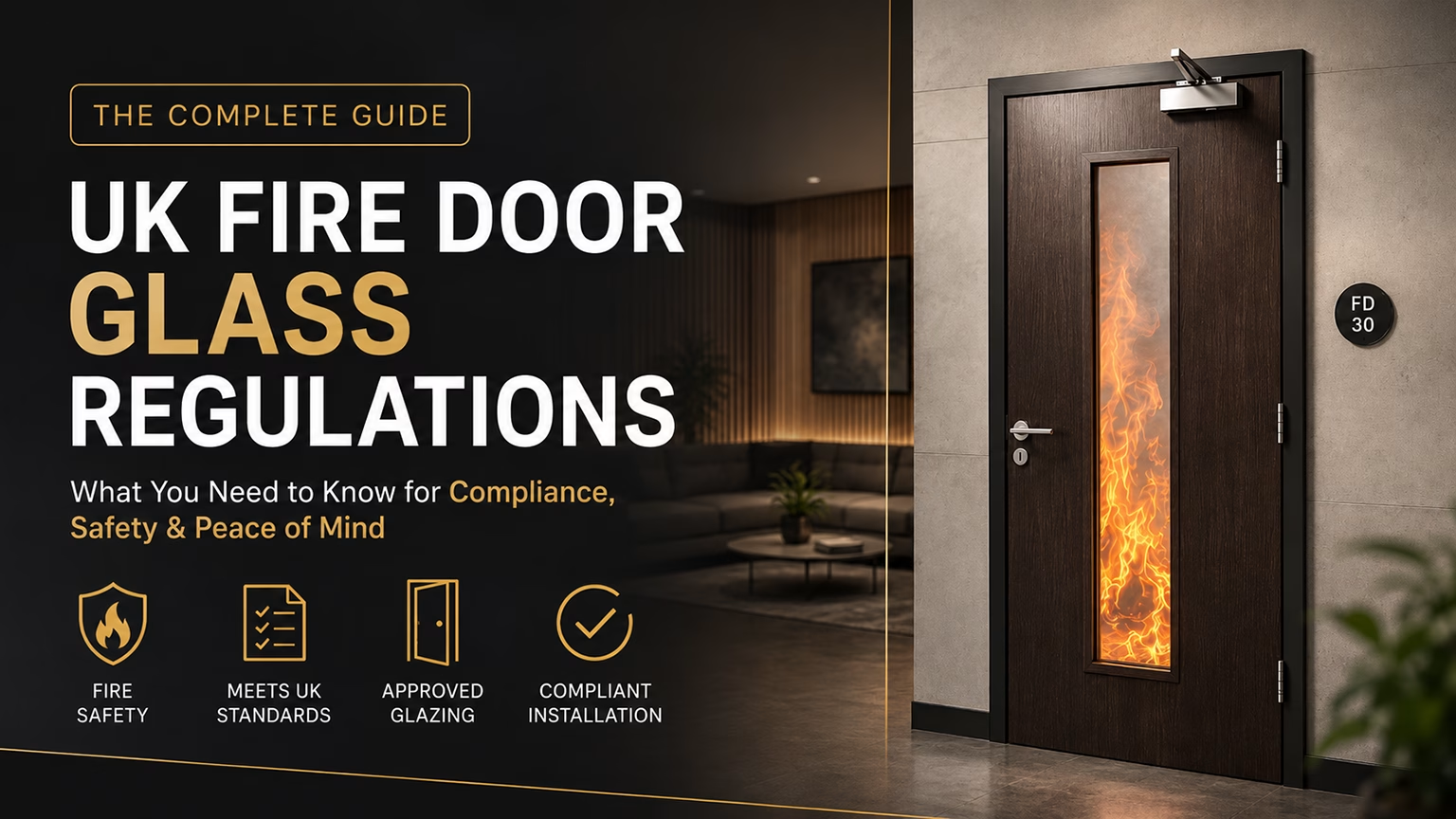
- Glass Panels: Some fire-rated doors feature small windows made from fire-resistant glass, allowing visibility into the area behind the door without compromising safety.
- Thresholds and Weatherstripping: Thresholds and weatherstripping effectively prevent smoke and flames from passing underneath and around the door.
This specialized materials and hardware combination makes internal fire-rated doors essential to building safety.
Types of Internal Fire Doors
Below, we introduce two common types of these doors: FD30 and FD60 internal fire-rated doors.
FD30 Internal Fire Door
FD30 fire doors are capable of resisting fire for a minimum of 30 minutes. The main features of these doors include:
- Thickness: These doors are typically 44 millimeters thick, which is slightly thicker than standard doors.
- Core Material: They are constructed from solid materials such as chipboard, flexboard, or solid wood.
- Components: Includes robust frames, heat-expanding seals (firestops) that expand when exposed to heat to seal gaps between the door and frame, and fire-resistant glass if present.
- Hardware: All components, such as hinges and locks, must be tested and certified to prevent a reduction in fire resistance.
- Standards: These doors must be tested according to recognized standards like BS 476-22:1987 or BS EN 1634-1:2014.
FD60 Internal Fire Door
FD60 fire doors offer excellent resistance, withstanding fire for at least 60 minutes. Features of these doors include:
- Thickness: Typically around 54 millimeters thick, due to additional fire-resistant materials.
- Core Material: They have a solid core made from high-density materials such as compressed chipboard or mineral cores.
- Expanding Seals: Equipped with firestops that expand when exposed to heat, sealing gaps effectively.
- Design and Appearance: Available in various finishes, laminates, and colors, and may include fire-resistant glass.
- Door Frame: Frames must have a specific density, such as a minimum of 640 kilograms per cubic meter for hardwood frames.
- Certifications: Often certified under programs like IFC Certification and BM TRADA Q Mark Fire Schemes.
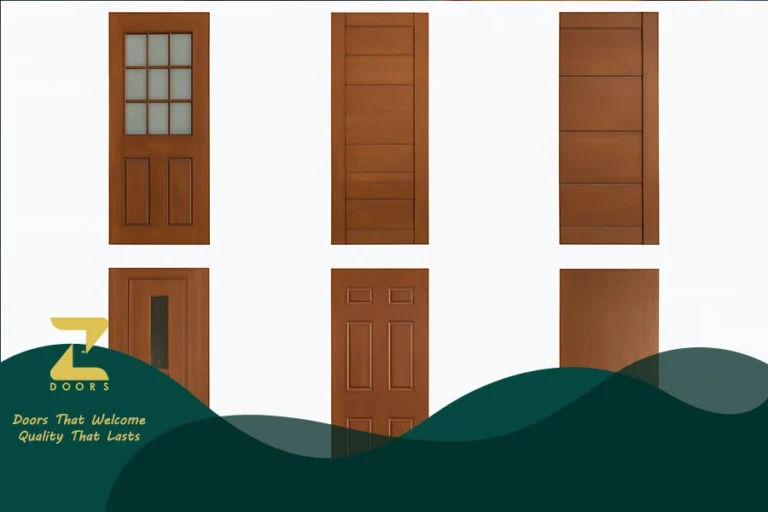
Different types of fire doors are available based on various factors such as their fire resistance (FD30-FD120, higher ratings for higher-risk areas), materials (steel, wood,…
How Thick Are Internal Fire-Resistant Doors?
One of the essential features of these doors is their thickness, which directly impacts their fire resistance level.
Standard Thicknesses of Fire Doors
Typically, internal fire-resistant doors have greater thickness compared to standard doors. This increased thickness is due to the use of heat and fire-resistant materials. Common standards include:
- 30-Minute Fire-Resistant Doors: These doors usually have a thickness of approximately 44 millimeters.
- 60-Minute Fire-Resistant Doors: The thickness of these doors is typically around 54 millimeters.
These measurements are determined based on the required fire resistance and international standards.
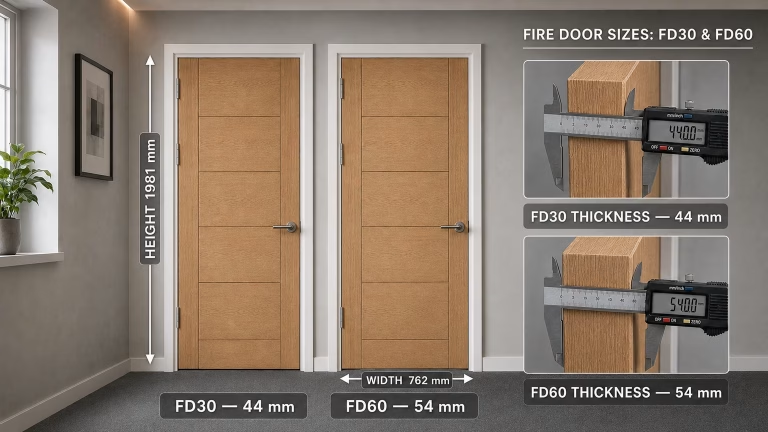
Most internal fire doors in the UK are 1981 x 762mm (2'6") or 1981 x 838mm (2'9"), 44mm thick for FD30 and 54mm for FD60.…
Comparison with Standard Internal Doors
Standard internal doors typically have a thickness ranging from 35 to 40 millimeters. This lesser thickness implies lower fire resistance and cannot provide the same level of protection as fire-resistant doors.
Impact of Regional Standards and Building Codes
The required thickness for fire-resistant doors may vary based on regional laws and regulations:
- United Kingdom: FD30 doors with a 30-minute resistance have a thickness of 44 to 45 millimeters, and FD60 doors with a 60-minute resistance have a thickness of 54 millimeters.
- United States: Doors with up to 90-minute resistance typically have a thickness of approximately 44.5 millimeters (equivalent to 1 and 3/4 inches).
Adhering to these standards when selecting fire-resistant doors is crucial to ensure compliance with local safety regulations.
Relationship Between Thickness and Resistance Rating
The thickness of a fire-resistant door is related to the duration it can withstand fire. Thicker doors typically offer excellent resistance to heat and flames. Therefore, selecting the appropriate thickness should be based on the required level of protection in the building.
Installation of Internal Fire-Resistant Doors
Installing internal fire-resistant doors requires precision and adherence to specific steps to ensure proper functionality and building safety. This section covers installation steps, best practices, and common mistakes.
Steps for Installing Fire Doors
1. Preparation of the Door Site: First, accurately measure the door opening. If an old door exists, remove it along with its hinges and related hardware, preparing the area for installing the new door.
2. Selection of the Appropriate Door: The chosen door must have an appropriate fire rating (such as FD30 or FD60), and all its components and parts must comply with the necessary standards.
3. Installation of the Door Frame: Carefully place the door frame into the opening and secure it using screws or nails. Using shims to adjust the alignment and prevent door misalignment is essential.
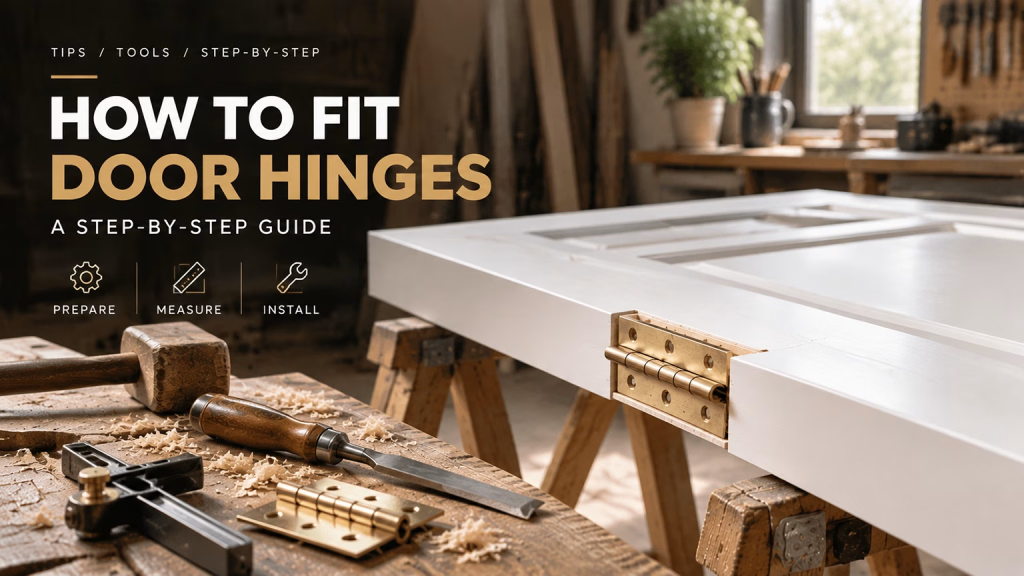
4. Hanging the Door: Hang the door onto the installed frame and ensure it is properly aligned and connected. Verify that the door opens and closes smoothly and locks correctly.
5. Installation of Hardware: Install handles, locks, and automatic closing systems according to the manufacturer’s instructions. Ensure that all hardware is fire-resistant and functions correctly.
6. Final Testing: After installation, check the gaps between the door and frame and test the door’s operation to ensure it closes correctly and that there are no issues with opening and closing.
Common Mistakes in Installing Fire-Resistant Doors
- Incorrect Adjustment of Gaps Between Door and Frame: Improper gaps can reduce the door’s effectiveness and jeopardize building safety.
- Improper Installation of Hardware: Incorrect installation of handles and locks can lead to better door performance and save critical time during emergencies.
- Use of Unauthorized Components: Using uncertified or non-standard parts can reduce the effectiveness of fire-resistant doors and result in non-compliance with safety regulations.
- Incorrect Cutting of the Opening: Improper cutting of the door opening can compromise the door’s resistance properties and endanger building safety.
Regulations for Internal Fire Doors
Regulations about internal fire-resistant doors vary across different regions. Still, they all aim to prevent fires from spreading and protect individuals during a fire. Below is an overview of some essential standards and regulations in various regions:
England:
• Fire Safety Regulations Amendment Order 2005: This law stipulates that fire-resistant doors must be managed by a “responsible person” to ensure full compliance with safety measures.
• BS 476 and BS EN 1634 Standards: These standards are used to test the fire resistance of fire-resistant doors and align them with European criteria.
• Fire Safety Regulations 2022: These regulations require regular inspections of fire-resistant doors, especially in buildings taller than 11 meters.
• Building Regulations Approval Document B: This document specifies the requirements for installing fire-resistant doors in new and renovated buildings.
United States of America:
• NFPA 80: These guidelines include instructions for installing and maintaining fire-resistant doors and requirements for their regular inspection.
• NFPA 101 (Life Safety Code): This code requires specific fire-resistant doors to be inspected and tested annually.
• UL Certification: Many fire-resistant doors and components require UL certification to ensure they meet safety standards.
European Union:
• EN 1634: This standard tests fire-resistant doors for their resistance to fire and smoke control.
• CE Marking: The hardware of fire-resistant doors must bear the CE mark, indicating their compliance with European Union standards.
• British Standards (BS EN): The UK continues to follow European standards such as BS EN 1634 for testing and certifying fire-resistant doors.
Adherence to these regulations is crucial to ensure the safety of the building and its occupants. When purchasing a fire-resistant door, ensure that the selected product complies with your region’s standards and is certified by reputable authorities.
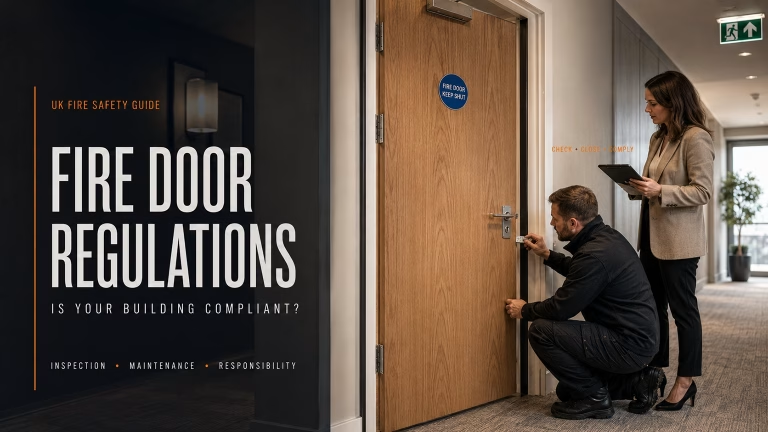
To protect all buildings from fire and enhance fire prevention, the UK fire door regulations were updated in 2025. Flat entrance doors must have at…
Maintenance and Care of Fire Doors
Periodic inspections help identify potential defects or damages to ensure fire doors perform well during emergencies.
✅ Inspection Intervals: It is recommended that fire doors be inspected every six months. In some countries, such as the United States, there are specific standards requiring an annual inspection.
✅ Key Areas to Inspect: During an inspection, attention should be given to various parts of the door. These include the door frame, mechanical components, door panel, seals, glass, the gap between the door and the frame, self-closing mechanism, and any relevant signs. Each of these components plays a crucial role in the functionality of the door and should be thoroughly examined.
✅ Maintenance and Repair Methods: Regular checks for damage or wear are essential. If any functional defects are found, immediate repairs should be carried out. It is also necessary to keep accurate records of all maintenance activities, which help in better tracking and adherence to standards.
✅ Compliance with Standards: Building owners and facility managers ensure fire doors are inspected and maintained according to the relevant standards. Adhering to these requirements not only provides the safety of the building but also holds legal significance.
By following these guidelines, you can ensure the proper functioning of your internal fire doors and maintain optimal protection in case of emergency.

Have you ever considered the safety of your home or workplace against fire hazards? Since fire risk always exists and can occur at times, purchasing…
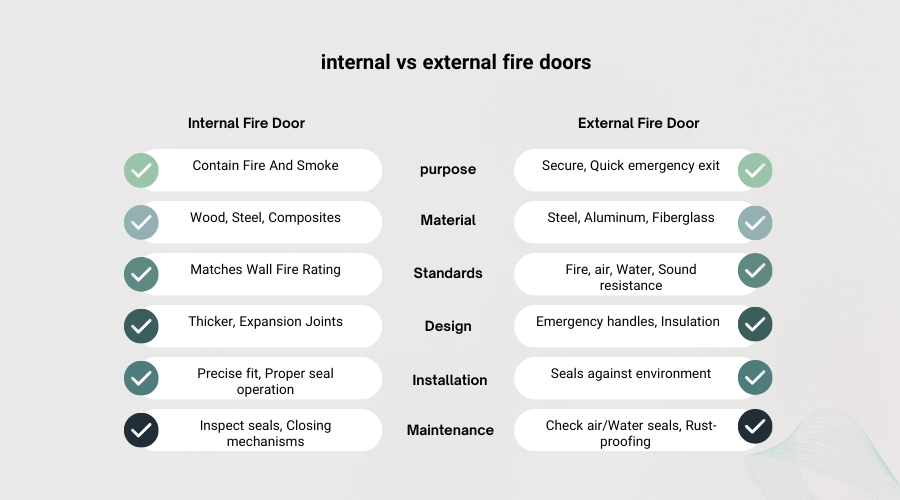
Are There Differences Between Internal and External Fire Doors?
Both internal and external fire doors are designed to enhance building safety but have different features and applications. Internal fire doors are primarily used to contain fire and smoke within specific sections of the building and protect exit routes. These doors are made from wood, steel, and composite materials and must match the wall’s fire resistance rating.
On the other hand, external fire doors serve as secure exit routes in emergencies and must have high resistance to environmental factors. These doors are typically made from steel, aluminum, or fiberglass and, in addition to fire resistance, they must meet criteria for resistance to air, water, and sound. Understanding the differences between these two types of doors helps in selecting and installing them properly to maximize the safety of the building.
| Features | Internal Fire Doors | External Fire Doors |
| Purpose and Function | Containing fire and smoke in specific sections of the building | Providing a secure and quick exit route in emergencies |
| Materials | Wood, steel, fire-resistant composite core materials | Steel, aluminum, fiberglass, weather-resistant composite materials |
| Standards and Regulations | Fire resistance rating matching the wall, self-closing and self-locking | Standards for fire, air, water, and sound resistance, CE marking |
| Design Features | Greater thickness, expansion joints, fire-resistant windows | Emergency handles, air and water insulation, special security locks |
| Installation | Precise fit with the frame, proper operation of seals and mechanisms | Sealing against environmental factors, emergency and security mechanisms |
| Maintenance | Regular inspection of seals and closing mechanisms | Inspection of air and water seals, rust-proofing metal components, checking security features |
Conclusion
Internal fire doors are vital to building safety, increasing the evacuation time for occupants by resisting fire and preventing the spread of smoke. These doors are made from steel, hardwood, and gypsum and are available in FD30 and FD60, with 30 and 60 minutes of fire resistance, respectively. Proper installation, the use of standard fittings, and regular maintenance are essential for optimal performance. There are differences between internal and external fire doors that must be considered during selection and installation. Compliance with local safety regulations is also of paramount importance.
FAQ
1) Do internal doors need to be fire doors?
Yes, internal doors often need to be fire doors to ensure the safety of the building. These doors help contain the spread of fire and smoke, segregating different areas of the building and protecting exit routes. Using internal fire doors provides additional time for the safe evacuation of occupants and prevents the spread of fire.
2) What is the standard size of an internal fire door?
Standard internal fire doors are typically 44mm thick. Common sizes in the UK are 1981mm x 762mm x 44mm (2 feet 6 inches) and 1981mm x 838mm x 44mm (2 feet 9 inches). In Europe and Scotland, the metric sizes include a height of 2040mm with varying widths such as 526mm, 626mm, and 726mm.
3) Where should fire doors be installed?
Fire doors should be installed in strategic locations. These include stairwells, elevator shafts, corridors, high-risk areas such as storage rooms, and critical locations. Installing fire doors at building entrances, exits, and between different usage areas helps prevent the spread of fire and ensures safe evacuation routes are maintained.
4) Do I need internal fire doors?
Whether internal fire doors are required depends on building regulations and the safety needs of the structure. These doors are essential for protecting exit routes, preventing the spread of fire and smoke, and complying with safety standards. Installing internal fire doors is recommended if your building is subject to safety regulations or requires enhanced protection.