In order to keep people safe in business and residential buildings, fire doors are crucial. They are designed to prevent smoke and flames from spreading rapidly, allowing firefighters to put out the fire and allow everyone to evacuate safely. Fire doors are constructed differently from regular doors and require extensive testing to determine their resistance to heat and fire. Their fire-resistance rating, which indicates how long they can resist fire, is derived from this. So, let’s have a look at the different types of fire doors in UK that you can get.
What are the different types of fire doors?
We’ll examine the different types of fire doors available, categorising them according to factors like how long they resist fire, what they’re made of, how they look, and whether they’re single or double doors. We can have a clear understanding of how each type of fire door is made to adhere to safety regulations by examining these various elements. In this way, you can choose the right door for various buildings and ensure that it will function correctly in the event of a fire.
| Category | Type | Description |
| Fire Resistance Rating | FD30 | 30-minute resistance, common for general use. |
| FD60 | 60-minute resistance, used for higher protection. | |
| FD90 | 90-minute resistance, for higher-risk areas. | |
| FD120 | 120-minute resistance, where maximum protection needed. | |
| Material | Steel | Strong, fire-resistant, low maintenance, ideal for warehouses/factories. |
| Wooden | Customisable, aesthetic look, good insulation. | |
| Glass | Allows natural light, fire-resistant glass, more expensive. | |
| Glass Type | Wire Mesh | Strong, but less attractive. |
| Ceramic | Stronger than wire mesh, more expensive. | |
| Borosilicate | Lightweight, handles high temperatures, expensive. | |
| Finish Type | Pre-Finished | Ready to install, smooth finish, low maintenance. |
| Unfinished | Customisable, lower cost, requires DIY effort. | |
| Primed | Base coat applied, quick preparation, needs painting. | |
| Style | Single | One-panel, swings one way, ideal for smaller rooms. |
| Double | Two panels, wide access, suitable for larger areas. |
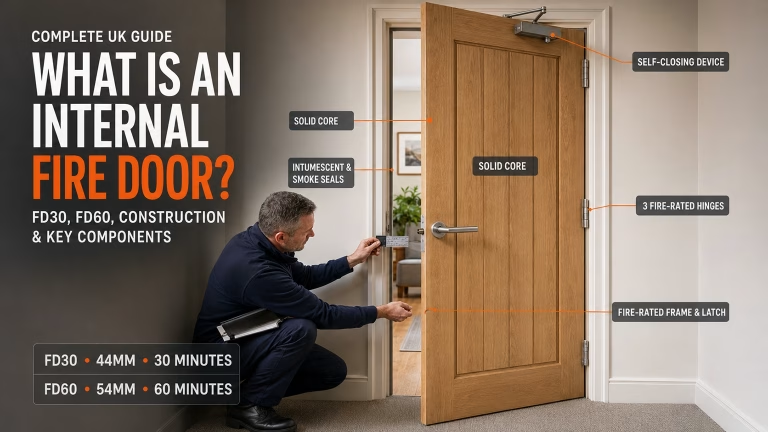
Internal fire doors are critical components of building protection systems designed to prevent the spread of fire and smoke within a structure.
Based on fire resistance rating
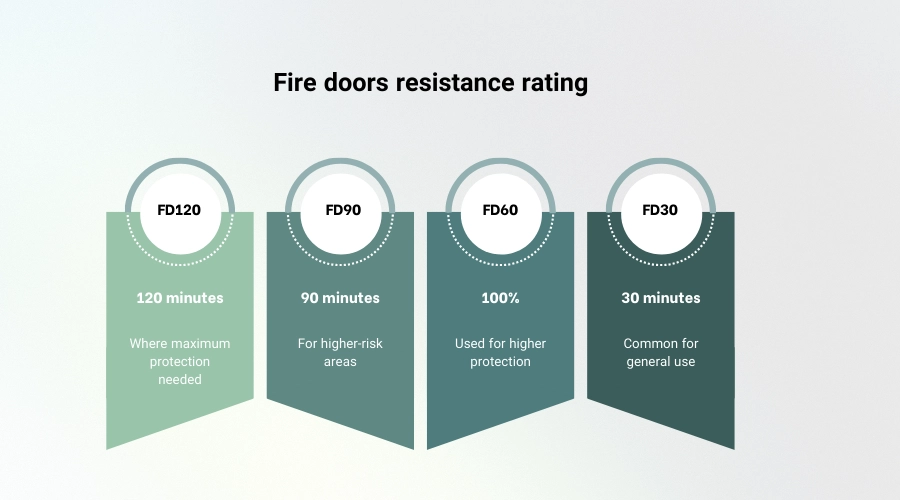
The primary distinction between fire doors is their fire resistance duration, even though they may have similar appearances and adhere to the same fundamental safety regulations. A door’s resistance to heat and fire is categorised using the FD rating system. The safety manager of the building is responsible for selecting the appropriate fire door for each location according to the regulations. The two most common FD ratings are:
- FD30: These doors resist fire for at least 30 minutes and are a common choice for most areas.
- FD60: Fire door FD60 gives you up to 60 minutes of fire resistance and is usually used where you need more protection or to separate areas.
The other two types of fire doors are less popular and are used in
- FD90: These doors can withstand fire for up to 90 minutes and are for higher-risk areas.
- FD120: These provide the maximum protection, resisting fire for up to 120 minutes, and are used where it’s absolutely essential.
The most popular fire door grade is FD30 and is frequently used for general use. Higher rated doors, such as FD60, are typically used to divide buildings or zones with varying fire dangers. To ensure that a structure is fully secured and safe, you need to choose the appropriate fire door rating.
Based on materials
Fire doors are made with different materials each of them has advantages over the others in terms of fire resistance, longevity, and appearance. Here are the most widely used materials of fire doors:
Wooden Fire Doors:
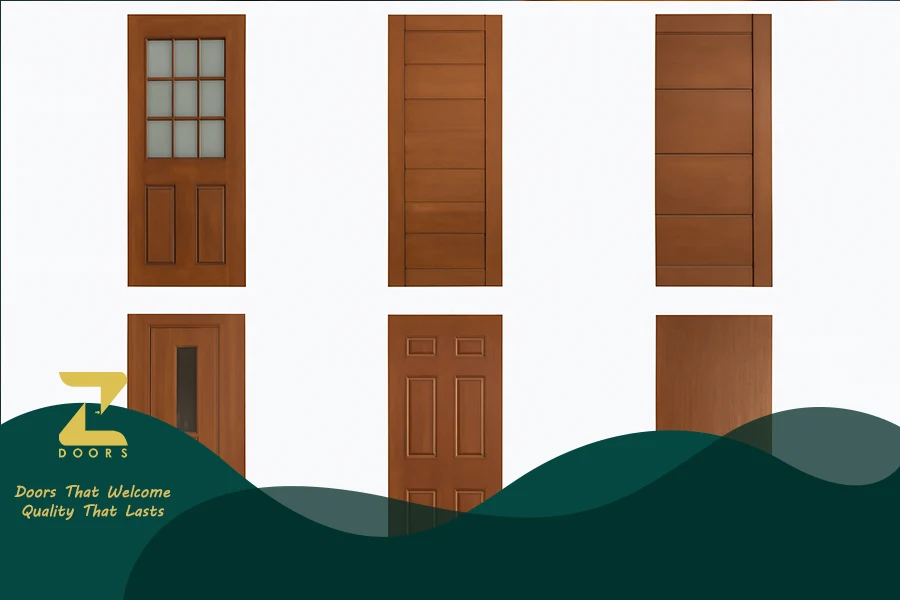
Common in homes, workplaces, and retailers, wooden fire doors are often constructed from solid wood or composite materials. They can be finished in many ways to blend in with the interior decor. Glass panels and fire-resistant seals can be added to wooden fire doors to increase their fire-fighting capabilities.
- Advantages: They are easy to install and modify, have a wide variety of designs, and are effective in insulating against heat and sound.
- Disadvantages: They can warp or become damaged over time, require routine maintenance to remain fire-resistant, and are less resilient in crowded areas.
Glass Fire Doors:
Fire-resistant glass panels are the best choice when you need natural light and visibility. These doors are often found in wooden fire doors. They are common in contemporary workplaces, retail establishments, and other locations where natural light is desired and visibility is required. Glass fire doors can be safe and beautiful at the same time.
- Advantages: They increase the brightness and appeal of spaces by letting in natural light.
- Disadvantages: They may not be as effective at insulating against heat or sound as solid doors, require special fire-resistant glass, and are more expensive than steel or wooden doors.
Steel Fire Doors:
Steel doors are well-liked due to their strength and high fire resistance. Steel won’t aid in the spread of a fire because it doesn’t burn. These doors are frequently used in warehouses, factories, and other locations where security is crucial. In addition to having excellent fire ratings, steel doors are less expensive than wooden ones.
- Advantages: They are long-lasting, low maintenance, and very effective at preventing heat, smoke, and fire.
- Disadvantages: They can be more expensive upfront, have fewer style options, and weigh more than wooden doors.
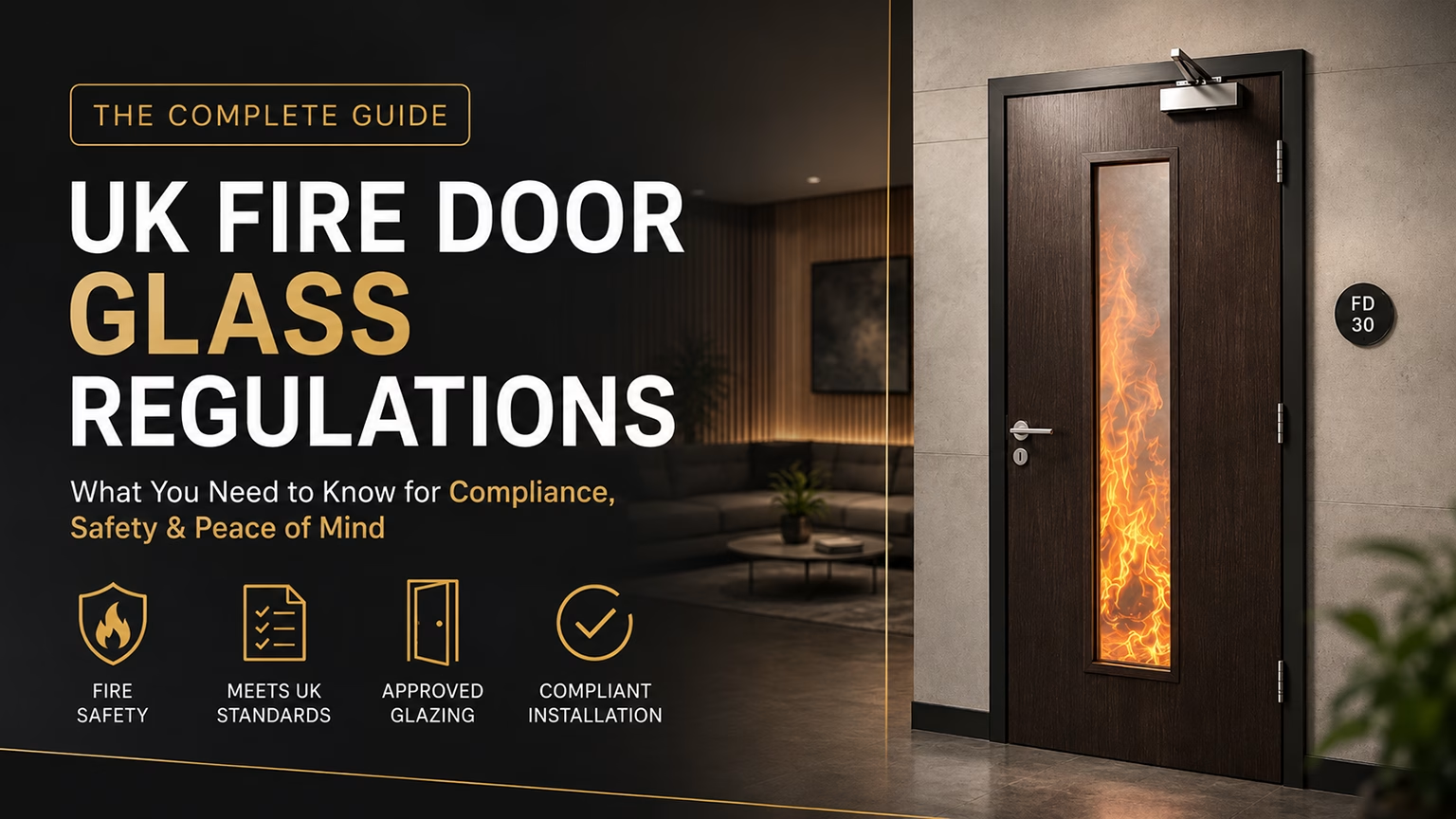
There are 3 kinds of fire glasses:
- Toughened glass: Toughened glass is known for its strength and resistance to shattering into sharp pieces. This is the most common glass used in the door industry.
- Wire Mesh: The oldest type, metal mesh holds broken pieces together. Very fire-resistant but looks less attractive.
- Ceramic: Heat-treated, stronger than normal glass. It’s stronger than wire mesh, but more expensive.
- Borosilicate: Newest and best. Handles high temperatures. Extremely strong, lightweight, resists high heat, but more expensive.
Based on finish type
You can see different types of door finish in this table:
| Finish Type | Definition | Advantages | Disadvantages | When to Choose |
| Pre-Finished | A door that is fully finished in the factory with paint, varnish, or sealant. | Ready to install, Smooth, professional finish, Low maintenance | Limited customisation, Higher cost | If you need a polished look, For high-traffic areas |
| Unfinished | A door with a raw wood surface, ready to be painted, stained, or varnished. | Full customisation, Lower cost | Labour-intensive, Requires DIY skills | If you enjoy DIY, Want a natural wood finish |
| Primed | A door that has a base coat of primer applied, ready for painting. | No need for sanding/priming, Customisable colour | Still needs painting, Requires DIY effort | If you want quick preparation for painting, Budget-friendly |
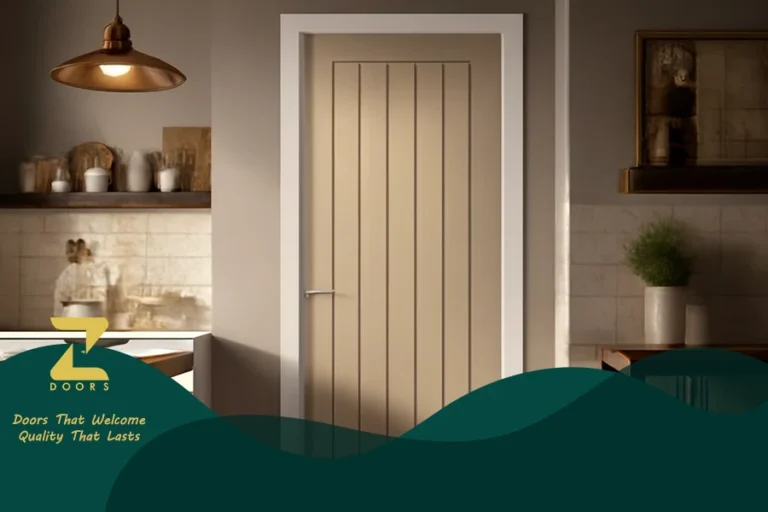
Pre-finished doors are ready to install. They offer a durable, factory-applied finish. They're convenient and professional-looking, but more expensive and less customizable. Unfinished doors are…
Based on style
There are different types of fire doors based on style to suit different building needs. Single, and double fire doors are the main types based on style. Here we explain which one is a better choice for different situations:
- Single Fire Doors: Single fire doors are typical one-panel doors that only swing in one direction. Common in homes and workplaces, they work well in small rooms like hallways and smaller rooms.
- Double Fire Doors: Double doors or French doors open together to create a larger entrance are called double or french fire doors. They are utilised in larger areas that require wide access, such as storage rooms and huge offices, as well as commercial buildings and halls.
What are the different types of fire door closing mechanisms?
Depending on the type of fire door, there are several ways that can be used to cause the door to close. For example:4
- Self-Closing hinges: Self-closing door hinge uses an internal spring that is attached to the door and the door frame to automatically close doors instead of manually closing the door.
- Door Closers: A door closer usually uses spring, hydraulic pressure or sometimes both to close a door after it is opened.
- Fire Door closers: These special fire door closers are connected to the fire alarm system. Opens and closes using power, such as electricity. It becomes self-closing when the power is shut off during a fire. It has a fire safety release and is used heavily and frequently in large business areas.
How are fire doors tested and certified?
To test the fire ratings of fire doors, some serious tests must be done. In simple terms, these doors undergo high heat and flame in a furnace. Then the testers check to make sure whether the door is still capable of preventing the spread of smoke and fire.
Fire doors and all of their components must adhere to extremely strict rules here in the UK. This is crucial for maintaining the security of facilities, especially those such as workplaces and retail stores. Door manufacturers often employ two distinct methods to assess a fire door’s quality: European Standard EN 1634-1 and British Standard 476:22 (BS 476). According to these standards, doors are rated from fire door FD30 to FD240, indicating how long they can withstand a fire.
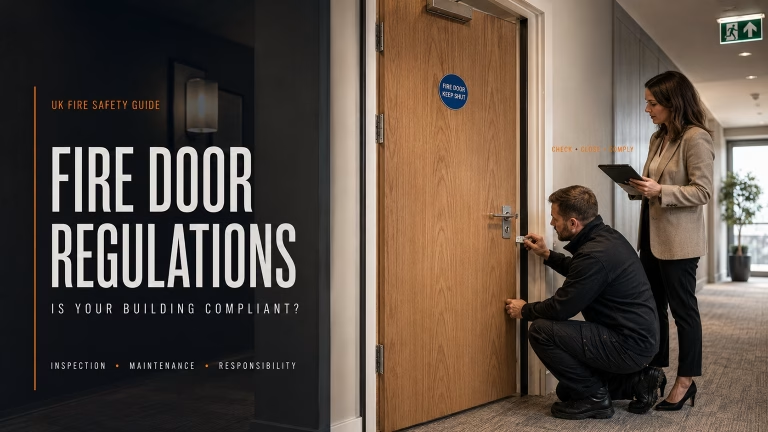
To protect all buildings from fire and enhance fire prevention, the UK fire door regulations were updated in 2025. Flat entrance doors must have at…
Maintenance and Inspections for all types of fire doors
In addition to testing in the factory, fire doors must be tested regularly even after installation. It is not enough to see whether they open and close correctly. You need to ensure they can withstand temperatures of up to 1000 degrees to make sure they can work in a real fire. An annual examination is essential because of this. Accordingly, they must undergo a full, comprehensive test once a year and a fast-functioning test every three months in accordance with EN-14637.
Choosing the Right Fire Door: Key Factors to Consider
As there are different types of external and internal fire doors, it can be hard to choose the best option. To make sure you follow the safety rules and prevent any damage during fire, it’s essential to choose the right fire door. But before choosing, there are some key factors to consider, including:
- Domestic building: It is legally compulsory for residences to have fire doors between flats and shared areas, on escape routes in multi-storey houses (including loft conversions), and between garages and the residence. Think about using them in high-risk areas, such as kitchens or spaces where fires are present.
- Commercial building: The regulations are stricter. All fire safety work must adhere to the proper standards, and you will require someone in charge of fire risk assessments.
- Fire Rating: Because outdated national standards are being phased out, choose “E rated” fire doors to satisfy current standards. Make sure that any statements about fire resistance are supported by the official EN13501-2 classification rather than by earlier findings.
- Lead Times: To lower project risk and provide flexibility in the event of last-minute changes to sizes or finishes, use doorsets with shorter lead times.
- Entrance Doors: In order to meet construction codes, commercial entrance doors need to be PAS24 rated. For sensitive situations, think about using PAS24-rated doors inside as well. The highest level of safety is provided by fire-rated entry doors.
- Internal Doors: For flexible installation, select internal doors with low lead times. Because they can adapt to changes in structural openings, adjustable architraves can further lower project risk.
- Certification: Crucially, ensure your fire doors are certified. Look for standards like BS 476 Part 22 / BS EN 1634 Part 1 (fire resistance testing), a Fire Leaf Rating (e.g., FD30, FD60, FD90 – indicating fire resistance duration), and third-party certification (e.g., BWF Fire Door Alliance, confirming quality and compliance).
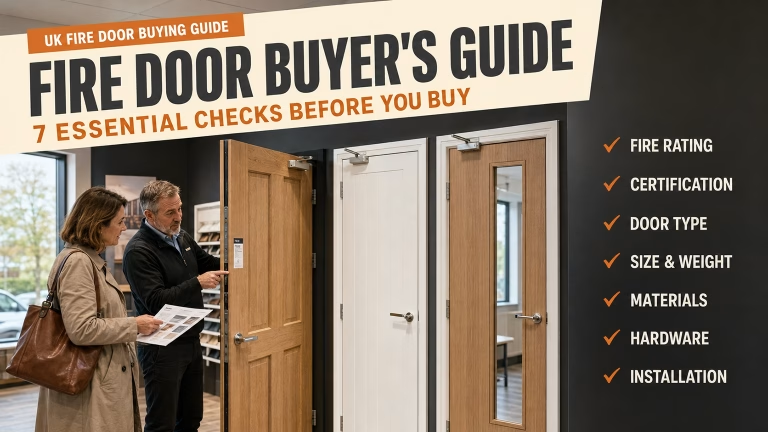
Have you ever considered the safety of your home or workplace against fire hazards? Since fire risk always exists and can occur at times, purchasing…
How Zed Doors Provides High-Quality Fire Doors for Every Need
Here at Z Doors, we understand that every project is unique and there are many types of fire doors in UK. Therefore, we found a solution whether you need a single door for a hallway or a double door for a commercial space. We offer all common fire ratings, from FD30 for general use to FD120 for maximum protection. For any option, we guarantee the proper level of fire resistance. Our selection includes different materials like steel, wood, and glass, each with its own advantages, and a choice of finishes from pre-finished to primed. For more information, check out our fire door options.
Conclusion
There are different types of fire doors in UK which are essential for keeping smoke and fire contained, securing escape routes, and keeping people safe. They include features like intumescent seals and specialised hardware and are constructed from fire-resistant materials like steel, reinforced glass, or wood. These doors must adhere to UK standards such as BS 476 and EN 1634, as well as laws like the Regulatory Reform (Fire Safety) Order 2005 and the Building Regulations 2010. Each form of fire door—swinging, sliding, or rolling—and its material (wood, steel, or glass) are appropriate for a particular use. Before choosing a fire door, you should consider factors like type of building, its location, and the level of fire risk in different areas.
FAQ
1) What are the different types of fire doors in the UK?
The main types of fire doors in the UK are FD30, FD60, FD90, and FD120, which indicate the fire resistance duration (30, 60, 90, and 120 minutes). Also, we can categorise fire doors based on other different factors like material, finishes type, and style, which are explained in this blog post.
2) What is the difference between FD30 and FD60 fire doors?
FD30 fire doors offer 30 minutes of fire resistance, but FD60 fire doors provide 60 minutes of protection.
3) What type of fire door is best for commercial buildings?
For commercial buildings, FD60 or FD90 fire doors are often recommended. They provide higher fire resistance for larger, high-risk areas.
4) What type of fire door is best for residential buildings?
For residential buildings, FD30 fire doors are typically used. They offer adequate protection for most home environments.