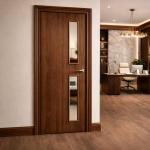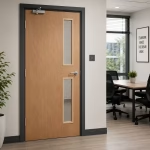

What Are Fire Doors Made Of? Maintaining the safety of your home and family mostly depends on fire safety. Using fire doors help accomplish this. These unique doors are designed to slow down the spread of smoke and fire, allowing more time for safe escape. But what are fire doors made of? Every substance offers unique benefits. For instance, while wood can be more fashionable and still provide good fire resistance, steel is rather strong and durable. Modern buildings frequently feature glass fire doors to allow in light while yet maintaining safety. Knowing how fire doors made will help you choose the correct one for your house and ensure your safety in case an emergency strike.
What Are Fire Doors Made Of?
Fire doors are engineered to keep your assets, people, and property protected when things get heated (literally). To ensure they actually do their job, you should know what are fire rated doors made of:
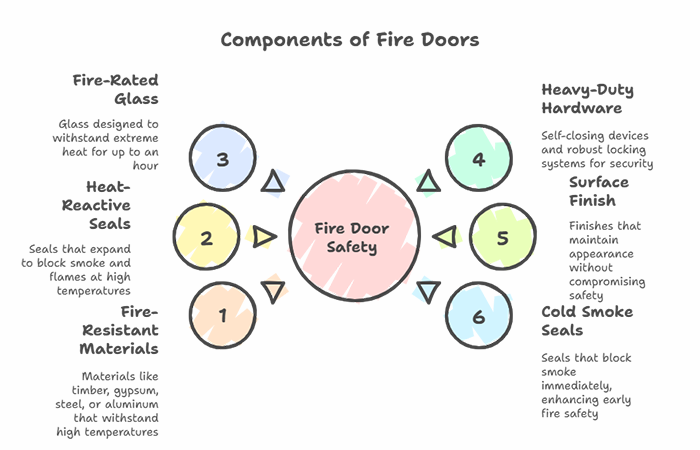
1- Fire-Resistant Materials:
You’ll find the core built from solid timber most of the time. Sometimes, manufacturers incorporate gypsum, steel, or aluminium for extra resilience. The point is, these materials don’t fold under pressure, especially not when the temperature spikes.
2- Seals That React to Heat:
Around the door edges, you’ve got intumescent seals. Once things hit 200°C, these seals expand and fill any tiny gaps. That’s what stops smoke and flames from sneaking through—critical when seconds count.
3- Fire-Rated Glass (If Specified):
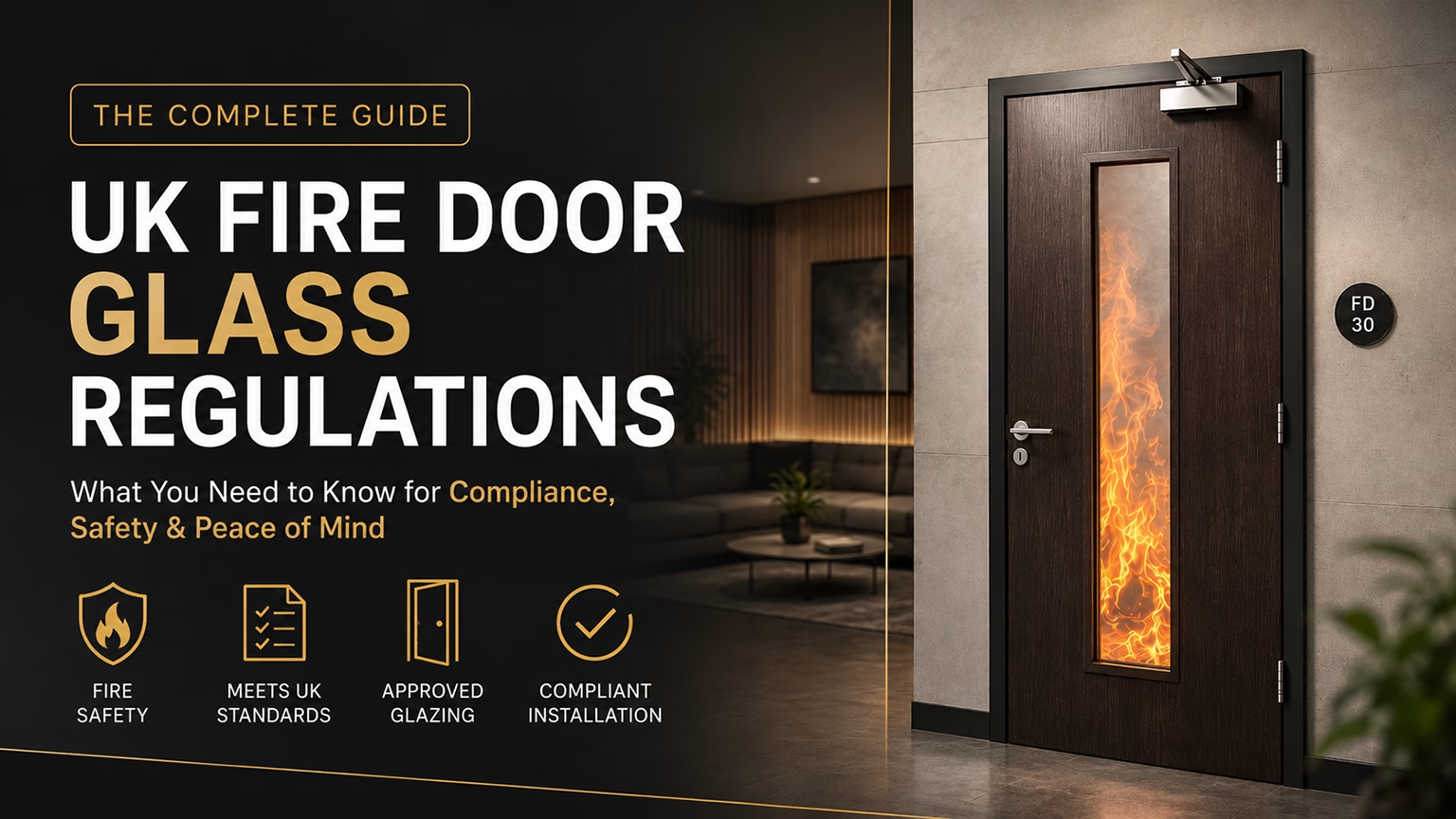
Some fire doors have glass panels, but it’s not the standard kind. This is fire-rated glass, designed to hold up for up to an hour in extreme heat. It maintains visibility without compromising safety.
4- Heavy-Duty Hardware:
You’re looking at self-closing devices to ensure the door never gets left open in an emergency. Fire-rated hinges, latches, and robust locking systems—think latch plus deadbolt—keep the door secure even under duress.
6- Surface Finish:
With options like timber veneer, high-quality laminates, or intumescent paint, it’s possible to achieve a professional, attractive appearance without sacrificing safety. Just be sure any finish you select is fully compatible with the door’s fire performance requirements—style shouldn’t compromise compliance.
7- Cold Smoke Seals (Optional Addition):
While intumescent seals activate in response to heat, cold smoke seals work immediately, blocking smoke before a fire even builds momentum. These seals are often paired with intumescent strips, providing an extra layer of protection for escape routes during early fire stages. It’s a smart upgrade for enhanced safety in commercial spaces.
Now that you know what are internal fire doors made of, let’s see the material of old fire doors.
What are old fire doors made of?
Old fire doors are made of:
- Wooden Frame Outside: Unlike their first appearance, older fire doors usually had strong wooden frames, not like most doors.
- Sheeting Made from Asbestos Cement: Commonly covered in asbestos cement sheeting, a composite of cement and asbestos fibres, the front and rear surfaces.
- Core Asbestos: Fundamentally, these doors usually comprised layers or solid blocks of either compressed asbestos material or asbestos insulating board (AIB).
- Insulation using Mastic: Manufacturers insulated some models with mastic made of asbestos. This improved the door’s resistance to fire.
Types of Fire Doors and Their Construction
The choice of material is not the only consideration when choosing a fire door. The time the door can successfully contain fire and smoke is what really counts, and this is where FD ratings come into play. The following number represents the number of minutes the door has been tested to withstand fire. FD stands for Fire Door. For example:
- FD30 is equivalent to 30 minutes of fire resistance.
- FD60 is equivalent to 60 minutes of fire resistance.
The environment is the only factor that determines the proper degree of fire resistance. FD30 fire door is usually adequate for residential properties. On the other hand, in order to comply with more stringent safety regulations, commercial or industrial settings frequently require FD60 or higher.
The most popular fire door types—wood, steel, and glass—as well as their typical ratings, construction specifics, and key benefits and drawbacks, are clearly broken down in the table below.
| Type | FD Rating | Construction | Use Cases | Advantages | Disadvantages |
| Wooden Fire Doors | FD30, FD60 | Solid timber core or composite materials. Often finished with veneer, laminate, or intumescent paint. |
|
|
|
| Steel Fire Doors | FD60, FD90, FD120 | Made from galvanised or stainless steel. Often includes a core of honeycomb, mineral board, or steel layers. |
|
|
|
| Glass Fire Doors | FD30, FD60 (with glazing) | Constructed using fire-rated glass set in steel, aluminium, or hardwood frames. |
|
Sleek, modern look
Allows daylight through Maintains sightlines during emergencies |
|
Fire Door Core Materials
A fire door’s performance during a fire is greatly influenced by the material inside. It is the component that establishes whether the door can withstand stress and perform its function when people’s safety is at stake. Here, you can see the fire door core materials that are most frequently used in the industry:
Solid Timber Core
These are made from softwood or dense hardwood, which, surprisingly, resists fire by producing a protective layer of char when heated. This is not merely a clever scientific trick; it is essential to maintaining the door’s structural integrity in the event of a fire. Traditional FD30 fire doors usually have timber cores. In addition to being safe, they are prized for offering strong sound and heat insulation.
Mineral Fibre Core/Mineral Core
Conversely, mineral cores are made of non-flammable materials such as gypsum, calcium silicate, or mineral fibre. They are designed to withstand extreme heat; there won’t be any surprises, smoke, or burning. When higher fire ratings, like FD60 and above, are non-negotiable, these cores are the preferred choice for steel or composite fire doors.
Honeycomb Core
Honeycomb cores are essentially lightweight fillers made of metal or cardboard that are pressed between steel or wood door skins in the traditional honeycomb pattern. They are easy to install, lightweight, and reasonably priced. But you shouldn’t count on these by themselves to provide much fire resistance. When fire is not a major concern, they are the preferred material for internal doors. If the safety specification needs to be raised, they are occasionally combined with other materials.
Gypsum Core
In contrast, gypsum cores are far safer. This core is made of dense, fire-resistant gypsum, which is essentially packed with water that is trapped inside the material. That water transforms into vapour when heated, preventing the spread of the fire and safeguarding the door and the property as a whole. For this reason, gypsum is the industry standard for fire-rated doors (think FD60 and above), especially in public or commercial buildings where compliance is mandatory.
Asbestos Core (Historical Background)
Because of its remarkable fire resistance, asbestos was frequently used in fire door cores in the past, particularly prior to the 1990s. A compressed asbestos core sits in the middle of wooden frames covered in asbestos cement sheets. Since we now know that asbestos poses major health risks, it is, of course, prohibited in many places.
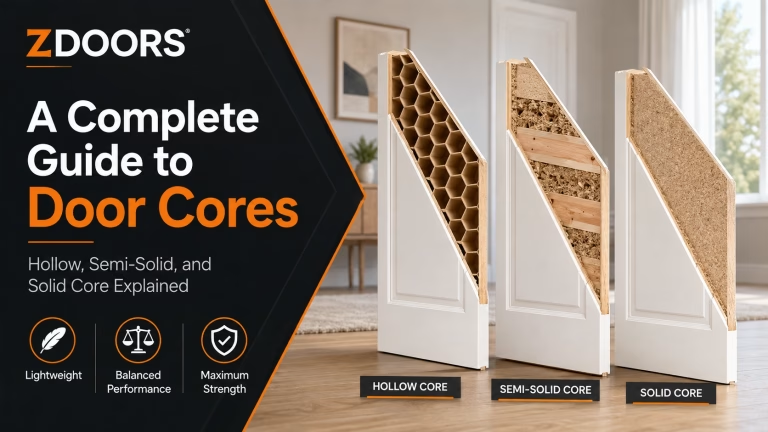
Hollow core doors are lightweight, cost-effective, and ideal for interior use in low-cost projects, but offer poor insulation, soundproofing, and security. Semi-solid core doors, with…
Fire Door Hardware and Accessories
Having a door is not enough; you also need to make sure that every component of that door is capable of handling the situation when it counts most. In an emergency, having the right hardware guarantees that the door will remain solid and sealed under pressure, safeguarding both people and property. Fire door hardware and accessories include:
- Intumescent Strips & Smoke Seals: Expand when heated to seal gaps and block smoke and flames.
- Door Hinges: Fire-rated hinges that withstand high temperatures and keep the door firmly attached.
- Self-Closing Devices (Door Closers): Ensure the door always closes automatically after opening.
- Locks & Latches: Fire-rated locks and latches that secure the door and maintain integrity under heat.
- Panic / Emergency Exit Devices: Allow quick and safe exit, meeting fire safety standards.
- Intumescent Hardware Protection Kits: Insulate hardware like hinges and locks to keep them effective in a fire.
- Glazing Beads & Vision Panels: Fire-rated glass with special seals to keep the door’s fire protection intact.
- Letterplate Liners: Fire-rated liners inside letterboxes to prevent fire spreading through the door.
- Signage & Labeling: Clear fire safety signs on the door to show it is a fire door and how to use it.
Legal Requirements and Fire Door Compliance
Fire doors are legally required in the UK, and ignoring them poses serious business risks. Fire doors must be installed correctly, inspected frequently, and maintained in optimal operating condition, according to fire door regulations such as the Regulatory Reform (Fire Safety) Order 2005 and the Fire Safety (England) Regulations 2022. Noncompliance can result in major legal issues as well as actual safety risks.
The Building Regulations specify precisely where fire doors must be installed in apartments and other multi-story buildings. It is not only best practice but also expected that communal areas undergo routine inspections, usually every three months. Indeed, you must maintain thorough records of each check.
Comparing Fire Doors: Timber vs. Steel vs. Composite
Timber fire doors are perfect for offices or high-end homes because of their polished, businesslike appearance and excellent noise-cancelling capabilities. Just be aware that they require a little more upkeep to remain in good condition; if you want wood to last, it can require a lot of care.
In contrast, steel fire doors prioritise security and longevity. In warehouses, factories, and other locations where safety is a top priority, they are the industry standard. Resistance to fire? Excellent. Upkeep? Almost none. Fashion? Well, they’re heavy, practical, and not particularly elegant.
Then there is the composite option, which combines the best features of both options. By combining wood, metal, and synthetic materials, these doors offer strength, reliable fire protection, and an aesthetic that can be used in a variety of commercial settings. Compared to plain timber, they are more dependable, but they are lighter than steel.
| Feature | Timber Fire Doors | Steel Fire Doors | Composite Fire Doors |
| Material | Solid timber or engineered wood | Fire-resistant steel | Combination of materials (wood, metal, resin) |
| Fire Resistance | Good, but may require thicker panels | Excellent, very high resistance | Very good, often designed to meet high fire ratings |
| Durability | Moderate; can warp or suffer damage | Very durable and strong | Highly durable and resistant to warping |
| Aesthetics | Wide range of finishes and styles | Limited design options | Good design flexibility, can mimic wood or metal |
| Weight | Generally lighter | Heavier, requires strong framing | Lighter than steel, heavier than timber |
| Maintenance | Requires regular upkeep to maintain performance | Low maintenance | Low to moderate maintenance |
| Sound Insulation | Good | Moderate | Generally good, varies by construction |
| Cost | Moderate | Usually more expensive | Varies, often mid-range to high |
| Common Use | Residential, offices, commercial interiors | Industrial, commercial, high-security areas | Residential and commercial external doors |
Environmental Impact of Fire Door Materials
Your choice of fire door type may have varying environmental effects. The most environmentally friendly choice is usually a wooden fire door, especially if it is constructed from wood from forests that are managed responsibly. They require less energy to produce and decompose naturally. Moreover, they can frequently be recycled.
Steel fire doors are incredibly durable and reusable. But the production of steel is more polluting and energy-intensive. Although using recycled steel is beneficial, wood still has a greater overall environmental impact.
Composite fire doors are made of a combination of materials, such as plastic and wood. Their composition and manufacturing process determine their environmental impact. While it’s good that some use recycled content, others may be more energy-intensive or more difficult to recycle.
The Forest Stewardship Council (FSC) is a non-profit that protects forests. They certify forests that meet high environmental and social standards, and products from these…
Maintenance and Inspection of Fire Doors
Simply opening and closing a fire door does not guarantee that it will remain sturdy in an emergency. You must follow a proper maintenance schedule if you want those doors to truly function in an emergency. Test every three months, and at least once a year, conduct a thorough, in-depth inspection. This entails inspecting every component—hardware, hinges, seals, etc.
Many companies play it smart by collaborating with organisations such as Hoefnagels Fire Safety. They take care of all technical checks, keep up with the paperwork, and ensure that there won’t be any future compliance issues.
If you’re unsure what to look for, check out our guide on How To Identify A Fire Door to ensure your doors meet safety standards.
Cost Factors for Fire Doors in the UK
In the UK, a number of factors affect fire door prices. Certified testing, necessary hardware, expert installation, continuing upkeep, and the project’s size all add to the final cost. Here are the main cost factors you should consider:
- Type of material used: Timber, steel, or composite doors vary significantly in cost.
- Fire rating: Higher-rated doors (e.g., FD60) typically cost more than lower-rated ones (e.g., FD30).
- Glazing options: Doors with fire-rated glass panels are more expensive than solid doors.
- Size and customization: Non-standard sizes or bespoke designs increase overall costs.
- Certified testing and compliance: Third-party certifications and safety standards raise the cost.
- Required hardware: Handles, locks, closers, hinges, and seals all add to the total cost.
- Installation complexity: Professional fitting, especially in commercial settings, can be a major cost factor.
- Ongoing maintenance and inspections: Regular servicing and legal inspections contribute to long-term costs.
- Project scale: Larger installations or full-building upgrades affect total expenditure.
If you need budget-friendly options with high-quality, here at ZDoors, we offer budget-friendly fire door options that meet safety standards without compromising on quality.
Conclusion
Real safety and compliance depend on knowing what are fire doors made of. Not all fire doors are made equally. Their cores, which are designed to reduce smoke and fire, can be anything from solid wood to specific mineral or composite blends. Add reinforced glass, heavy-duty hardware, and intumescent seals that expand when heated; each component has a distinct function. Whether you choose steel, wood, or a composite model, you must make sure that each component complies with applicable laws and industry standards.
FAQs
1) What are fire-rated doors made of?
Fire-rated doors are made of fire-resistant materials like solid timber, steel, gypsum, or composite cores with heat-expanding seals.
2) Can fire doors be made of wood?
Yes, fire doors can be made of solid or engineered wood and still meet fire safety standards when properly constructed.
3) Are glass fire doors as effective as steel ones?
Yes, when fitted with fire-rated glass and frames, they can offer similar protection, though steel is more durable in high-traffic areas.
4) Do fire doors require special hardware?
Yes, they need certified hardware like fire-rated hinges, closers, and latches to maintain fire resistance.