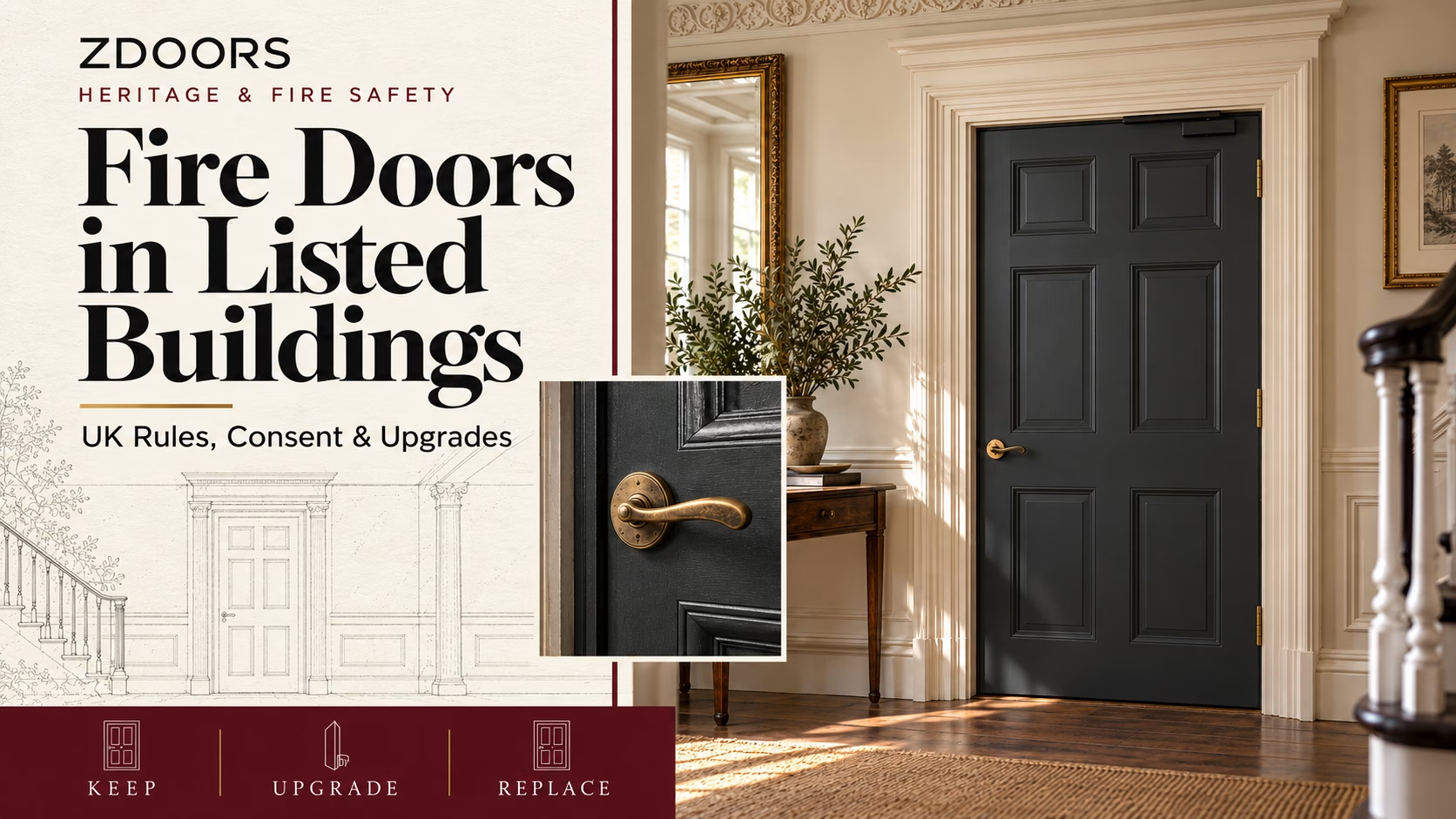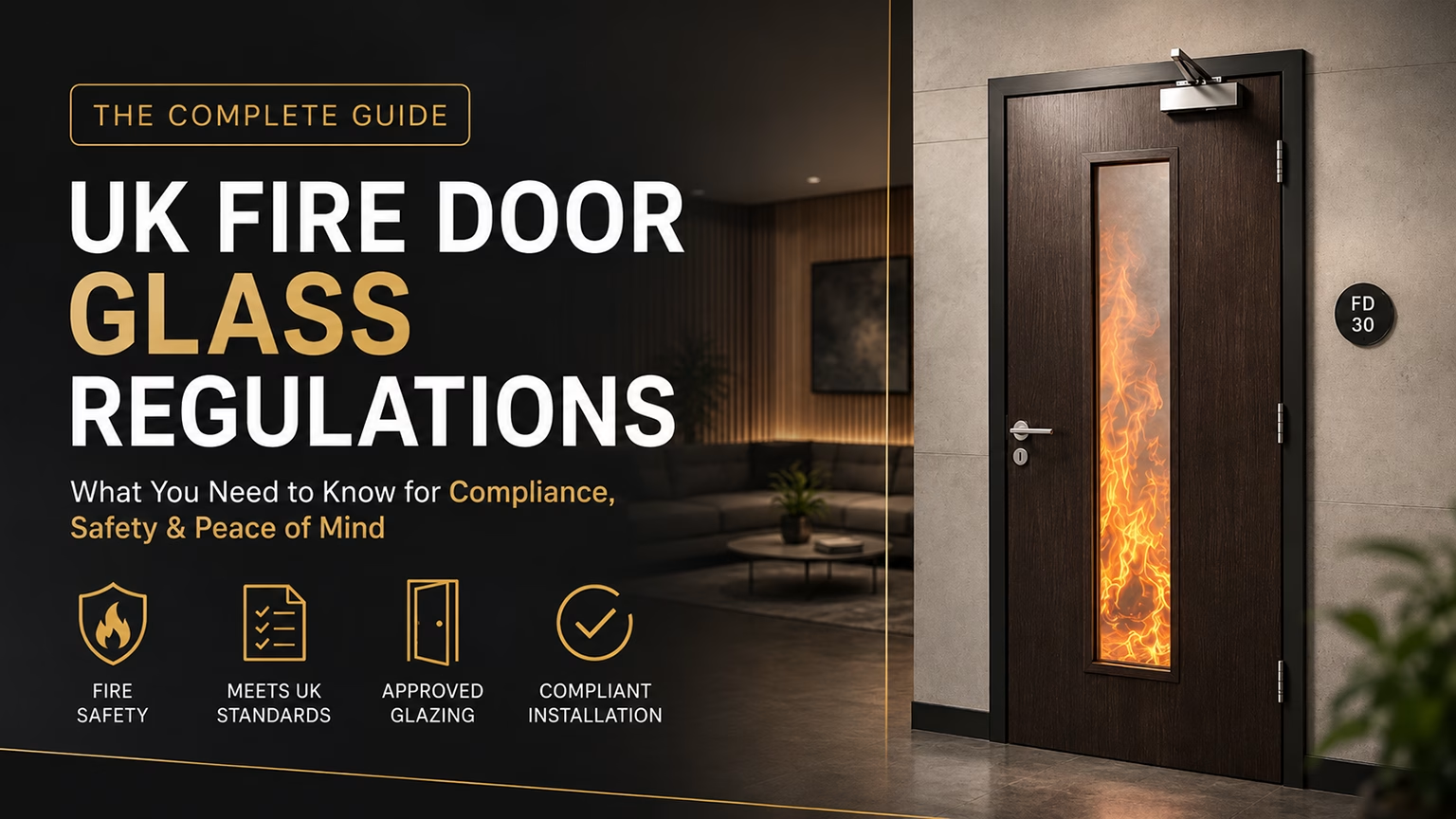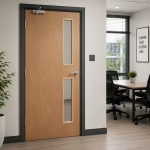

Have you ever considered the safety of your home or workplace against fire hazards? Since fire risk always exists and can occur at times, purchasing fire doors becomes critically important. Why are these doors essential, and how can you choose? In this article, we will explore the importance of fire-resistant doors, their doors’ features, and their structure, as well as the ten key factors to consider when purchasing them. Stay with us for expert advice to make an informed and secure decision.
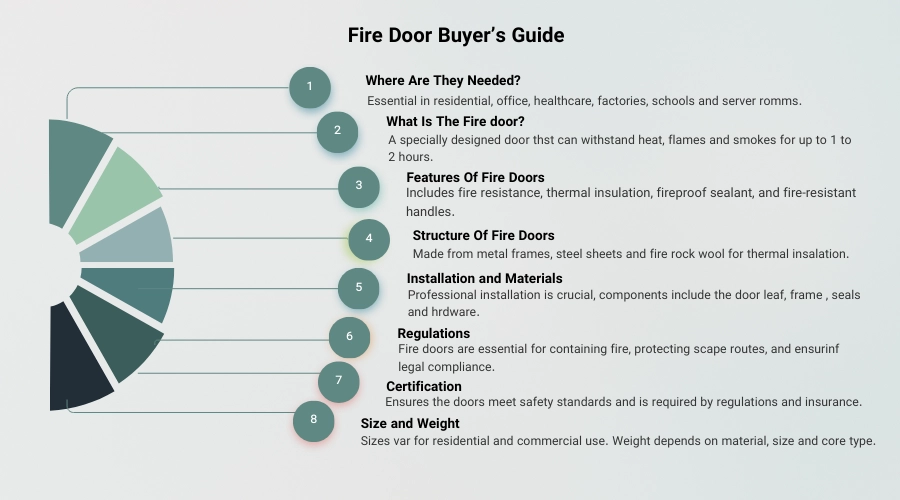
What is a Fire Door?
A fire door is a specially designed door that can withstand heat, flames, and smoke for up to 1 to 2 hours. These doors are mainly used in buildings and places that require fire protection, such as hospitals, residential buildings, office buildings, and commercial centers.
The primary purpose of fire doors is to prevent the spread of fire and provide an opportunity for safe evacuation during emergencies. In the event of a fire, individuals quickly move towards these doors and seek refuge behind them, staying safe from the flames. These doors are mainly installed in emergency stairways and areas requiring rapid evacuation.
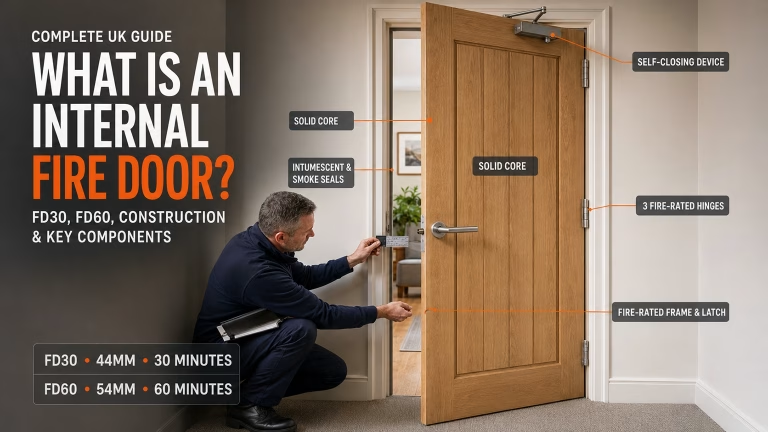
Internal fire doors are critical components of building protection systems designed to prevent the spread of fire and smoke within a structure.
Features of Fire Doors
Fire doors have unique features that differentiate them from regular doors:
- Fire Resistance: These doors can withstand temperatures as high as 1200°C, preventing the transfer of flames and smoke to other parts of the building.
- Thermal Insulation: Materials like fire rock wool are used in these doors, offering high resistance to heat and flames.
- Fireproof Sealant: The edges of the door are covered with fireproof seals to prevent the entry of smoke and toxic gases.
- Fire-Resistant Handles: The handles of these doors are designed to open quickly in an emergency.
Structure of Fire Doors
Fire doors are typically made from metal frames, with the surface covered by steel sheets coated with oven-baked paint. Inside the doors, fire rock wool is used as thermal insulation, providing resistance to fire up to 800°C. Additionally, fire doors are equipped with smoke-tight seals that prevent the transmission of smoke and toxic gases.
Where Do I Need a Fire Door?
Fire doors are generally installed to prevent the spread of fire and maintain safety in buildings and various locations. These doors play a vital role, especially during emergencies such as fires, by blocking fire and smoke from spreading to other areas of the building. Below are some places where the installation of fire doors is essential:
1. Residential Buildings:
In residential buildings with more than six floors, it is mandatory to install fire doors in emergency exit stairways. These doors should be installed on each floor separately to prevent the spread of fire and smoke to other parts of the building. This requirement is part of the national building regulations, and compliance can result in legal issues.
2. Office and Commercial Buildings:
In office environments, fire doors should be installed in areas such as file storage rooms and emergency exits, in addition to the entrances to each floor. These doors help maintain the security of sensitive information and provide a safe evacuation route during emergencies.
3. Healthcare Facilities:
Fire doors should be installed in critical areas such as ICUs and CCUs in hospitals and clinics. These doors help ensure that there is enough time for firefighters to reach and rescue patients during a fire emergency.e
4. Factories and Manufacturing Plants:
In factories and production units, especially in warehouses and areas that store flammable materials, fire doors should be installed to protect valuable materials and prevent the spread of fire in the event of an incident.
5. Schools and Universities:
In schools and dormitories, the installation of fire doors in hallways and emergency exits is crucial. These doors must be installed in locations where individuals can quickly and safely exit the building during a fire.
6. Server and Control Rooms:
Server and control rooms, particularly in sensitive locations like airports, need fire doors. These doors prevent the spread of fire to sensitive equipment and help protect human lives.
7. Isolated Rooms:
Fire doors are also needed in isolated rooms with paramount fire protection and safety. These doors help protect the contents and ensure a fire doesn’t spread within such specialized spaces.
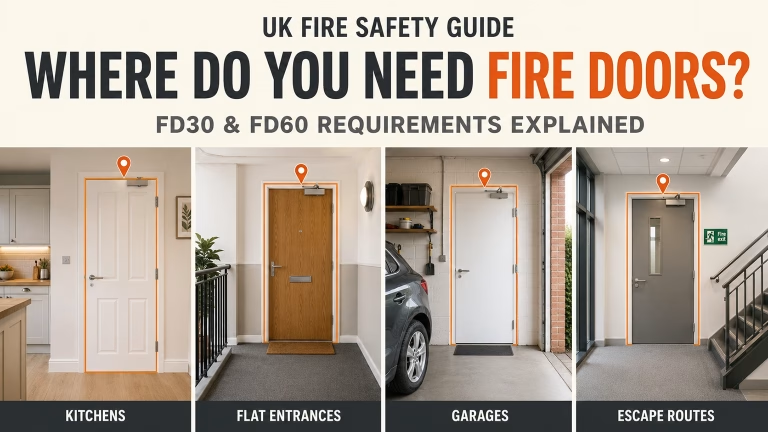
Whether it’s a domestic or a commercial property, in the UK they’re legally required to have fire doors installed. So, if you’re a landlord or…
7 Key Factors to Consider When Buying a Fire Door
When purchasing a fire door, making the right choice that suits the building’s needs and ensures the safety of its occupants is crucial. Below, we discuss 10 key factors to consider to help you make a more informed decision.
1) What Type of Fire Door Do You Need? – External/Internal
Fire doors are divided into two main categories: external and internal.
✅ External Doors:
These doors are installed at the building’s entrance or exit and act as a fire-resistant barrier between the interior and exterior of the building. They are typically made from materials such as steel or composite and are highly fire-resistant. Their design must consider security, resistance to weather conditions, and durability. Additionally, these doors often contain mechanisms like panic bars for easy evacuation during emergencies.
✅ Internal Doors:
Inretnal fire doors are installed within the building to separate different areas and prevent the spread of fire and smoke. Internal fire doors generally have a lower fire-resistance rating than external doors and may be made from materials such as solid wood or fire glass.
Is It for a Residential or Commercial Building?
✅ Residential Buildings:
- Single-Unit Homes: There is no legal requirement for fire doors in old single-unit homes. However, for enhanced safety, it is recommended to install fire doors in escape routes and areas with higher fire risks, such as kitchens.
- Two-Story Homes: Due to potential fire hazards associated with garages, fire doors are required between the garage and the living space.
- Three-Story Homes or More: Every habitable room accessible by stairs must have internal fire doors.
- Multi-Unit Residential Buildings: Fire doors are typically required to enhance occupant safety and protect property. Standard fire-resistance ratings for residential buildings include FD30 (30 minutes) and FD60 (60 minutes). These doors should be made from materials that can withstand high temperatures and pressure, such as solid wood or steel. They should also be equipped with appropriate hardware, including automatic closing devices and smoke seals.
✅ Commercial Buildings:
When selecting fire doors for commercial buildings, you must ensure installation and maintenance comply with the relevant building codes such as IBC and NFPA standards. These doors are available in various fire ratings ranging from 20 minutes to 3 hours, and choosing the most appropriate rating based on usage and installation location is vital.
Additionally, these doors must be self-closing and equipped with positive locking mechanisms to ensure automatic closure during emergencies. They should also comply with accessibility standards like the ADA to provide easy and safe access for all individuals, including those with disabilities.
2) Fire Door Certification
Fire door certification is an official process that confirms the door’s compliance with specific safety standards and regulations. The primary goal of this certification is to ensure that fire doors have been tested and meet the necessary criteria for effective performance during a fire.
This certification serves several vital functions:
- Safety Assurance: Certified fire doors are designed to prevent the spread of fire and smoke, providing critical time for evacuation and reducing the risk of injury or death during a fire.
- Compliance with Regulations: Fire door certification is essential to comply with building codes and fire safety regulations. In many jurisdictions, having certified fire doors is a legal requirement.
- Insurance Requirements: Many insurance providers require buildings to have certified fire doors as part of their coverage conditions. Without certification, insurance claims related to fire damage may be voided.
- Property Protection: Certified fire doors help protect property by preventing the spread of fire and smoke, thereby minimizing damage to the building and its contents.
- Liability Reduction: Building owners and managers can reduce their liability by ensuring that fire doors are certified and maintained in accordance with safety standards.
- Quality Assurance: Certification ensures that fire doors are manufactured and installed according to strict safety standards.
3) Regulations and Requirements for Fire Doors
Fire doors are essential barriers in a building’s passive fire protection system. Their primary functions are:
- Containment of Fire and Smoke: Preventing the rapid spread of fire and smoke between different sections of the building.
- Protection of Escape Routes: Maintaining clear and safe evacuation paths for building occupants during emergencies.
- Structural Integrity and Insulation: Providing thermal insulation against heat, smoke, and toxic gases to preserve the building’s structure.
- Protection of Life and Property: Saving lives and reducing property damage by controlling the spread of fire.
- Legal Compliance: Adhering to local and international regulations for installing and maintaining fire doors.
- Commitment to Safety: Proper installation of fire doors is a moral and legal obligation to enhance building safety.
Installing fire doors is both a moral and legal commitment to safety.
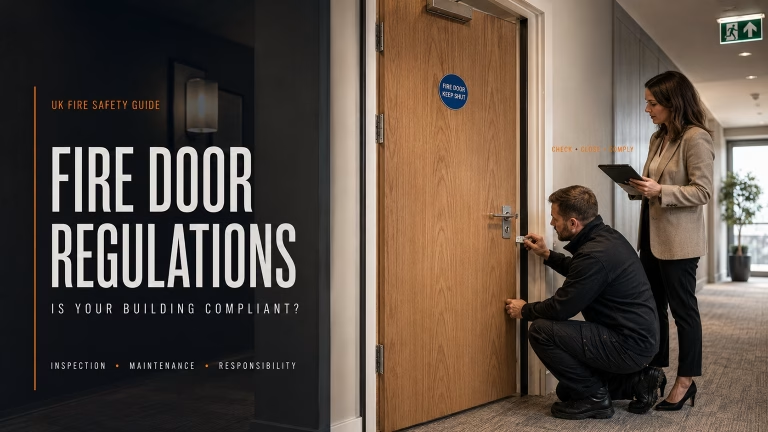
To protect all buildings from fire and enhance fire prevention, the UK fire door regulations were updated in 2025. Flat entrance doors must have at…
4) Standard Internal Fire Doors in the UK
In the UK, internal fire doors are available in various types to meet the diverse needs of buildings:
- Wooden Fire Doors: The most commonly used type, suitable for residential and commercial buildings.
- Steel Fire Doors: Ideal for industrial environments with high resistance to fire.
- Combination Wooden and Steel Doors: A blend of wood aesthetics and steel strength.
- Aluminum Fire Doors: Lightweight and resistant to corrosion.
- Glass Fire Doors: Allow light to pass through while maintaining fire resistance.
These doors are rated based on the duration they can resist fire (FD30, FD60, FD90, FD120). The higher the rating, the more excellent the fire resistance and the more time it provides for safe evacuation. Additionally, fire doors are certified with labels that include essential details such as the manufacturer’s information and the door’s manufacturing date.
5) Fire door sizes and weight
In residential environments, fire doors are typically designed to fit standard door frames while providing the necessary fire protection. Common sizes in the UK and Wales are 1981 x 762 x 35 mm (often referred to as a 2’6″ door), and for wheelchair access, 1981 x 838 x 35 mm (2’9″).
In Scotland and Europe (metric-sized doors): Height 2040 mm, thickness 40 mm, with widths ranging from 526 mm to 926 mm. In commercial applications, fire doors are generally more oversized to accommodate higher traffic and comply with safety regulations:
The standard width for single-leaf fire doors is 900 mm to 1000 mm, and the height is similar to those used in residential buildings. In industrial environments, more oversized fire doors are often required to match the scale of operations and equipment. Custom-sized doors are commonly made to meet the unique needs of industrial facilities. Large fire doors can be manufactured up to 18 meters wide and 12 meters high for large openings.
The weight of fire doors can vary significantly depending on several factors. These include the door material, size, thickness, core type, and additional features. For example, a standard fire door (2 meters high, 850 mm wide, 44 mm thick) made from wood with a 510 kg/m³ density weighs approximately 38 kg. More oversized doors with additional features, such as intumescent coatings, can be significantly heavier. For instance, fire-resistant floor doors with intumescent coatings can weigh up to 167 kg for sizes up to 1.06 meters by 1.06 meters.
6) Installation:
Skilled and trained professionals should carry out the installation of fire doors to ensure proper functionality in emergency situations:
- Preparation of the Installation Site: Accurate measurements and gathering of necessary tools and materials.
- Installing the Frame: Ensuring the frame is level and securely fixed using screws or nails.
- Installing the Door: Carefully align the door in the frame and attach at least three fire-resistant hinges.
- Installing Hardware: Installing handles, locks, and self-closing devices according to the manufacturer’s instructions.
- Final Inspection: Ensuring the door opens and closes quickly and that the gaps around the door are even.
7) Materials: Door Leaf, Frame, Sealing, and Hardware
A fire door is made up of several components, each playing a crucial role in its fire resistance:
- Door Leaf:
This is the central part of the door, which can be made of steel, wood, fire-resistant glass, or composite materials. Steel is popular due to its high strength. Wooden doors, with fire-resistant seals, offer a more natural appearance and are generally more cost-effective. Fire-resistant glass or ceramic glass is often used in the vision panels of fire-resistant doors. Composite doors combine strength, fire resistance, and aesthetic appeal.
- Fire door frame and seals:
The door frame is typically made of steel, and swelling seals fill gaps when exposed to heat, preventing the passage of fire and smoke. Smoke seals also play a significant role in preventing smoke from spreading.
- Door Hardware:
This includes hinges, locks, and self-closing devices. Hinges are typically made from steel or bronze, and the locks must be fire-resistant. Self-closing devices are essential to ensure the door closes automatically after being opened.
How Long Do Fire Doors Withstand Fire?
Fire doors are typically categorized into different classifications based on their fire resistance, which includes:
- 20 minutes
- 45 minutes
- 60 minutes
- 90 minutes
- 180 minutes (3 hours)
These durations represent the minimum resistance time that a fire door can withstand under standard testing conditions. These results are based on specific tests conducted in controlled environments.
Factors Affecting Fire Door Resistance Time
There are several factors that can influence the amount of time a fire door can withstand fire:
- Quality of Door Materials: The type of materials used to construct a fire door, such as steel, wood, or specialized composites, can have a significant impact on the door’s fire resistance. Generally, steel doors offer higher fire resistance.
- Installation Location and Environmental Conditions: Environmental factors, such as temperature variations, humidity, or frequent use of the door, can significantly affect its lifespan and its ability to resist fire.
- Maintenance and Regular Inspections: Timely maintenance of fire doors is critical. Doors that are regularly checked and whose components are in proper working order tend to perform better in the event of a fire.
- Proper Installation: Incorrect fire door installation can negatively affect its performance during a fire. Specialists must carry out installation to ensure the door provides the intended protection for the building’s interior.
The amount of time a fire door can withstand fire generally ranges from 20 minutes to 3 hours. These times are determined under standard test conditions and may vary in real-world situations due to factors like material type, installation, maintenance, and environmental conditions.
Can I Install a Fire Door Myself?
Before answering this question directly, reviewing a few considerations is best. Installing fire doors is a complex process requiring specific knowledge and skills, including precise measurements, proper adjustments, and installing components like intumescent strips, smoke seals, and specialized hardware. Without the necessary experience and expertise, the door may not be installed correctly.
Legally, adherence to regulations and standards related to the installation of fire doors is mandatory. This includes building codes, fire safety guidelines, and national and international standards. Improper installation may lead to non-compliance with these regulations, which can result in legal and financial consequences. Once again, a professional should install a fire door.
Moreover, the unprofessional installation of a fire door can create serious hazards. If the door is not installed correctly, it may not function as required during a fire, allowing fire and smoke to spread rapidly throughout the building. This endangers the safety of occupants and can cause irreparable damage.
Considering these points, it is recommended to entrust the installation of fire doors to experienced experts.
How Do I Choose the Best Fire Door?
The first point to consider is the fire resistance rating. This rating indicates how long the door can resist fire and smoke. Depending on the building’s needs and the door’s location, you can use doors with different resistance levels.
The type of building and the door’s position also influence the selection. High-rise buildings or high-risk areas require doors with higher resistance. Additionally, the materials used in the doors, such as steel or wood, play a significant role in their performance. Each material has its own specific characteristics that should match your needs.
Ensuring that the door complies with safety standards and regulations is crucial. Costs should also be considered, but not at the expense of reduced safety. Ultimately, regular maintenance and inspection of the doors are necessary to preserve their effectiveness. Considering all these factors, you can choose a door that provides essential safety and aligns with the building’s design.
Conclusion
This comprehensive guide on fire door purchasing has thoroughly explored the importance of choosing the correct type of fire doors for building safety and occupant protection. We introduced what fire doors are, their features and structure, essential installation locations, and 10 key factors to consider when purchasing. Purchasing a fire door is one of the most critical steps for enhancing the safety of buildings. Fire doors, with key features such as high fire resistance, thermal insulation, and specialized handles, help prevent the spread of fire and protect inhabitants and property.
Choosing the right door type, adhering to standards and certifications, and professional installation were crucial points discussed in this guide. By considering the specific needs of each building and following the guidelines provided, you can make the best and safest choice, ensuring the security of your environment.
FAQ
1) Why do I need a fire door in my home?
Fire doors play a critical role in home safety. They help protect residents and property by preventing the spread of fire and smoke. They also create safer exit routes during fire emergencies, providing valuable time for evacuation.
2) What fire door rating do I need?
The fire door rating indicates the amount of time a door can resist fire. For residential homes, FD30-rated doors (30-minute resistance) are usually sufficient. However, higher ratings may be required depending on the installation location and building regulations.
3) Who can install a fire door?
Fire door installation should be carried out by specialists familiar with safety standards. Proper installation ensures the door will function correctly in an emergency and ensures compliance with legal and safety requirements.
4) Are there specific installation requirements for fire doors?
Yes, fire door installation has specific requirements. These include maintaining proper clearances, using standard hardware, and ensuring the door closes automatically. Correct installation is crucial for the door to perform effectively during a fire.
5) Are there maintenance requirements for fire doors?
Yes, regular maintenance of fire doors is essential. This includes periodic inspections to ensure the correct operation of components, checking for damage or wear, and ensuring that closing mechanisms function adequately to ensure the door works correctly in an emergency.