
Who is Responsible for Fire Doors in Flats? Fire doors in flat buildings aren’t just a technicality—they’re a legal mandate, and their role is critical. These doors are engineered to slow down fire and smoke to provide essential time for residents to evacuate safely. Regulations are clear: the main entrance door to each flat needs to offer at least 30 minutes of fire resistance. In this blog post, we cover everything you need to know about fire doors in flats, including maintenance requirements, building codes, legal responsibilities, and resident awareness. So, let’s see who is responsible for fire doors in flats.
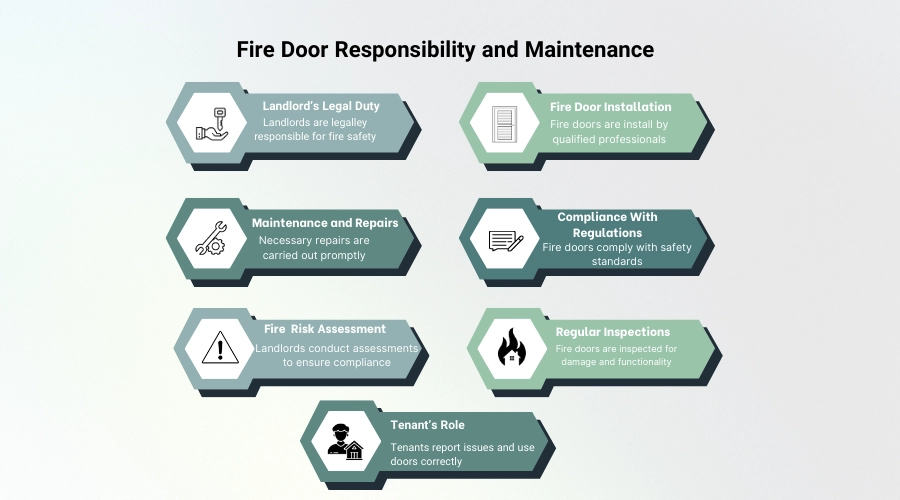
Fire Door Responsibility in Flats
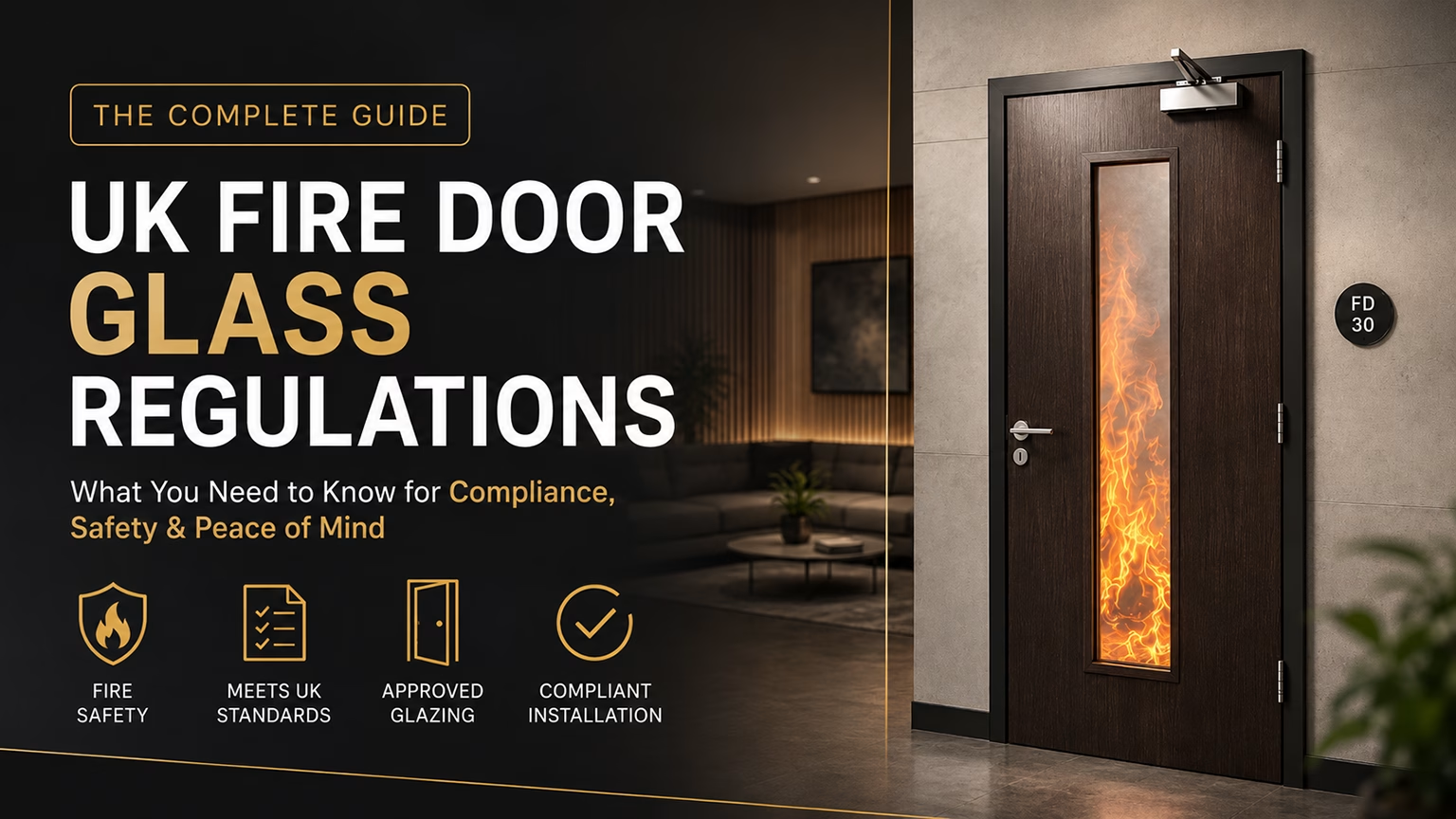
Fire doors act as barriers to slow the spread of fire and smoke in flats. Not only do they contain fire to a specific area, but they also help maintain clear escape routes, offering peace of mind for building owners and residents alike. If you’re wondering what is a fire door, they provide either 30 or 60 minutes of protection—an essential window that allows occupants to evacuate safely and helps limit property damage. In the UK, compliance isn’t optional; fire doors are a legal requirement in all commercial properties and multi-residence buildings, such as blocks of flats.
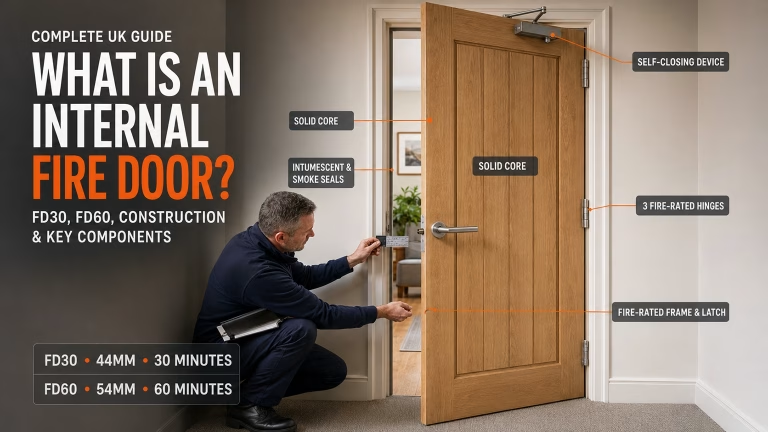
Internal fire doors are critical components of building protection systems designed to prevent the spread of fire and smoke within a structure.
Do landlords have to install fire doors?
Yes! Landlords have a legal obligation to install fire doors in specific situations, especially in properties like flats and HMOs (Houses in Multiple Occupation). Legislation such as the Regulatory Reform (Fire Safety) Order 2005 and Building Regulations (Approved Document B) makes this quite clear. Fire doors must be fitted between individual flats and shared areas.
Do tenants have to maintain fire doors in rented flats?
Tenants are generally not responsible for maintaining fire doors in rented flats. The landlord, or the “Responsible Person” is legally responsible for making sure that fire doors are kept up to date and in accordance with fire safety regulations. However, tenants do have a role in helping to keep fire doors effective by using them correctly, such as not wedging them open or breaking them, and promptly reporting any problems or damage to the landlord or property management. All residents’ safety and adherence to the law are enhanced by this collaboration.
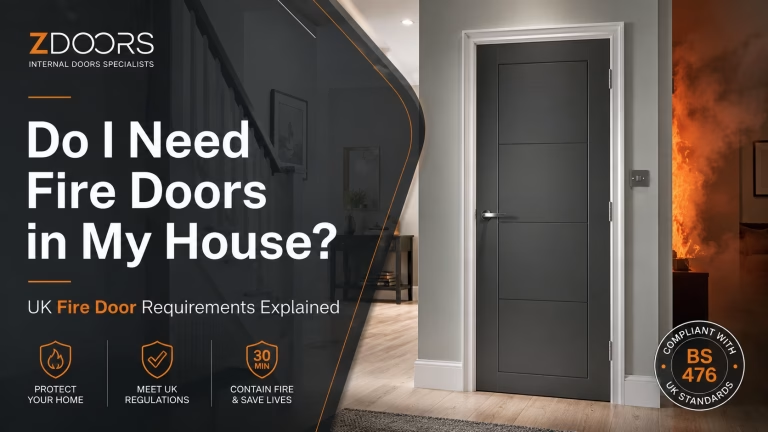
Fire doors prevent fire and smoke to a specific area, preventing them from spreading throughout the premises. This containment is vital, as it preserves escape…
What should I do if my flat’s fire door is not compliant with fire safety standards?
If you notice that your flat’s fire door isn’t up to standard, report it to your landlord or property manager immediately; that’s their responsibility. If they don’t act, escalate the matter to your local council or fire authority. Document everything: emails, photos, the lot. Fire doors are critical for safety and compliance, so don’t accept any delays or excuses. Make sure the issue gets addressed, and follow up until it’s properly resolved.
New fire door regulations what landlords need to know
Now you know who is responsible for fire doors in flats. As a landlord, you should be aware of the recent changes to fire door regulations. You can see the newest regulations in the following table:
| Category | What to Do | How Often |
| 1. Fire Door Checks | ||
| Communal Area Doors | Inspect for damage and test self-closing function | Every 3 months |
| Flat Entrance Doors | Check doors that lead to shared areas | Once a year |
| Visual Inspection | Look for damage – no tools needed | During each inspection |
| Self-Closing Devices | Make sure the door closes by itself properly | During each inspection |
| 2. Maintenance & Repairs | ||
| Damage | Repair any damage to the door, frame, hinges, seals, or closers | As soon as it’s noticed |
| Intumescent Strips | Check and replace if damaged (they expand in heat to seal gaps) | During inspection/repair |
| Door Movement | Ensure doors shut fully, without dragging or sticking | During inspection |
| Double Doors | Both sides should close together neatly | During inspection |
| 3. Resident Communication | ||
| Provide Fire Door Info | Explain why doors matter and why they must stay shut | On move-in + every year |
| Reporting | Encourage tenants to report damage | Ongoing |
| Follow-up | Fix issues reported by tenants | As soon as possible |
| 4. Certification & Labels | ||
| Certified Fire Doors | Ensure all fire doors have a CE mark or certification label | When installed |
| Do Not Tamper | Labels must not be painted over or removed | Always |
| 5. Legal Duties | ||
| Safe Living Environment | Landlords must provide safe housing including proper fire door management | Ongoing |
| Competent Installation | Fire doors must be installed by qualified individuals | On installation |
| Fire Risk Assessment | Identify fire hazards and take precautions | Regularly recommended |
| 6. Quick Inspection Points | ||
| Check for Damage | Door, frame, hinges, seals, closers | Each inspection |
| Intumescent Strips | Present and in good condition | Each inspection |
| Self-Closing Devices | Fully working | Each inspection |
| Door Closing | Door shuts tightly against the frame | Each inspection |
| Signage | Fire safety signs like “FIRE DOOR KEEP SHUT” should be visible | Each inspection |
Legal Requirements for Fire Doors in Flats
Legal requirements for fire doors in flats include:
- Flat entrance doors typically need to have at least 30 minutes of fire resistance (known as FD30).
- Fire doors are legally required in apartment buildings to divide individual apartments from common areas.
- A complete fire door set must include the door frame, hinges, closers, seals (intumescent strips), and signage.
- Fire doors must shut on their own and cannot be left open unless a certified device is present to release the door upon a fire alarm.
- Building owners or landlords are in charge of making sure fire doors are installed properly and are inspected and maintained on a regular basis.
- Fire doors have to abide by the Regulatory Reform (Fire Safety) Order 2005 and the Building Regulations Approved Document B.
- Regular fire risk assessments, which include inspecting fire doors, must be performed by a “Responsible Person,” who is frequently the building manager or landlord.
- The fire resistance rating of fire doors should be verified by certification and labelling.
- Serious safety concerns and legal repercussions may result from breaking these regulatory standards.
Who is responsible for installing fire doors flats?
In any building equipped with fire doors, particularly in multi-occupancy properties like blocks of flats, there must be a designated Responsible Person. Typically, this falls to the landlord. It’s their duty to conduct regular fire risk assessments to confirm that all fire doors meet current regulations.
Who is responsible for maintenance of fire doors in flats?
According to the Regulatory Reform (Fire Safety) Order 2005 (FSO), landlords are in charge of maintaining the fire doors in apartments. According to this rule, landlords must make sure their buildings are fire-safe and that tenants have a safe way to leave. In order to fulfil these responsibilities, landlords are required to conduct routine fire risk assessments, particularly in common areas of apartments, HMOs, and comparable structures.
A safe escape route is mostly dependent on well-maintained fire doors. Landlords are responsible for making sure these doors are properly fitted, in good shape, and operating as intended. Also, they must take their obligations seriously since neglecting to maintain fire doors and adhere to fire safety rules may result in legal action.
Can fire doors be replaced or modified by tenants?
Tenants shouldn’t attempt to replace or modify fire doors on their own. These doors are a key component of a building’s fire safety system, and there are strict regulations in place for a reason. Any changes made without proper authorisation or expertise can compromise the building’s safety and leave both tenants and landlords exposed to legal trouble.
If there’s an issue with a fire door, maybe it’s damaged or not working as intended, tenants should promptly notify their landlord or property manager. It’s their responsibility to ensure fire doors are maintained and compliant, and only qualified professionals should be handling repairs, replacements, or modifications.
⚠️ Note: Unauthorised alterations to fire doors are not just risky, but can also result in serious legal and safety consequences. It’s best to report problems and let the professionals take care of it.
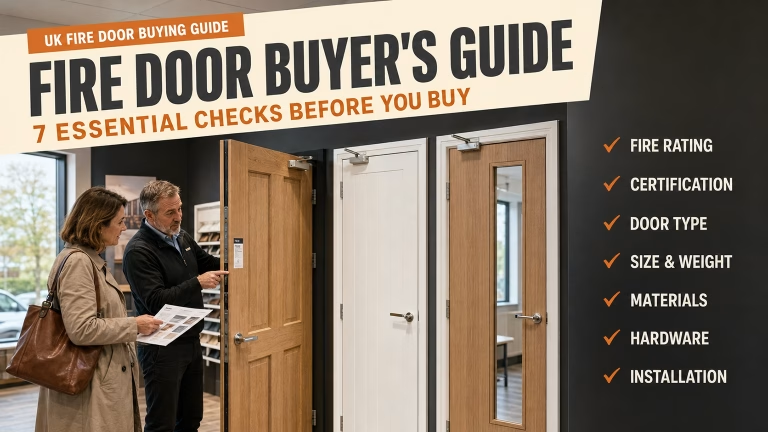
Have you ever considered the safety of your home or workplace against fire hazards? Since fire risk always exists and can occur at times, purchasing…
Conclusion
Now, who is responsible for fire doors in flats is clear: the landlord or the designated Responsible Person holds the legal duty to install, maintain, and regularly inspect fire doors. Tenants do have a part to play, use fire doors correctly, and report any problems. Proper upkeep isn’t optional here; it’s crucial for the safety of everyone and for protecting property in the event of a fire.
When you need internal fire doors that actually meet regulations, Z Doors delivers solid, compliant options to help protect your property and keep your tenants safe.