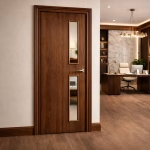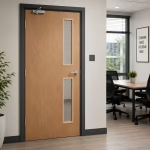

Do I need fire doors in my house? This is a question that many people ask, and the answer is: if you want to protect your building and your family, YES!
Fire doors are an essential component of fire protection in homes, businesses, and offices. Certified fire doors are made especially to protect your property and save lives. It is now more crucial than ever for property owners to understand when and where these doors are required due to recent revisions to UK fire safety regulations. If you want to know what is the purpose of fire doors, continue reading this blog post.
What Is a Fire Door and How Does It Work?
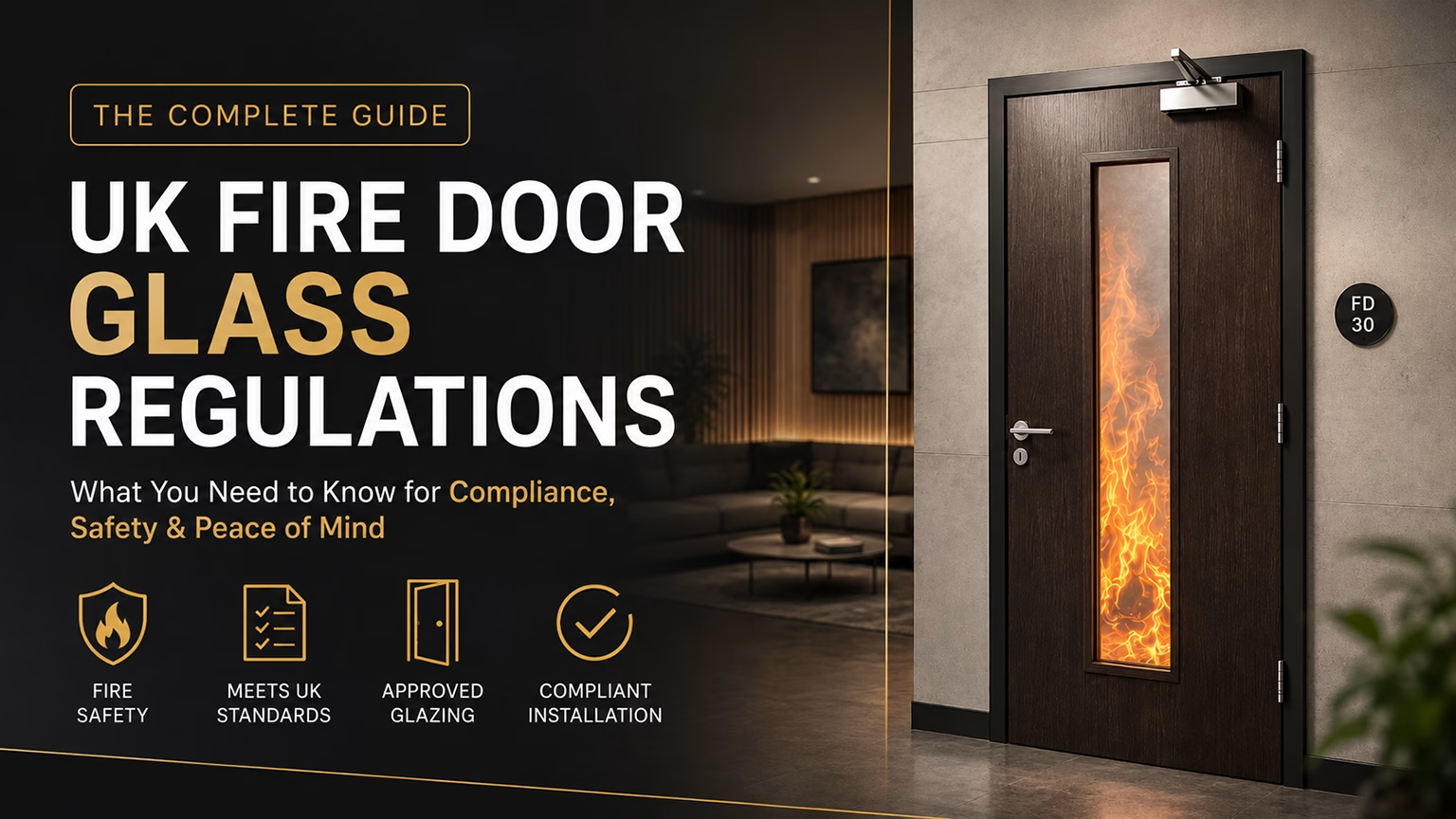
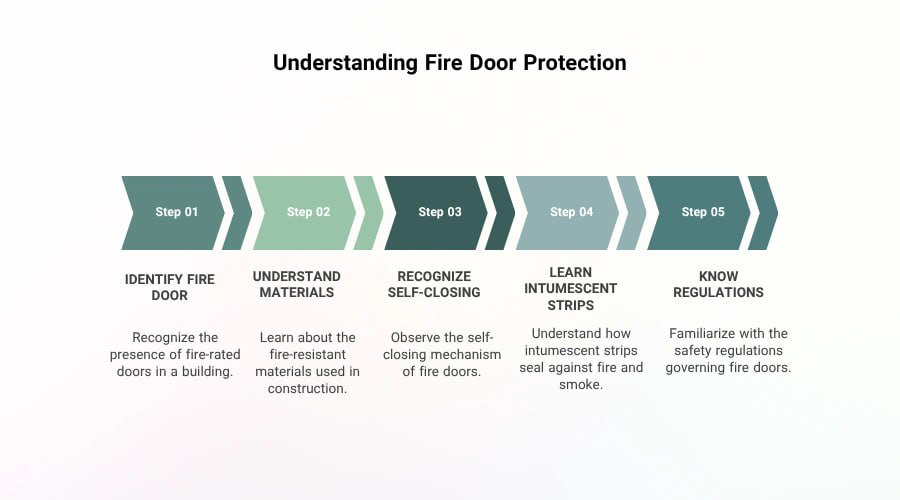
Before you know what is the purpose of fire doors, you should know what is a fire door. Fire rated doors are designed to stop fire and smoke from spreading. They give people crucial time to evacuate and help to protect property from serious damage.
They are build using fire-resistant materials like steel, special fire-rated glass, or solid wood. According to British safety rules, they actively put out fire and smoke for a predetermined amount of time, usually 30, 60, 90, or even 120 minutes.
These doors have some ingenious characteristics. When someone opens them, they shut themselves. Some doors can be held open by magnets for everyday use, but when a fire alarm sounds, the door will immediately snap shut. Special strips, known as intumescent strips, along the edges expand in the heat when the door is closed, forming a tight seal that prevents smoke and fire from slipping through any openings.
Fire door ratings
Based on how long they can resist fire before failing, fire doors are rated and certified as follow:
- FD30: Offers 30 minutes of fire resistance
- FD60: Offers 60 minutes of fire resistance
- FD90: Offers 90 minutes of fire resistance
- FD120: Offers 120 minutes of fire resistance
Are Fire Doors Legally Required in Residential Homes?
Yes, depending on the size, layout, and whether the house is a single residence or a structure with several apartments, fire doors are legally required in several types of residential homes in the UK. The Fire Safety (England) Regulations 2022 and Building Regulations Approved Document B (Fire Safety) are the main laws that govern fire door regulations in the UK. But, when do you need internal fire doors?
If you live in a flat or a shared house with multiple tenants, you will find fire doors at the entrance to any shared hallways or stairwells. For flats located higher than 4.5 metres (about two storeys up), you also need fire doors between the main living spaces and the hallways. This ensures that fire cannot easily spread into the escape routes that everyone relies on.
Where Should Fire Doors Be Installed in a House?
Do you want to know Where Do You Need Fire Doors? Here are the key places that fire doors should be installed:
- Common Areas: Fire doors are located at the entrances to common areas such as stairwells, lobbies, and hallways. Everyone is shielded from fires that originate elsewhere by this.
- Stairwells and Escape Routes: This prevents fires from obstructing exits and maintains clear escape routes.
- High-Risk Areas: Places like IT server rooms and boiler rooms should have fire doors. This aids in containing any potential fire there.
- Multi-Storey Homes: For properties with three or more floors, it’s essential to install fire doors separating living spaces from stairwells. This is a key safety measure and often a regulatory requirement.
- Homes with Garages: If your property includes an integral garage, the connecting door to the main house must be a fire door. Garages commonly store flammable materials, so this step is non-negotiable for safety compliance.
- Houses in Multiple Occupation (HMOs): Additional fire doors are required between individual units and communal areas. This helps ensure the safety of all occupants and aligns with legal standards for shared housing.
⚠️ To confirm about the regulations that you need to meet, contact your local council for more information as this can be different from case to case.
Cost Considerations for Residential Fire Doors
Now that you know what is the purpose of fire doors, you may want to know how much they cost for you. The cost of fire doors varies greatly based on the specification. You have your basic fire door ratings, such as FD30 or FD60; of course, the greater the rating, the more expensive it will be. Remember that you are paying for more than just a door; you will also need certified hardware, such as hinges that are rated for fire, self-closers, and all the other features that truly make a door “fire safe.”
The most important one is that installation is not a do-it-yourself task. You might as well not bother at all if you want someone who genuinely understands what they’re doing. A bad fit means you’ve just wasted your cash and put safety at risk and you won’t pass the regulations once an inspector has checked them. Factor in the ongoing stuff too—regular inspections, recertification, repairs here and there. All of this stacks up.
Although it’s a significant investment, taking short cuts here might ultimately cost you much more in the long run—not just in terms of money, but also in terms of responsibility and, in the worst situation, safety.
Maintenance and Inspection of Fire Doors at Home
Just because your fire doors appear fine doesn’t mean they’re actually doing their job. Opening and closing them a few times? Not exactly a test of their performance under serious pressure like, actual fire conditions.
Industry standards recommend an annual inspection. And we’re not talking about a quick once-over. This should be a comprehensive review, making sure every component, from those heat-resisting seals to the self-closing mechanism, is functioning as it should. That’s how you ensure your fire doors are genuinely ready to withstand extreme temperatures, as they’re engineered to do.
Many businesses provide fire door maintenance contracts. If you own one of these, you don’t need to worry because they handle all of the routine maintenance and inspections. You may feel secure knowing that your fire doors are prepared to defend your house since they take care of all the paperwork and make sure your doors are always in excellent shape.
How to Choose the Right Fire Door for Your Home
Selecting an appropriate fire door for your property isn’t just about ticking a few boxes—it’s about protecting your investment and the people inside. Start by confirming the fire resistance rating you need, like FD30 for 30 minutes or FD60 for an hour. The door’s material is important, too; quality and durability can make all the difference in an emergency.
Also, don’t overlook compatibility with your existing fire safety systems. The door should integrate smoothly with any alarms or sprinklers you already have in place. And, of course, only consider doors that are certified by a recognised testing authority. The following table helps you to choose the right fire door:
| Factor | Recommendation |
| Fire Resistance Rating |
|
| Material |
|
| Style | Match the door design to your interior – options include wood finishes, glazing, and modern panels. |
| Size and Fit | Ensure a tight fit with minimal gaps (max 3mm). Accurate measuring is key. |
| Certification | Check for certification from BSI or Certifire. Look for a label or plug on the door. |
| Installation | Always use a qualified professional. Poor fitting voids fire protection. |
| Integration | Ensure compatibility with your fire alarm and closing systems. |
| Legal Requirements | Fire doors required in: internal garage entries, stairwell areas in 3-storey homes, and flat/HMO entrances and kitchens. |
| Quick Tips |
|
Innovations in Fire Door Technology for Homes
The fire door industry isn’t standing still, it’s evolving fast, with new technologies pushing safety standards to a whole new level. Modern fire doors now integrate with building alarm systems, so they can close automatically during a fire and immediately notify staff if there’s a fault. This kind of real-time monitoring isn’t just a nice feature; it’s become a key driver for compliance and risk management. Plus, these innovations are reshaping how architects and developers approach both safety and sustainability in building design.
It’s not just about integrating advanced tech anymore—fire door manufacturers are stepping up their sustainability game. They’re now using recycled wood and metal, making doors that are both eco-friendly and robust. Importantly, these green materials don’t compromise on fire safety. In fact, thanks to ongoing breakthroughs—like those intumescent seals that expand under heat to lock things down even tighter—fire doors are getting smarter and more reliable. Bottom line, these innovations mean today’s fire doors offer stronger protection for people and property, while also helping companies meet environmental goals. That’s a win-win in any industry.
Premium Fire Doors You Can Rely On
At ZDoors, we take fire safety seriously. Our FD30 and FD60 fire doors are engineered for reliability, Each door features intumescent seals for effective smoke control and is fully certified to meet strict British Standards. We oversee professional installation to ensure seamless integration with your fire safety systems. When it comes down to protecting your people and property, you can count on us to deliver.
Conclusion
So, what is the purpose of fire doors? Fire doors aren’t just another line item on a compliance checklist. They’re your frontline defence when it comes to protecting people and property. When disaster strikes and every second counts, a well-chosen, properly installed fire door buys you and your family or team that crucial window to evacuate safely and allows emergency crews to get in and do their jobs.
FAQ
1) Do I need fire doors in my flat?
Yes, you are legally obligated to have a fire-certified entrance door with a self-closing mechanism if your apartment faces a common space like a hallway or stairwell. Typically, this door is rated FD30 (30-minute fire resistance).
2) Where are fire doors required in a house?
- Three-Storey Homes (including loft conversions): If your home has three floors, you must install fire doors on all living spaces that lead to the stairwell.
- Homes with an Attached Garage: The door connecting your garage to the inside of your house absolutely needs to be a fire door.
- Houses in Multiple Occupation (HMOs): In shared homes (HMOs), fire doors are essential between individual living units and any shared areas.
3) Are fire doors mandatory in all homes?
No, not every home needs a fire door. In certain situations, such as three-story homes, residences with built-in garages, and HMOs, they are necessary. Even in situations where it is not legally necessary, installing fire doors can improve safety.
4) Do all internal doors need to be fire doors in a house?
Although they are not necessary for every inside entry, fire doors are necessary for safety in some locations. For instance, they must be placed along escape routes in multi-story homes, and a fire door must be installed at the entrance to your living space if you have an attached garage. Additionally, HMOs require fire doors between public halls and individual living areas.
5) Which rooms require fire doors?
In multi-storey homes, rooms that lead onto stairwells usually require fire doors; this keeps your escape routes secure. Additionally, because kitchens are more likely to experience a fire, they are essential, especially if they open immediately onto an escape path. Finally, to prevent any possible fire from spreading, the door leading from the garage into your living space needs to be a fire door if your house has an attached garage.
6) Can I replace a regular door with a fire door in my house?
Yes, a fire door can be used in place of a standard door only if the frame is a fire frame and at least 44mm thick. To satisfy fire safety regulations, it is essential to guarantee correct installation and certification. It is not advised to convert a regular door into a fire door since it might not offer the required level of security.