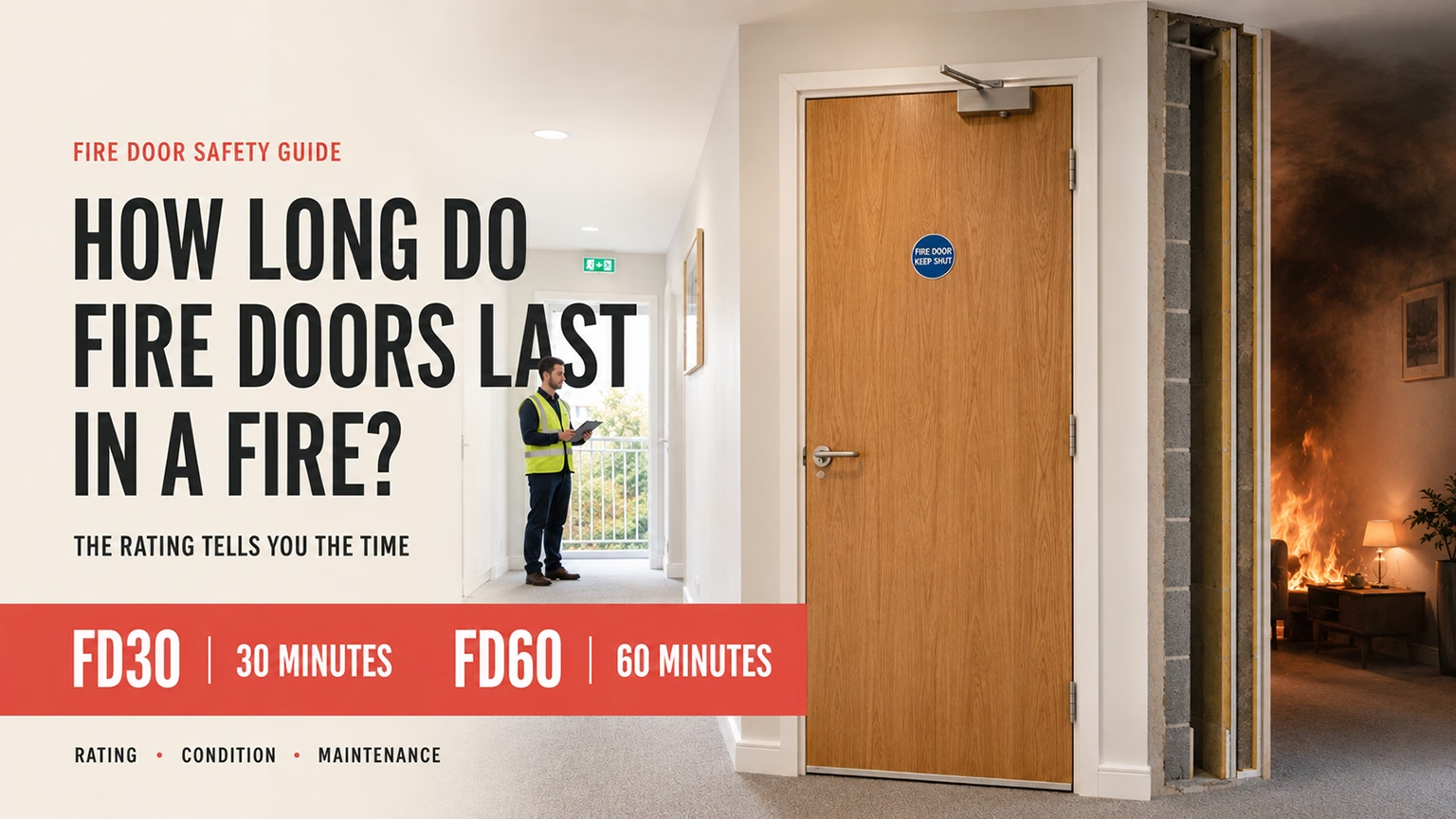
In the midst of a fire, minutes, sometimes even seconds, can save someone’s life. And an internal fire door is a vital part of a building’s and people’s safety infrastructure. Designed to slow the spread of flames and smoke, these doors help protect both people and property during emergencies. But, how long do fire doors last? When you’ve got that information, you’re not just more compliant; you’re genuinely in control and have peace of mind. Let’s find the answer and see how often fire doors should be inspected.
How Long Do Fire Doors Last?
Fire doors are designed for long-term reliability, not just short-term use. Manufacturers such as LPD or DEANTA often provide warranty periods ranging from 10 to 25 years, depending on the quality of materials and manufacturing standards. Even so, where you install the doors matters just as much as who made it.
External fire doors, for example, have a tougher role. Exposure to rain, temperature fluctuations and UV rays can take a toll over time, reducing their operational lifespan compared with their internal counterparts. Internal fire doors generally face less environmental stress and therefore tend to last longer.
✅ Note: Ongoing inspection and regular maintenance are essential to ensuring fire doors remain effective throughout their lifespan.
Key Factors Influencing Fire Door Durability
The lifespan of a fire door really hinges on a mix of daily usage, the environment it’s installed in, and whether anyone’s actually maintaining it. Even the most robust fire doors can fall short of expectations if they’re ignored. Here are the main factors that play into its longevity.
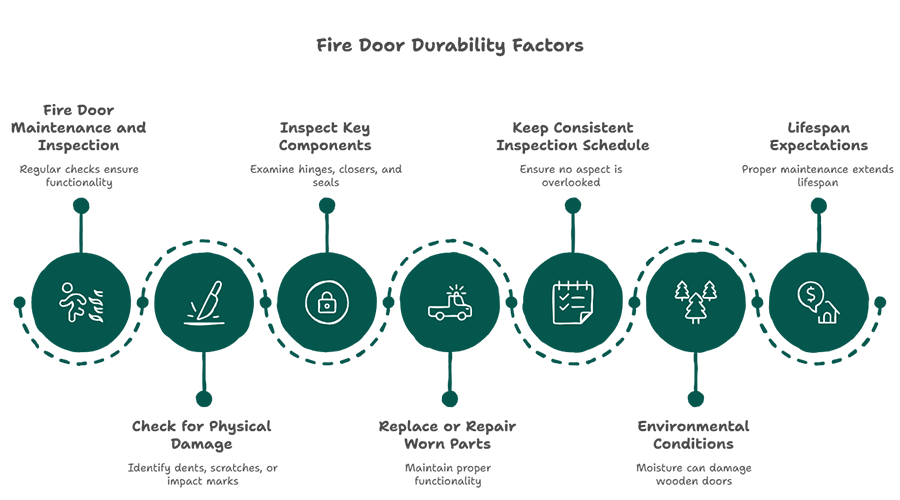
1 – Fire door maintenance and inspection:
How often should fire doors be inspected? As best practice, fire doors should be inspected at least every six months. In more crowded areas, you may need to check them more frequently.
When carrying out inspections, make sure to:
- Check for physical damage: such as dents, scratches, or impact marks, as these can compromise the door’s ability to resist fire and smoke.
- Inspect key components: including hinges, closers, and intumescent seals for signs of wear and tear or defects.
- Replace or repair worn parts promptly: to maintain proper functionality.
- Keep a consistent inspection schedule: to ensure no aspect of fire door maintenance is overlooked.
2 – Environmental conditions:
Honestly, the placement of a fire door really does impact how long it will hold up, especially in a work environment. Anywhere there’s moisture, whether it’s from high humidity, plumbing leaks, or the occasional spilt drink, wooden fire doors are at risk. They can swell, warp or even start to rot, which obviously isn’t ideal. When that happens, these doors lose both their structural strength and their ability to stop a fire. That’s a risk no business wants to take.
3- Lifespan expectations:
If you actually maintain your fire door, keep up with regular inspections and don’t just forget about it, high-quality ones can easily last 20 to 30 years. That’s solid value. But if you skip routine checks or ignore UK fire safety standards, you’re essentially gambling with people’s safety and, honestly, with liability too. Reliable performance only comes from proper upkeep, plain and simple.
For those who are unsure, here’s a useful resource to learn what is a fire door, it explains the construction, fire resistance features, and purpose of these critical safety doors.
Understanding Fire Door Ratings: FD30, FD60
This table shows how long FD30 and FD60 fire doors can withstand fire and their typical applications. If you understand these ratings, you’ll select the right door to maximise occupant safety and property protection.
| Fire Door Rating | Fire Resistance Duration | Typical Lifespan in Fire | Materials | Maintenance Considerations | Common Use |
| FD30 | 30 minutes | Short-term protection, enough for safe evacuation | Timber, steel or composite | Requires regular inspection of seals, hinges, and closers; more resilient indoors | Residential buildings, small offices, HMOs |
| FD60 | 60 minutes | Extended protection, suitable for larger or higher-risk spaces | Timber, steel, composite, or specialised fire-resistant cores | Frequent inspection essential; particularly important in high-traffic or moisture-prone areas | Hospitals, schools, high-rise buildings, larger commercial spaces |
FD30 Fire Door
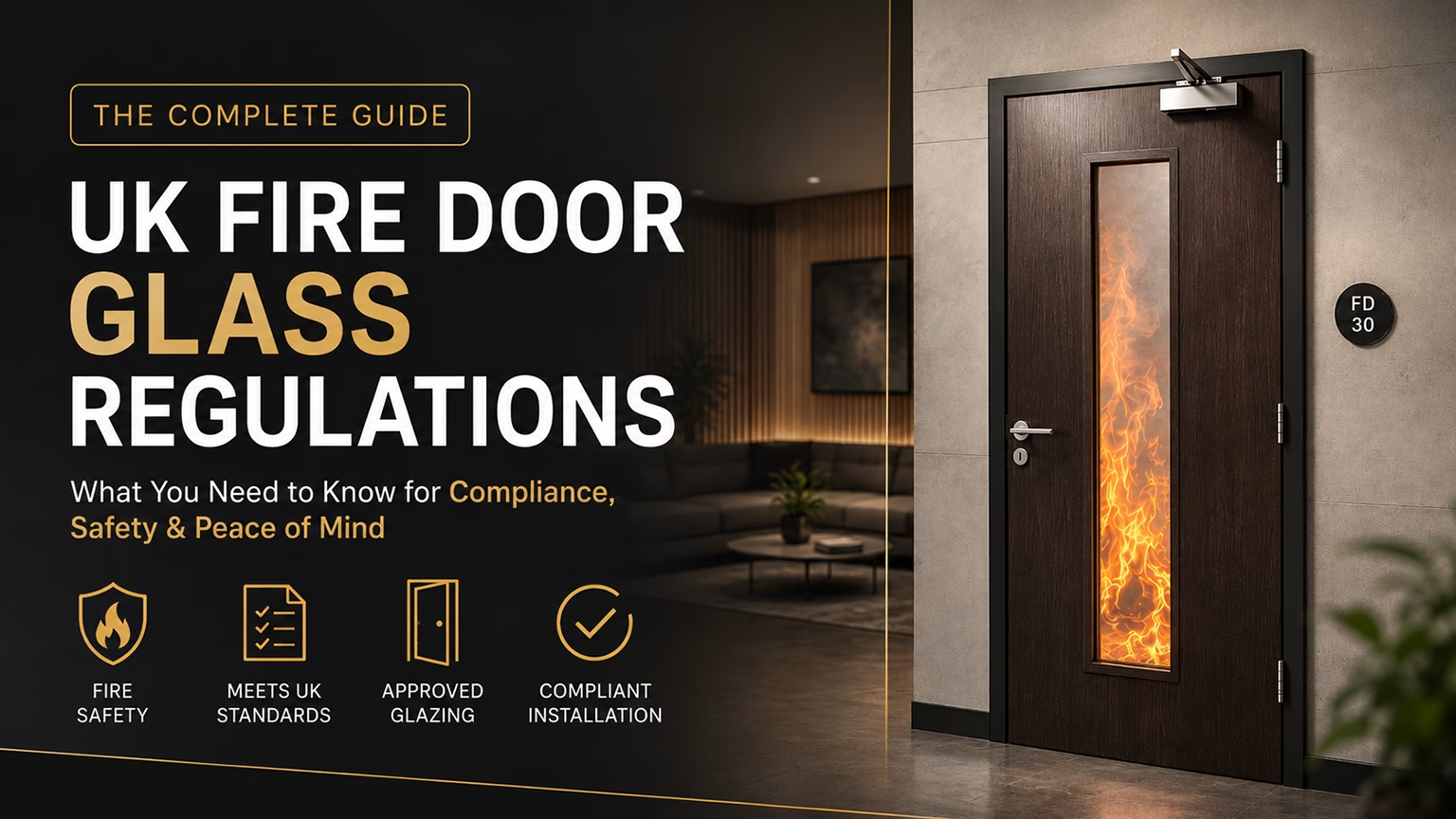
An FD30 fire door provides up to 30 minutes of fire resistance. You’ll typically find these installed in residential buildings, smaller office spaces, or multi-occupancy homes. They create a critical time buffer during a fire to allow occupants enough time to exit the premises safely, essentially buying those crucial minutes needed for evacuation. These aren’t heavy-duty industrial doors, but for lower-risk areas, they hit the sweet spot between safety and practicality.
FD60 Fire Door
FD60 fire doors deliver up to an hour of fire resistance, 60 solid minutes, to be exact. You’ll typically find these installed in larger facilities like hospitals, schools, and high-rise buildings. There’s good reason for it. In high-traffic or high-risk environments, having that extra barrier can make all the difference, especially when you need more time for safe evacuation or to contain the spread of fire. It’s a smart investment for buildings where safety can’t be compromised.
Legal Requirements for Fire Door Maintenance in the UK
Fire Door Regulations in the UK aren’t optional. The rules are set out in several important laws:
- Regulatory Reform (Fire Safety) Order 2005: This is the main law. It requires “Responsible Persons” to carry out fire risk assessments, check all fire doors regularly, and make sure every part of those doors is in good working order. Skipping these checks isn’t allowed.
- Fire Safety (England) Regulations 2022: These rules add extra duties, especially for multi-occupied buildings above certain heights. They call for more frequent checks, better record-keeping, and tighter routines, particularly in residential blocks.
- Fire Safety Act 2021: This law makes it clear that flat entrance doors and doors in shared areas are covered. In shared buildings, there’s no room for avoiding responsibility.
- Building Regulations (Approved Document B: Fire Safety): This sets out the technical requirements, covering how fire doors should be built, fitted, and tested in new or altered buildings. Ignoring these standards is a breach of the rules.
In short: UK law doesn’t just recommend fire doors; it requires them to meet strict standards. Responsible Persons are legally accountable, and “not knowing” is never an excuse.
How to Know When It’s Time to Replace Your Fire Door
Over time, wear, damage, or changing regulations can mean fire doors no longer provide the level of protection they should. A defective fire door is a serious safety risk, so it’s important to recognise the warning signs early. To help, it’s useful to know How To Identify A Fire Door correctly. If you noticed these, it means you need to replace them:
- Visible damage: Cracks, warping, dents, or gaps around the frame.
- Operational issues: The door is stiff, difficult to open, or fails to close fully.
- Damaged or missing seals: Worn or missing intumescent or smoke seals reduce effectiveness.
- Missing fire rating label: Without a certification label, compliance cannot be confirmed.
- Failed inspection: The door does not meet requirements during a professional fire safety check.
- Beyond repair: Damage is too severe or repairs are no longer cost-effective.
- Regulation updates: Renovations or new safety rules mean an upgrade is required.
⚠️ Important note: Make sure to replace fire doors at the right time, it’s about saving lives!
Conclusion
Fire doors aren’t just another box to tick; they’re engineered to be an important part of building safety. But many people still wonder: how long do fire doors last? That said, fire doors don’t have a one-size-fits-all lifespan. Their longevity depends on factors like fire rating specs, installation quality, frequency of use, and perhaps most critically, whether they’re regularly inspected and maintained. If you stay on top of maintenance and choose reliable materials, a fire door can easily stay functional for decades.
Z Doors is one of the leading fire door providers in the UK, offering fully certified FD30 and FD60 fire doors built to the highest standards.
FAQs
1) How often are fire door inspections required in the UK?
In the UK, fire doors should be inspected at least every six months. However, in high-traffic areas such as corridors, stairwells, and communal spaces, inspections may need to be carried out every three months to ensure the doors remain fully functional and compliant.
2) Is there a legal requirement to inspect fire doors in the UK?
Yes. Under the Regulatory Reform (Fire Safety) Order 2005 and the Fire Safety (England) Regulations 2022, it is a legal requirement for responsible persons to maintain and regularly inspect fire doors. Failure to comply can result in enforcement action and serious safety risks.
3) How often should fire doors be checked in residential buildings?
In residential buildings above 11 metres in height, flat entrance fire doors must be checked at least once a year, while communal fire doors must be inspected every three months. This ensures that all occupants remain protected in the event of a fire.