- Published:
- ZDoors
- categorys: Flooring Guides
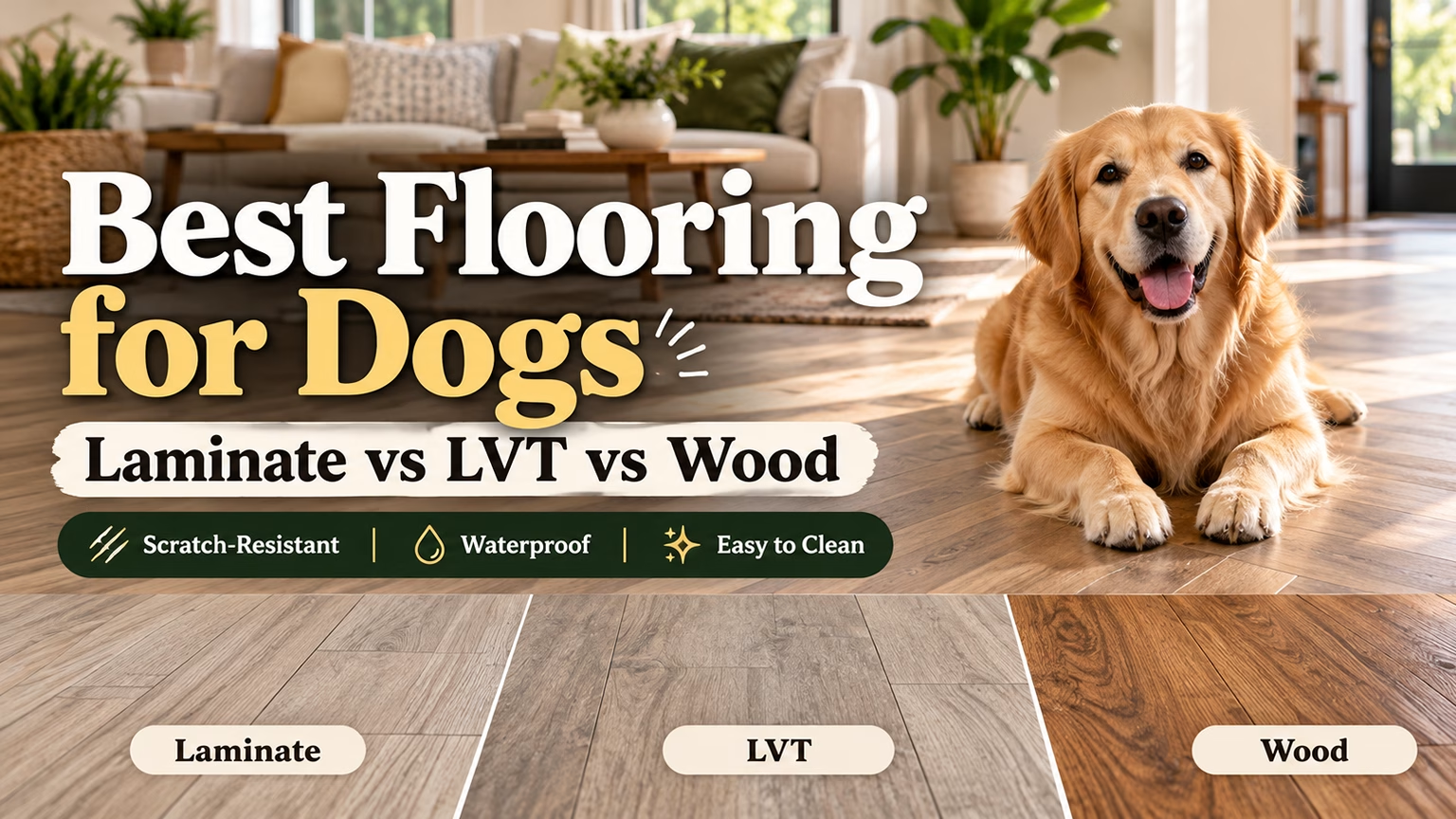
luxury vinyl tile (LVT) is the best all-round floor for a home with dogs. It is waterproof, hard to scratch and warmer underfoot than tile. Laminate rated AC4 or AC5 comes a close second, costs a good deal less per square metre, and for a house-trained dog in a living room it is often the better buy. Solid hardwood and deep-pile carpet are the two to steer clear of.
- Floor area0 m²
- Including cuts0 m²
- Coverage per pack0 m²
- Total coverage bought0 m²
Estimate only. Pack sizes and prices come from the product page and can change. Add more for L-shaped rooms, diagonal laying or herringbone.
That is the answer most flooring people will give you, and we agree with it. What follows is the bit they tend to skip: when laminate is the right call, when it is not, and how to tell a laminate that will cope with your dog from one that will not. If you already know your room size, the pack calculator further down tells you how many packs to order and what it will cost.
| Question | Answer |
| Best overall for dogs | LVT, then AC5 laminate |
| Best for accidents | LVT (waterproof), or laminate rated for 24 to 72 hours of water resistance, wiped up when you find it |
| Best for claws | Anything rated AC4 or AC5 under EN 13329 |
| Best for older dogs | A textured surface with rugs on the routes they use |
| Best colour | Mid-tone wood effects hide hair and dust |
| Avoid | Solid hardwood, high-gloss finishes, deep-pile carpet, polished stone |
What Is the Best Flooring for Dogs?
A floor in a home with a dog has four jobs. It has to stand up to claws, cope with water and the odd accident, give paws something to grip, and still look like a floor you chose rather than one you settled for. Nothing does all four.
LVT gets closest. It shrugs off water, claws struggle to mark it, and a textured finish gives decent grip. A good laminate is almost as tough on top, grips just as well if the surface has a proper wood texture, and only falls behind on water. Engineered wood looks the best and copes the worst with claws and spills. Tile is close to indestructible but cold and slippery. Carpet is lovely to lie on and fails at everything else.
Which one is right depends on the dog and the room. One calm spaniel in a carpeted lounge is a very different problem from two Labradors and a back door onto a muddy garden.
How to Choose Flooring for Dogs and Cats
Before you look at a single colour, check these five things. They decide whether a floor is still looking good in three years.
The wear rating. Every laminate sold in the UK carries an AC rating under the European standard EN 13329. AC3 is light domestic use, AC4 is general domestic and light commercial, AC5 is intensive use. It comes from an abrasion test, so it tells you how long the surface lasts under claws and grit. With a dog in the house, treat AC4 as the minimum and AC5 as the one you will not regret. Every board in our wood effect laminate range is AC5.
What it does with water. Laminate is not waterproof, whatever the box says. The better boards are water-resistant: the surface and the joints hold liquid out for a stated time, 24 or 72 hours in the case of the boards we stock, which is long enough to find a puddle and dry it. LVT is waterproof right through, which is why it wins on accidents.
The surface texture. Look for an embossed surface, and if you can, one where the texture follows the printed grain (the trade calls it register embossed). It gives claws something to hold and hides the odd scratch. A smooth, glossy surface shows every mark and gives an older dog nothing to push against.
The edges. Most laminate planks have a bevelled edge so they look like separate boards. It looks right, and it is also where a spill sits. The joint is the weak point on any laminate, so that is the bit you dry first.
Colour and pattern. Mid-tone oak, walnut and greyed wood effects hide hair, dust and paw prints. Very dark floors show pale hair; very pale floors show dark hair and mud. A visible grain disguises a scratch far better than a plain surface.
Cats are easier on a floor than dogs. Their claws are lighter and they rarely skid, so any laminate rated AC4 or above will cope. The one thing to plan for is the litter tray: put a mat under and around it, because scattered litter is grit, and grit is what scratches laminate.
One test beats any colour chart. Take a sample home, drop a pinch of your dog’s hair on it and leave it by the back door for a day. If you cannot see the hair or the paw prints, that is your colour.
Laminate vs LVT vs Engineered Wood for Dogs
| Feature | Laminate (AC4/AC5) | LVT | Engineered wood |
| Claw resistance | Very good | Excellent | Fair |
| Water and urine | Water-resistant for a stated period | Waterproof | Poor |
| Grip for paws | Good with an embossed surface | Good | Good |
| Warmth underfoot | Moderate | Good | Good |
| Noise from claws | Moderate | Low | Moderate |
| Typical UK price per m² | Lower | Mid to high | High |
| Repair | Replace the board | Replace the plank | Sand and refinish |
Porcelain tile is not in the table because it belongs in a boot room or a utility rather than a lounge. It beats all three on claws and water, but it is cold, loud under claws and slippery for an older dog unless you choose a textured finish.
Choose laminate if: your dog is house-trained, the room is a lounge, hallway or bedroom, you want a floor that looks like real wood, and you would rather not pay LVT prices for the whole house.
Choose LVT if: you have a puppy or an elderly dog, the room is a kitchen or utility, or you expect accidents to sit unnoticed while you are out.
Choose engineered wood if: the dog is calm, you love real timber, and you can live with a few marks as part of its character.
Why do people pick laminate over LVT? Three reasons, and they are good ones. It costs less, so a whole-house floor stays affordable. The printed and embossed wood effects on a decent laminate look more like wood than most LVT at the same price. And a 12 mm laminate board feels more solid underfoot than a thin click vinyl. The same AC5 wear rating that specialist pet-flooring brands sell from around £24 per square metre starts at £12.50 on our wood-effect range at the time of writing.
Why do people pick LVT over laminate? One reason: water. If urine is going to sit overnight before anyone finds it, LVT will not care and laminate might.
Do Dogs Scratch Laminate Flooring?
Yes, if the laminate is rated AC3 or has a gloss surface. On an AC4 or AC5 board with an embossed surface, a dog rarely leaves a mark.
The reason is in the test. An AC5 board has to survive at least 6,000 passes of an abrasion wheel under EN 13329. AGT, who make the laminate we stock, publish 6,500 cycles for their AC5 range, and a scratch resistance of 5 N against a required minimum of 3.5 N. A dog’s claw on a normal walk across the room does not come near that. What marks laminate is grit: the small stones that come in on paws and get dragged across the surface. A gravel drive and no doormat will scratch a floor faster than the biggest dog in the house.
Nail length matters too. Long nails on a dog that skids on the turns leave fine lines on any floor. Keep them trimmed and the laminate will show far less.
Best Flooring for Dogs That Pee: Water Resistance Explained
Water-resistant and waterproof are not the same thing, and the difference decides what happens when you are out for the day.
A waterproof floor, LVT or tile, does not absorb liquid at all. A water-resistant laminate has a sealed surface and tight joints that keep liquid out for a set time. AGT state that all their laminate is water-resistant for 24 hours and that the Mood XLarge collection is water-resistant for 72 hours, tested under the NALFA scheme. After that, liquid can get through the joints to the fibreboard core and the board swells.
For a house-trained adult dog, 24 hours covers every accident you are going to have. For a puppy, an old dog, or a dog left on its own for long days, either go for LVT or put a washable mat where the accidents tend to happen.
If you do find a puddle on laminate:
- Blot it with kitchen roll or a towel. Do not rub it towards the joints.
- Clean with an enzyme-based pet cleaner, which breaks the urine down rather than covering the smell.
- Use a damp cloth, not a wet mop, and dry the area afterwards.
- Have a look at the joint a day later for any lifting at the edge.
Non-Slip Flooring for Dogs: Texture, Older Dogs and Arthritis
If a dog with hip or joint trouble keeps slipping, the floor’s surface is the first thing to look at. Dogs push off with their claws, and on a glossy surface there is nothing to push against.
The answer is texture first, then rugs. Pick a laminate or LVT with a register-embossed surface rather than a smooth or high-gloss one. Then put a washable runner on the routes the dog uses most: the hallway, the path from bed to back door, and in front of the sofa. A non-slip underlay under the runner stops the runner itself travelling.
For a dog that already has arthritis, texture helps but will not fix it on its own. Rugs on the main routes, trimmed nails, and keeping the fur between the pads short do more than any floor choice.
Underlay matters as well. A good underlay adds a little give, takes the edge off the sound of claws, and a foil-backed or DPM underlay puts a moisture barrier under the boards. Ask which underlay the manufacturer requires before you buy, because the wrong one can void the guarantee.
The Best Laminate for Dogs on ZDoors: 8 mm vs 12 mm, and How Many Packs You Need
We stock laminate from AGT, a Turkish manufacturer, in two ranges. One suits dogs better than the other, so here is the honest comparison.
| Wood Effect (Effect range) | Marble Effect (Mood XLarge) | |
| Thickness | 8 mm or 12 mm | 10 mm |
| Wear rating | AC5, Class 33 (intensive use) | AC4, Class 32 (home and office) |
| Water resistance (AGT) | 24 hours | 72 hours |
| Surface | Register embossed, follows the grain | Smooth Mood surface |
| Edge | Bevelled | Bevelled |
| Locking system | Click-together (L2C), no glue | Click-together (L2C), no glue |
| Guarantee | 10 years | 10 years |
| Price | See the product page for the current price per m² | See the product page for the current price per pack |
For most dogs, go for the wood effect. It has the higher wear rating and the embossed surface that gives paws grip and hides claw marks. Pamir, Ural, Tibet and the rest of the range share the same specification, so once you are in that range the only decision left is colour.
8 mm or 12 mm? Both have the same AC5 surface, so they resist claws the same. The 12 mm board is heavier, quieter under claws, more forgiving over a subfloor with a few dips, and feels closer to real wood when you walk on it. The 8 mm does the same job for a few pounds less per square metre. In a hallway or a room with a large dog, we would spend the extra. In a bedroom, we would not.
When the marble effect makes sense. The Mood range has the longer 72-hour water resistance, which suits a kitchen or utility where the water bowls live. The trade-off is its smooth surface: more slippery for an older dog, and it shows fine scratches sooner than the embossed boards. If you go that way, put a mat under the bowls and a runner on the main route.
Work out how many packs you need. Enter the room size, pick a product and a thickness, and the calculator below gives you the number of packs, the cost and the price per square metre, using the current price from the product page.
Have a look at the full laminate flooring range, the wood effect boards or the marble effect boards. The Technical Information tab on every product page shows the specification quoted above, so you can check it for yourself.
Worst Flooring for Dogs
- Solid hardwood with a lacquered finish. Claws go through the lacquer, urine stains the wood underneath, and the fix is sanding the whole floor.
- High-gloss anything. Shows every scratch, every paw print and every hair, and gives no grip.
- Deep-pile carpet. Holds hair, smell and damp, and an accident soaks through to the underlay where no cleaner reaches.
- Polished stone and smooth porcelain. Will outlast the house, but cold, hard on joints and slippery when wet.
- Thin, unbacked vinyl sheet. Dents under furniture and tears under claws.
What About Carpet in a Home With Dogs?
Carpet is not on the avoid list by default. A dense, low-pile carpet in a bedroom or on the stairs gives a dog better grip than any hard floor, keeps the room quiet and warm, and a man-made fibre with stain protection cleans up better than most people expect. What fails is deep or loose pile: it holds hair and smell, and an accident goes straight through to the underlay.
Carpet upstairs and a hard floor downstairs is a sensible split for most dogs. Keep the carpet out of the hallway, the kitchen and anywhere a wet dog walks in.
Keeping the Floor in Good Condition With Pets
- Trim the claws. The single biggest difference to how any hard floor looks after a year.
- A mat at every outside door. Grit does more damage than claws. A coarse mat outside and a washable one inside catch most of it.
- Vacuum rather than sweep. Sweeping drags grit across the surface; a vacuum lifts it off.
- Runners on the main routes. Hallway, back door, in front of the sofa. Washable, with non-slip underlay.
- A mat under the water bowl. More laminate gets damaged by a water bowl knocked every day than by any accident.
- Fit it to the instructions. Leave the expansion gap the manufacturer asks for, use the underlay they specify, and keep the fitting instructions with the guarantee.
Frequently Asked Questions
What is the best type of flooring for dogs?
LVT, because it is waterproof, scratch-resistant and warm underfoot. AC5 laminate with an embossed surface is the closest alternative for less money.
Is LVT or laminate better with dogs?
LVT if accidents are likely or the dog is old; laminate if the dog is house-trained and you want a more convincing wood look at a lower price.
Do dogs ruin vinyl plank flooring?
Rarely. Good LVT has a thick wear layer that resists claws and does not absorb urine. Thin, cheap vinyl is a different product and can tear.
Do dogs scratch laminate flooring?
Not laminate rated AC4 or AC5 with an embossed surface, in normal use. Gloss finishes and AC3 boards do scratch. Grit carried in on paws is the usual culprit, not the claws.
What is the best flooring for dogs with arthritis?
A textured LVT or embossed laminate, with washable runners on the routes the dog uses. Texture cuts the slipping; rugs on the main routes cut it further.
Is laminate flooring waterproof for dogs?
No. Laminate is water-resistant for a stated period, 24 hours for the AGT boards we stock and 72 hours for the Mood range, after which liquid can reach the core. LVT is waterproof.
What colour flooring is best for dogs?
Mid-tone wood effects with visible grain. They hide hair of most colours, dust and paw prints better than very dark or very pale floors.
Sources
- BS EN 13329:2023, Laminate floor coverings: specifications, requirements and test methods (BSI Knowledge)
- AGT Flooring, Frequently Asked Questions: water resistance by collection, NALFA testing
- AGT Laminate Flooring Technical Specifications, AC5 (PDF)
- Floors for Paws: dog-friendly flooring from £24 per m²
- ZDoors: AGT Pamir Wood Effect Laminate 8 mm/12 mm, Technical Information
- ZDoors: AGT Marvel Mood Media XLarge Laminate 10 mm, Technical Information
- Share the article with your friends :
The content of this blog is for informational purposes only and is intended to enhance your knowledge. While we strive to provide accurate and up-to-date information, we do not take responsibility for any errors, omissions, or potential consequences resulting from the use of this information. Before making any purchasing or installation decisions, we recommend consulting with your local council or a professional.
Related Posts