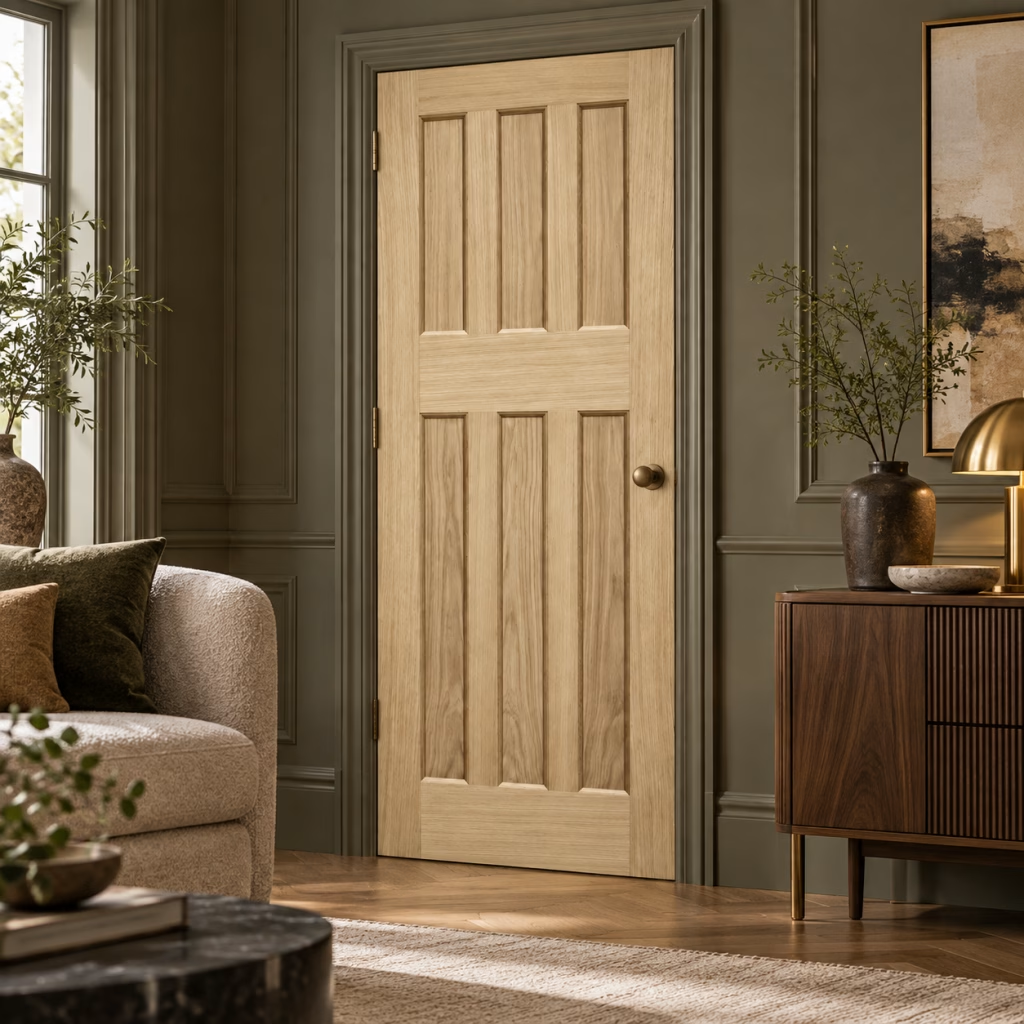
Unfinished Internal Doors
Unfinished internal doors arrive as bare oak veneer, with nothing applied at the factory, so you choose the oil, stain or varnish that goes on. They suit anyone matching existing oak floors, stairs or joinery, tradespeople who finish on site, and buyers who'd rather put in the work than pay for a factory coat. The range covers LPD and Deanta oak on a solid core, as panelled, grooved and glazed designs. The decision here is whether to finish the door yourself. If you'd rather hang it straight away, see our pre-finished internal doors.
Products: 64
-
-
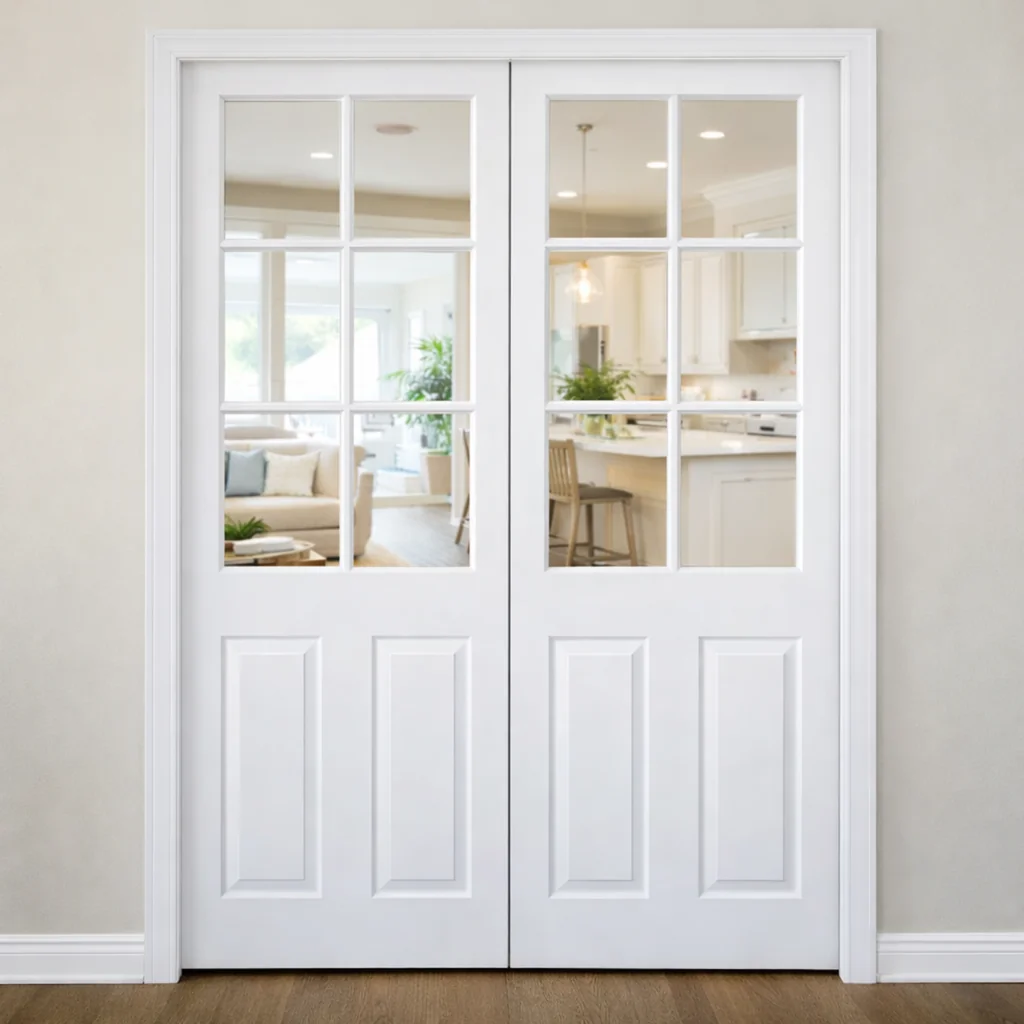 17%Premdor Out of Stock
PREMDOR White Primed 2 Panel 6 Clear Top Glass Internal Double Door
£230.00Original price was: £230.00.£190.00Current price is: £190.00. -
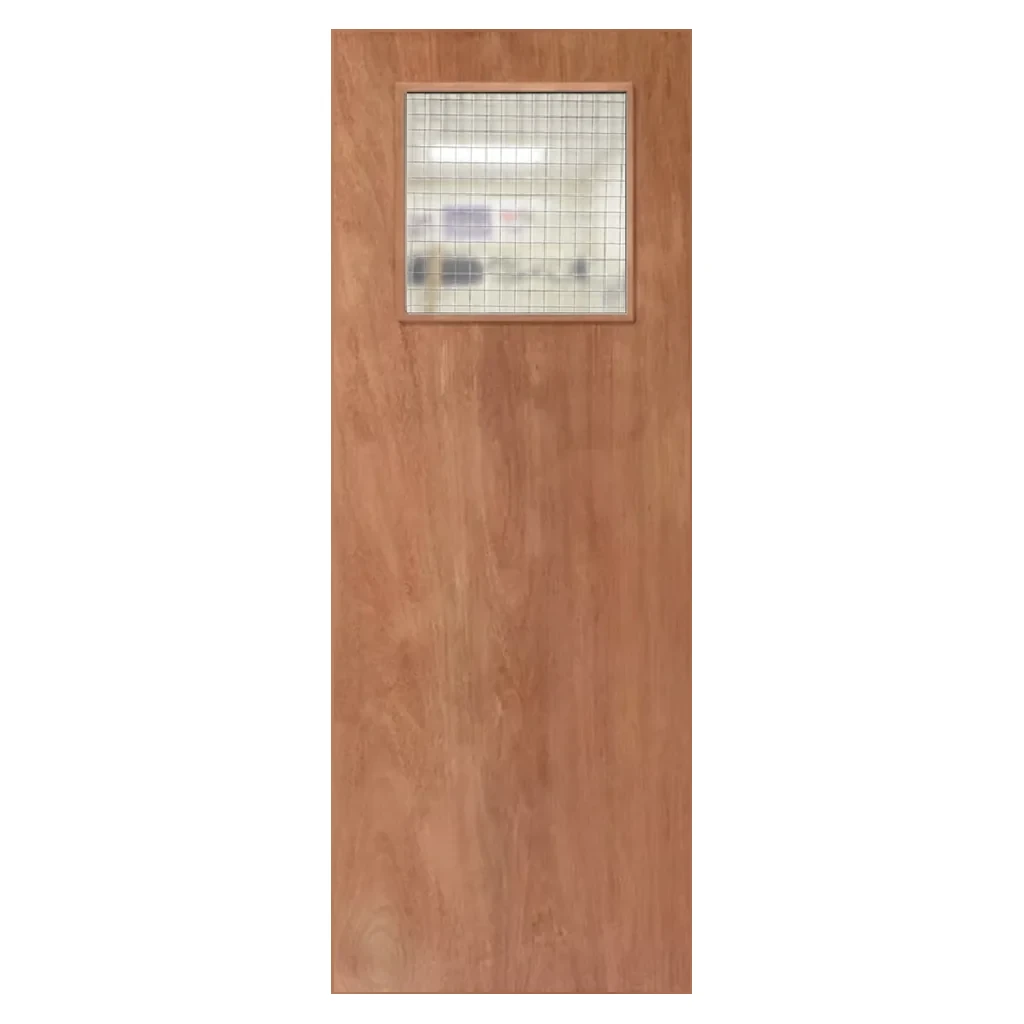 17%FD30Premdor Out of Stock
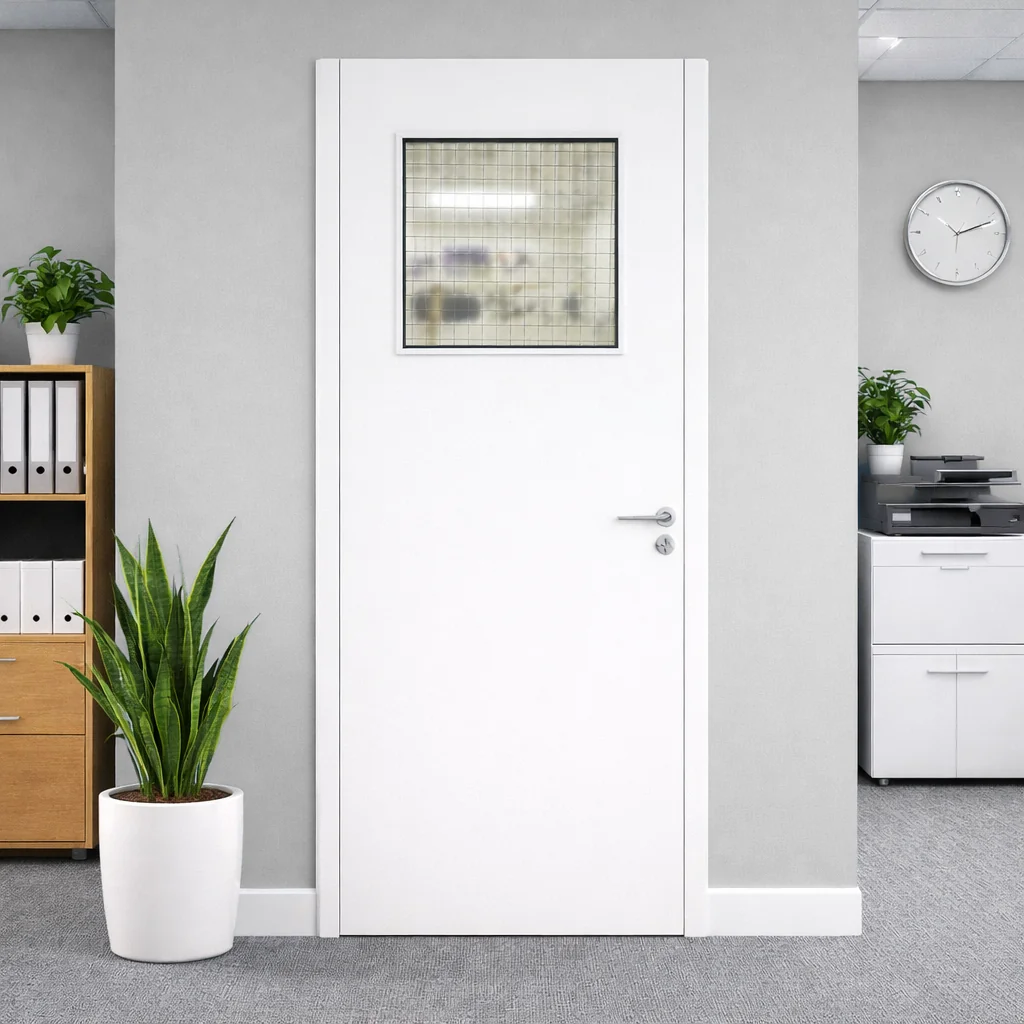
PREMDOR Unfinished Plywood Top Square Wired Glass Internal FD30 Office Door
£230.00Original price was: £230.00.£190.00Current price is: £190.00. -
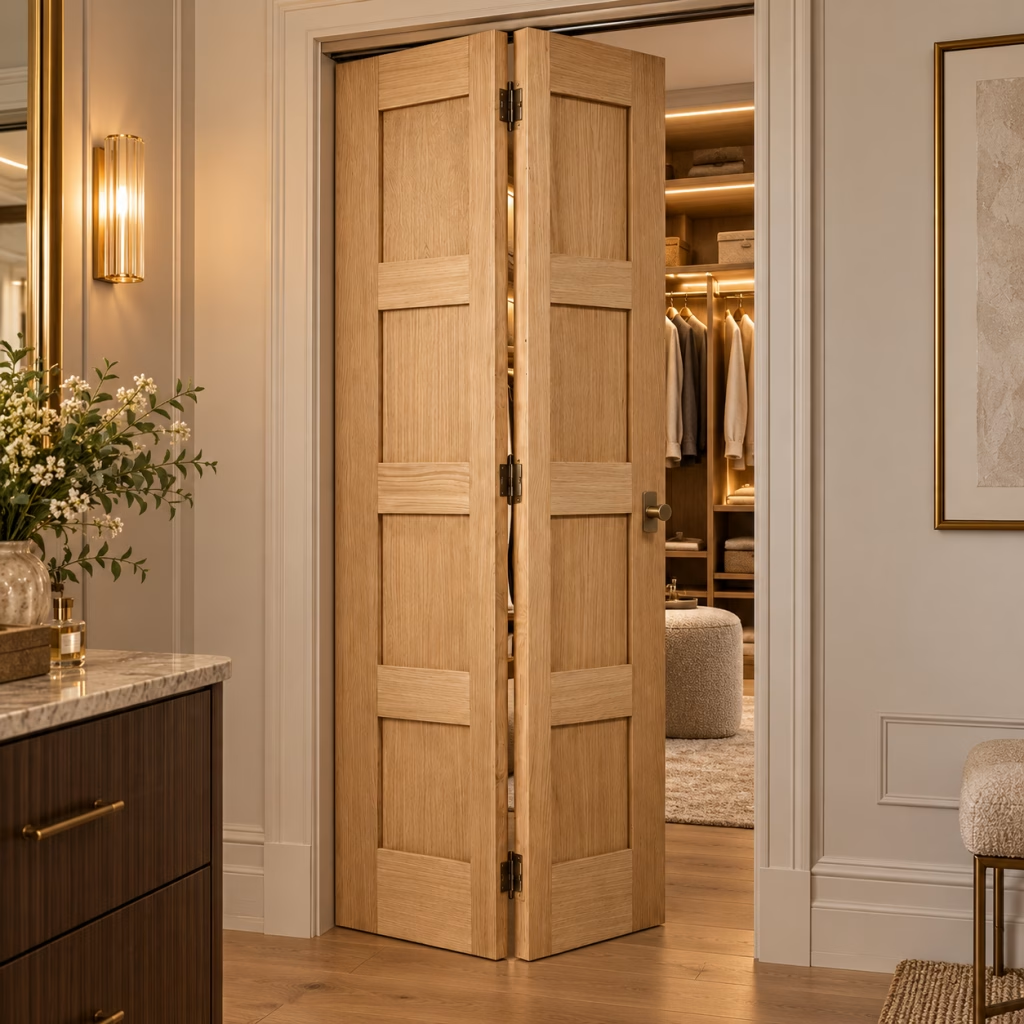 LPD Out of Stock
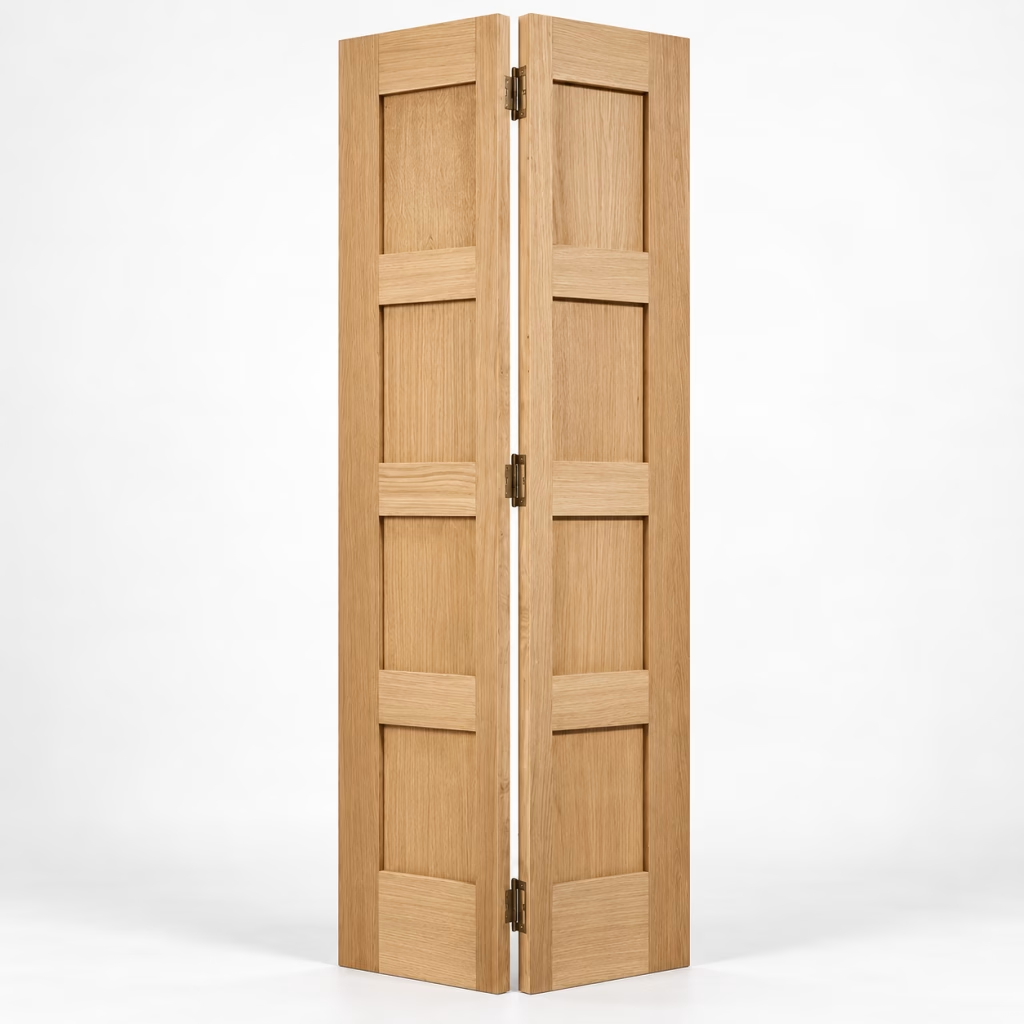
LPD Shaker Oak 4P Pronounced Panel Design White Oak Veneer Unfinished Bi-Fold Internal Door
£291.00
Buying guide
In this guide
- What unfinished internal doors are, and why th…
- Unfinished internal doors by design
- Glazed unfinished internal doors
- How to finish oak doors yourself
- +10 more
What unfinished internal doors are, and why they need sealing
Unfinished internal doors haven’t been primed, painted, stained or sealed. You get the timber exactly as it left the press, which is what makes it so flexible: the same door can end up pale and matt, honey-toned or dark, depending on what you put on it.
The catch is that bare veneer can’t be left that way. Timber takes up moisture from the air, and an unsealed door can warp, mark or discolour. Every face needs a finish before the door goes into use, including the top and bottom edges, which are easy to forget because nobody sees them.
This is a door that needs finishing, so allow time for it in your plans. It’s a weekend job for most people, longer if you’re doing a whole house.
Unfinished internal doors by design
Most of our unfinished internal doors are LPD designs, with a real oak veneer over an engineered core; several titles name it as white oak. Deanta’s designs, such as the Bristol, use crown-cut American white oak, and many are listed as FSC-certified timber.
- Traditional panelled: the LPD Regency 4P, including a raised-moulding version, the Idaho 3 panel, the Wexford, the Lincoln and the 2-panel Louis.
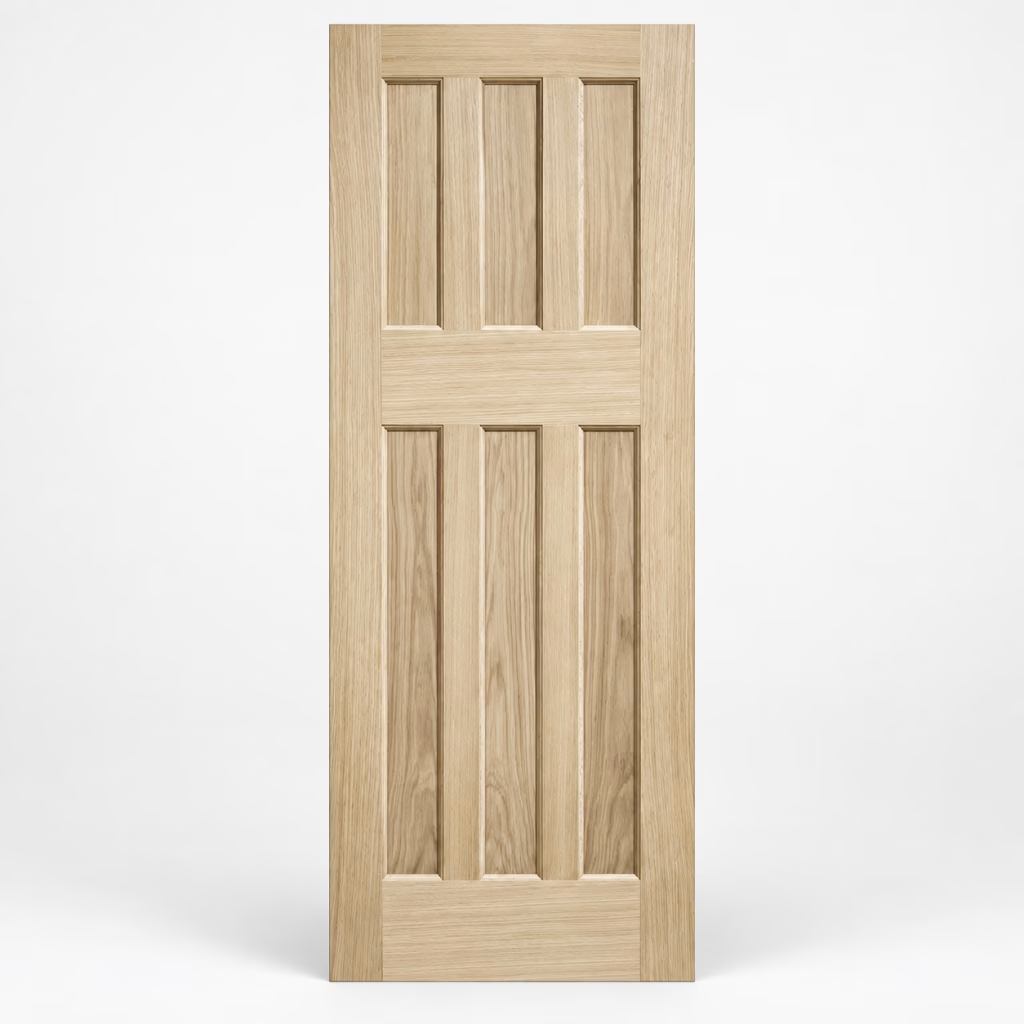
- Period styles: the DX 30s 4 panel, styled on 1930s doors, and the DX 60s with six inset panels.
- Vertical and grooved: the Belize, Mexicano, Kilburn, London and Coventry, with long panels or grooves running top to bottom.
- Shaker and flat panel: the Shaker 4P with recessed panels, and a 4-panel design with flat rectangular panels for a plainer look.
- Contemporary: the Carini 7P, with a V-cut ladder between contrasting side panels, and the grooved Girona.
- Cottage and ledged: the Cotswold Cottage and the Button Bead Ledged, for a boarded, country feel.
Beyond single doors, unfinished oak internal doors also come as bi-folds in the Mexicano and Shaker designs, and as glazed pairs in the Coventry 3L and Lincoln 3L.
Prefer the same look ready to hang? Many of these unfinished internal doors also come pre-finished, alongside the full oak range in our oak internal doors.
Glazed unfinished internal doors
Plenty of unfinished internal doors come with glass, and the choice is wider than just clear.
- Clear: the Belize 1L and 4L, Mexicano Half Light, Kilburn 1L, Utah 3L and the 9-lite Downham, plus Deanta’s Eton 2 Lite and Ely Half Lite.
- Clear bevelled: Deanta’s Bristol, Norwich 3 Lite, Kerry Full Lite and Ely 6 Lite, where the angled edges catch the light.
- Frosted or obscure: the DX 30s 1L and Utah 3L frosted, and Deanta’s Coventry 4 Lite, Walden and Cambridge with obscure glass, for bathrooms and cloakrooms.
Glazed doors take longer to finish, as the beads around each pane need the same coats as the rest of the door. Mask the glass with low-tack tape first, and peel it off before the last coat is fully hard so it lifts cleanly. Compare these with factory-finished options in our glazed internal doors.
How to finish oak doors yourself
There are three main routes for finishing unfinished internal doors, and the right one depends on the look you want and how much upkeep you’ll accept.
| Finish | The look | Upkeep | Good for |
|---|---|---|---|
| Door oil or hardwax oil | Natural, low sheen, deepens the grain | Re-coat now and then | Matching oiled floors |
| Clear varnish or lacquer | Even, harder-wearing surface | Little once cured | Busy hallways and family homes |
| Stain, then a clear coat | Any timber tone, from pale to dark | Depends on the top coat | Matching darker joinery |
Whichever you use, the method is much the same.
- Let it settle: keep the door flat in the room where it will hang for a couple of days, away from radiators and fresh plaster.
- Trim first: cut the door to fit before finishing, so the cut edges get sealed with everything else.
- Sand lightly: use fine paper along the grain, then remove every trace of dust.
- Thin coats on every face: front, back, all four edges, and the glazing beads. Several thin coats beat one heavy one, with a light rub down between them.
- Let each coat dry fully: rushing the next coat traps soft finish underneath.
If you’re wondering how to oil oak doors without blotches, wipe off any excess within the time the tin gives; oil left sitting on the surface dries sticky. Wax on its own gives a soft sheen but little protection, so it works best over a sealed surface.
For more on how to treat oak doors compared with primed and factory-finished ones, read our guide to unfinished, primed or pre-finished doors. Always follow the finish manufacturer’s instructions for drying times.
Unfinished or pre-finished: which should you buy?
Choose unfinished internal doors if matching is the priority. A door finished in the same oil as your floor or staircase will sit with it far better than any factory colour.
Unfinished interior doors also make sense for trade buyers and anyone fitting many doors, where the lower door price adds up. The saving is before labour, though, so count your own time, or a decorator’s, honestly.
Pre-finished is the better choice if you want doors up quickly, need every door identical, or don’t fancy the sanding and drying.
Before you hang unfinished internal doors
Check each door when it arrives, before you cut, sand or finish anything, and book your fitter once you’ve done so. A door that’s been trimmed or finished can’t be returned.
Natural variation in colour and grain is part of buying real oak, not a defect, and it usually evens out once the finish goes on.
Measure each opening carefully with our measuring guide. Most designs come in 35mm imperial sizes, and several, including the Mexicano, Belize 1L and Deanta Norwich, also come in 40mm metric sizes; the Button Bead Ledged is 40mm only.
Our unfinished internal doors are solid and heavy, so plan on three hinges each; Deanta recommends three for its designs, and hinges are sold separately.
Fitting them yourself? Our guide on how to fit door hinges walks you through cutting the recesses.
Unfinished internal doors: your questions answered
Can you leave internal doors unfinished?
No. Unfinished internal doors are bare veneer, which takes up moisture and dirt, so an unsealed door can warp, stain or discolour. Seal every face, including the top and bottom edges, before the door goes into use.
What can I use to finish an oak veneer door?
A door oil, a hardwax oil, a clear varnish or lacquer, or a stain followed by a clear coat. Check that the product is suitable for interior doors and veneer, and test it on an offcut or the top edge first.
Can I stain unfinished internal doors?
Yes. Stain lets you darken the oak or match older joinery, but it needs a clear coat over it for protection. Apply it evenly along the grain, as stain shows lap marks more readily than oil.
Are unfinished doors cheaper than pre-finished?
Generally, yes, before labour. Once you add sanding, materials and several coats, the gap narrows, so weigh up your time as well as the price.
Can I paint an unfinished oak door?
You can, with a suitable primer first, but oak veneer is a costly base for paint. If you want paint grade internal doors, our white primed doors are ready for top coats.
Are untreated internal doors covered by a warranty?
The product pages list a 10-year manufacturer’s warranty, and a few describe it as conditional. Finishing the door properly, and keeping within the trim allowance, keeps you on the safe side.
Do you sell unfinished fire doors?
Yes. Many unfinished internal doors here, including the Regency, Idaho, Shaker and Mexicano Half Light, also come as FD30 unfinished fire doors.
7 min read